
Be yourself; Everyone else is already taken.
— Oscar Wilde.
This is the first post on my new blog. I’m just getting this new blog going, so stay tuned for more. Subscribe below to get notified when I post new updates.
Be yourself; Everyone else is already taken.
— Oscar Wilde.
This is the first post on my new blog. I’m just getting this new blog going, so stay tuned for more. Subscribe below to get notified when I post new updates.
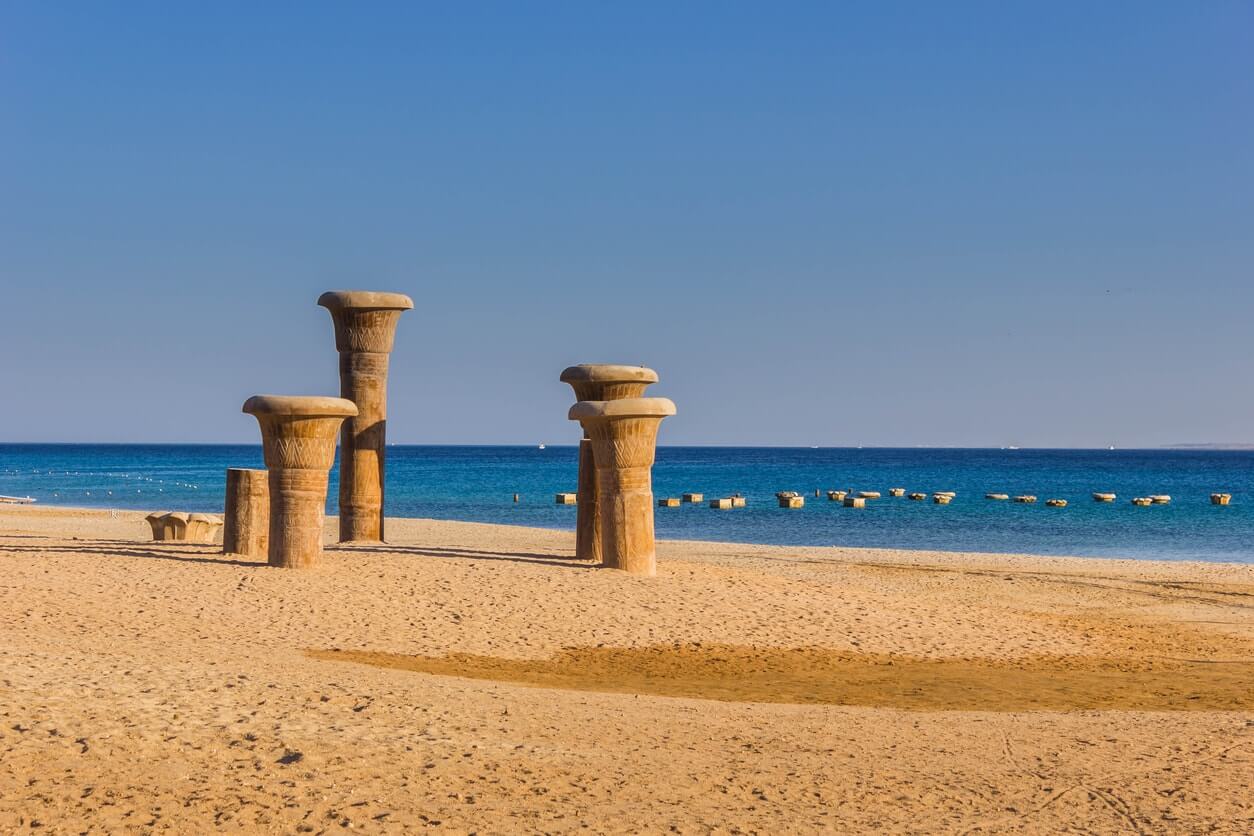
One of the most popular and spectacular holiday destinations on the Red Sea coast, Hurghada is the perfect resort to visit.
Located at the coast of the Red Sea in Egypt, the city of Hurghada used to be a quiet fishing village some twenty years ago. However, since then the city has seen some rapid transformation to become the leading seashore resort on the Red Sea.
Year long sunshine, incredible beaches and countless exciting attractions for all ages to explore. Hurghada makes for a perfect holidaying destination, it’s a modern, cosmopolitan and a newly-found city, filling the gap with amazing modern and natural attractions. With so much to do, here are some ideas to make your time in Hurghada really special.
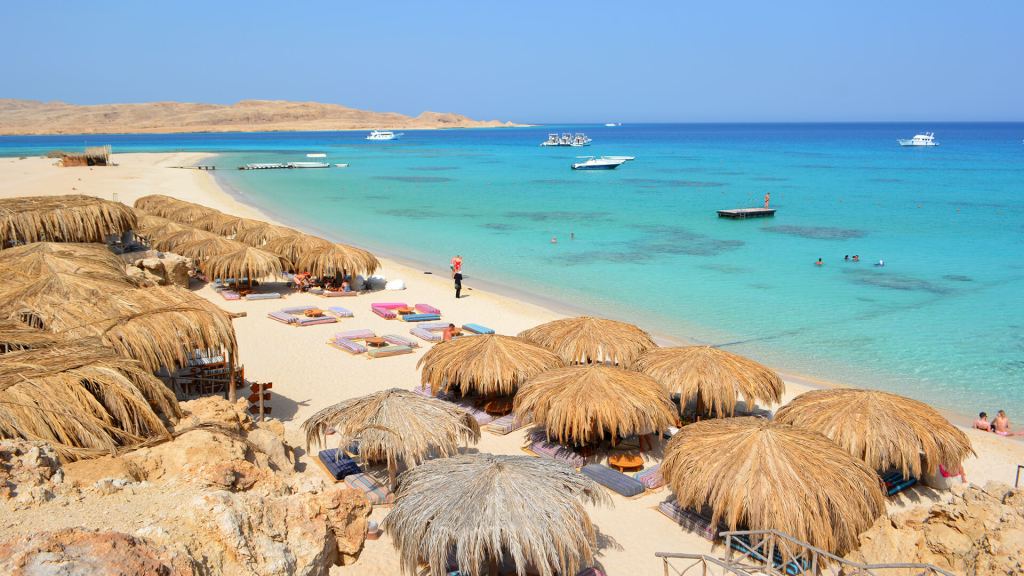
Hurghada’s best patches of sand have all been claimed by the shore-side resorts that stretch along the coast on both sides of town. Even if you’re not staying in one of the hotels, nearly all of the resorts offer day access to non-guests. To really sample Hurghada’s beach life though, you should book yourself in for a few nights of resort living.
The best beaches lie south of the main town area (called Sigala) in the unimaginatively named “Resort Strip.” Travel a bit farther south, and you get to the area known as Sahl Hasheesh, which is home to some of the Red Sea coastline’s prime pieces of white-sand beach and best hotels
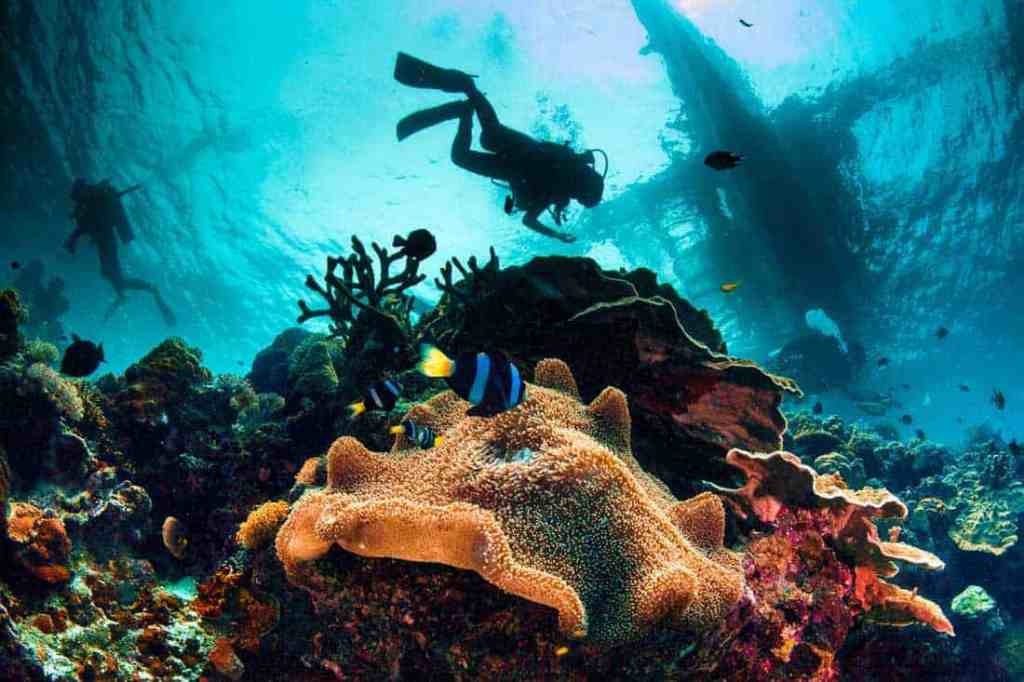
This popular dive site in Hurghada features many coral forests and a dense population of fish, such as tuna, jacks and the occasional hammerhead shark. However, the reef’s fame comes from its large population of giant morays animating its premises. Two coral towers brushing the water surface construct the reef itself. The valley between the two towers is about 16 metres deep, and offers a wide range of dive options, being accessible for both professional divers, as well as less experienced ones.
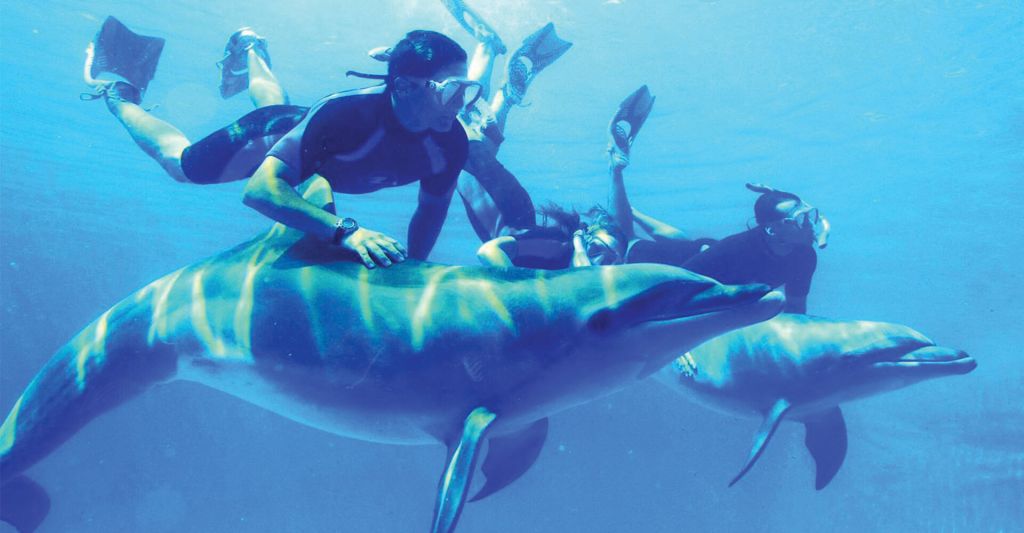
Get a little closer to the local marine life with a relaxing trip to Dolphin House. There you can observe the playful marine mammals in the wild and even swim with them yourself.
The perfect place to have some family fun is at one of the big water parks.
The Jungle Aqua Park is the largest water theme park in Hurghada and boasts 35 slides as well as 14 pools.
At Makadi Water World, you can choose between 50 water attractions, swimming pools, a children’s park, recreation areas and much more, including a 19m free-fall slide and a gleaming river to fulfill all your diving fantasies!
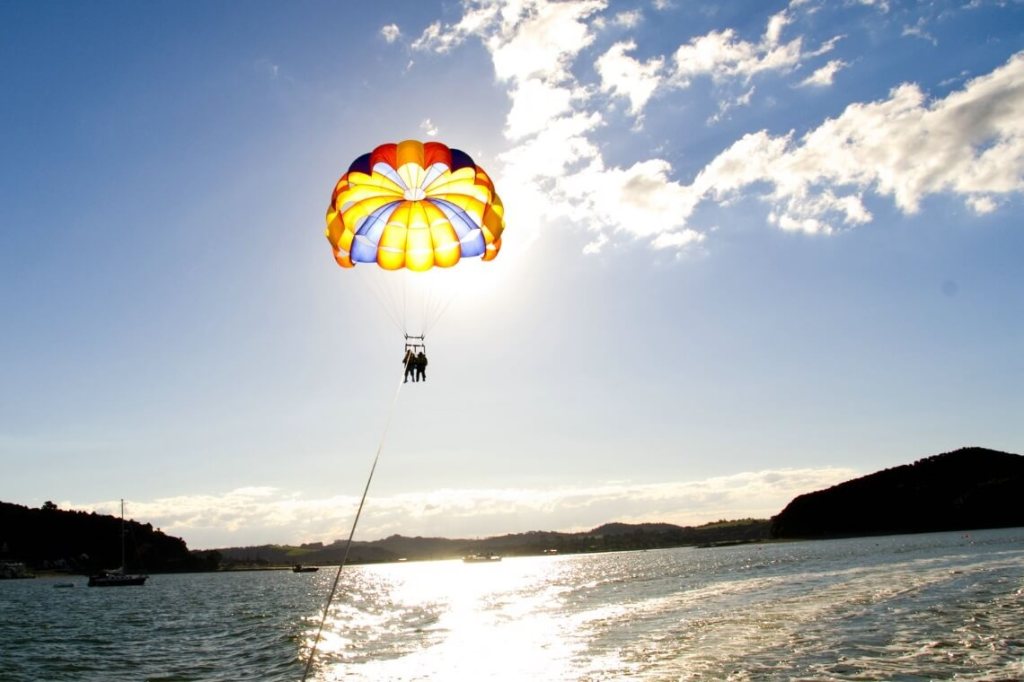
It doesn’t get any more exciting than parasailing. Make your vacation even more exceptional when you go parasailing in Hurghada.
The activity involves a parachute being attached to a speedboat while one or two persons ride at the same time.
Witness the stunning and scenic views of the Red Sea at bird’s eye level with this parasailing adventure in Hurghada, Egypt.
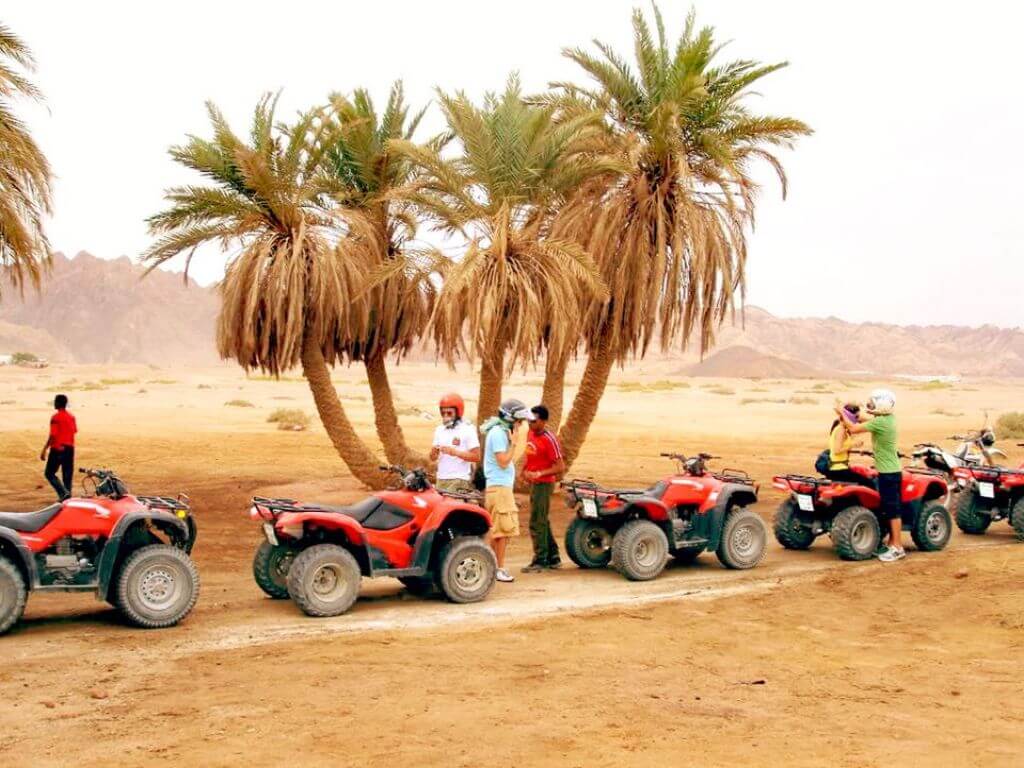
After you’re done enjoying the beautiful water, you can find other things to do on dry land. Included is taking a camel ride, driving through the desert, or going on a “safari.”
Many hotels offer camel rides on their grounds. You can also take a camel ride while visiting Bedouins in the area. Just make sure you pay upfront because some camel owners will charge a fee to get on the camel, and then another fee to get off.
If you are feeling even more adventurous, you can book a trip through the desert on motorbikes. Just visit the Hurghada Motorsport Centre to rent quads and get your team assembled to ride through the mountains and twisty desert paths.
After the noise of riding bikes through Hurghada, you can find complete silence on an Egyptian safari. This is not the African safari you think of visiting wild animals. Instead, this is a genuine experience of walking through the desert in the middle of nowhere. It’s just sand and heat.
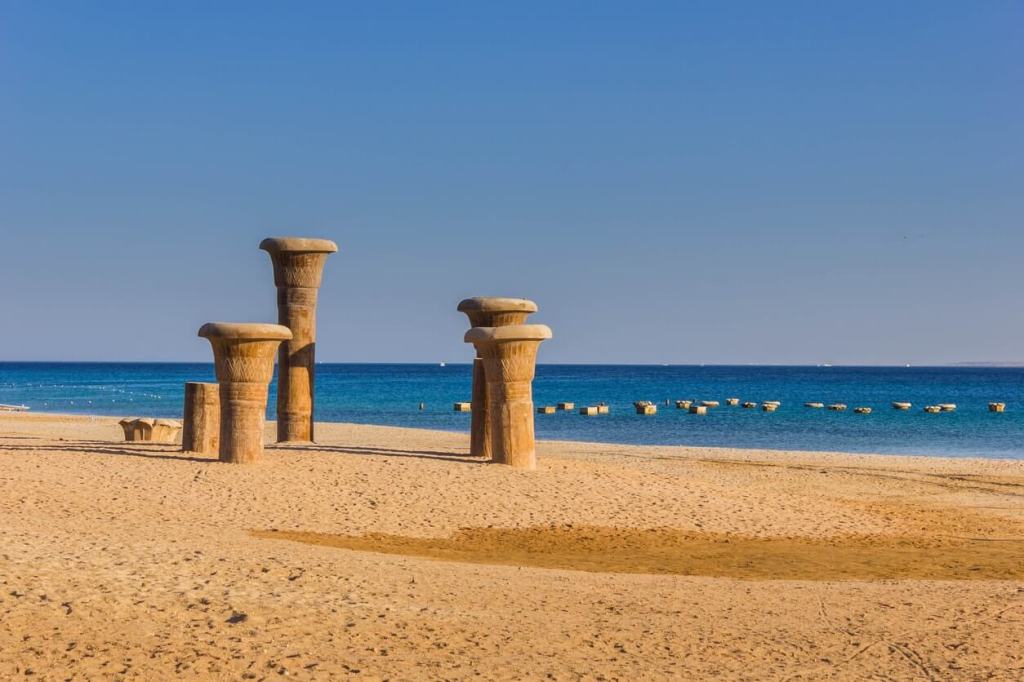
Hurghada Sand Museum is the only open-air museum in Africa and the Middle East. There are numerous real and imaginative sculptures from sand in the museum. Hurghada Sand Museum is located 12 kilometers away from the airport, next to Senzo Mall.
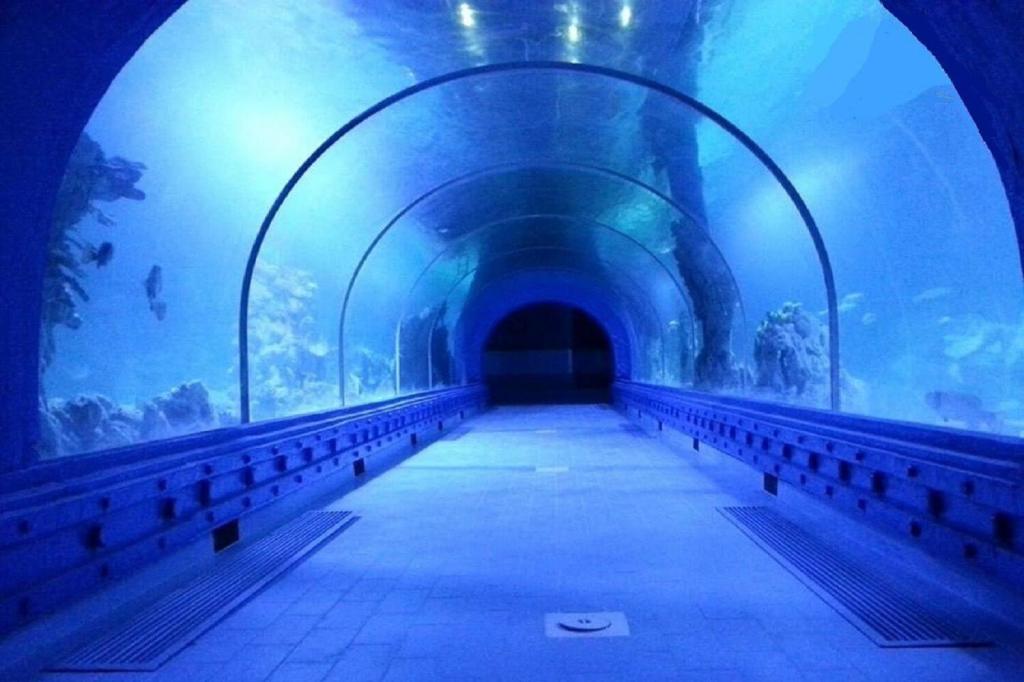
For tourists who are not particularly passionate about watersports but still enjoy the beauty of the sea, the Hurghada Grand Aquarium offers an experience of the marine life of the Red Sea. Visitors can get a closer look at the attractive sea life, all well preserved and properly showcased. Just north of the public hospital, the aquarium has a fascinating selection of fish and other marine creatures that will appeal to the little ones, just as much as to adults.
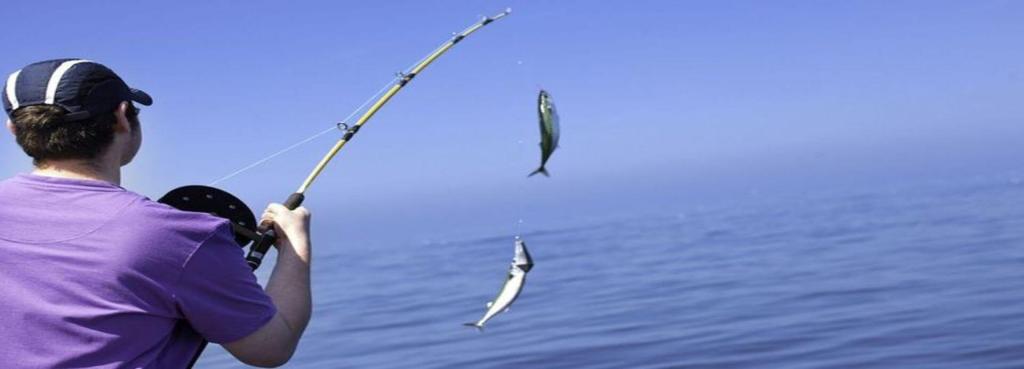
Embark upon a real Red Sea adventure with a fishing trip. Or join a tour to learn new techniques and tips from a professional guide and experience the best fishing in the area.
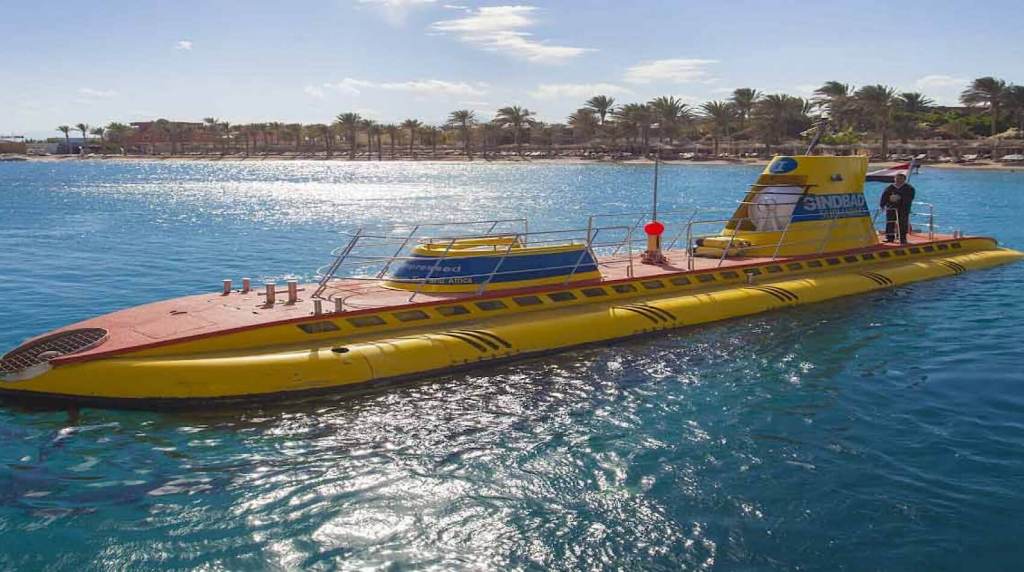
If you don’t want to get your feet wet, this tourist submarine — the only one operating on the Red Sea — takes passengers down to a depth of 22 meters under the water for a peek at the Red Sea’s abundant coral and fish life, all without even putting a toe in the sea. Trips take about one hour, and although they don’t go very far offshore where the better coral can be viewed, for non-swimmers, it provides an opportunity to see the magical world below the surface.
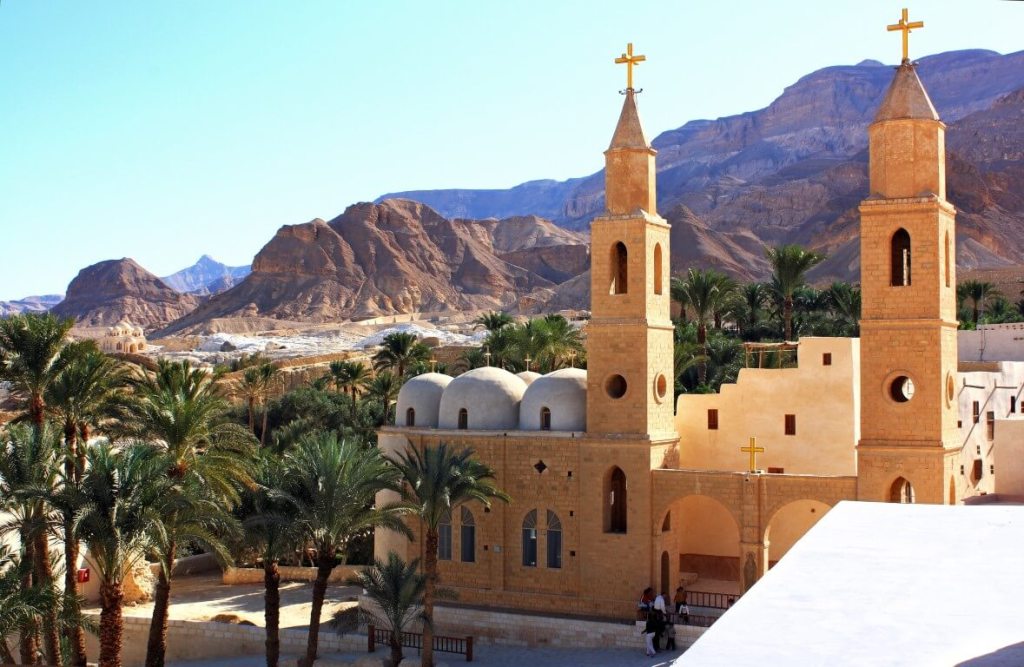
Those expecting only mighty mosques might be surprised to know Egypt is home to some of the most beautiful Coptic churches in the world.
The monasteries of St. Anthony and St. Paul are old Christian monasteries dating back to the 4th century AD.
The Monastery of St. Anthony specifically is considered the holiest site of the Coptic Church in Egypt.
Also called the Big Mosque, the architectural marvel that stands tall offers tourists the opportunity to connect with the culture and daily life of Hurghada, Egypt.
The classic Islamic architecture and the intricate design might be enough of an attraction for many. Clothes with which women can cover are available for free near the entrance of the mosque.
Cairo is one of the world’s great megacities. As beautiful as it is crazy, and as rich in historic finery as it is half dilapidated, Cairo tends to be a city that travelers love and hate in equal measures. Its sheer noise, pollution, and confounding traffic are an assault on your senses, but look beyond the modern hubbub, and you’ll find a history that spans centuries. Full of vigor, Cairo is where you really get a feel for Egyptian street life. No trip to Egypt is complete without a stay in the city Arabs call Umm al-Dunya (The Mother of the World).
If you’re a student, bring your ID card. The majority of sites have big discounts for students.
Here we share with you things to do in Cairo. So, if you are planning to visit Egypt, keep reading.
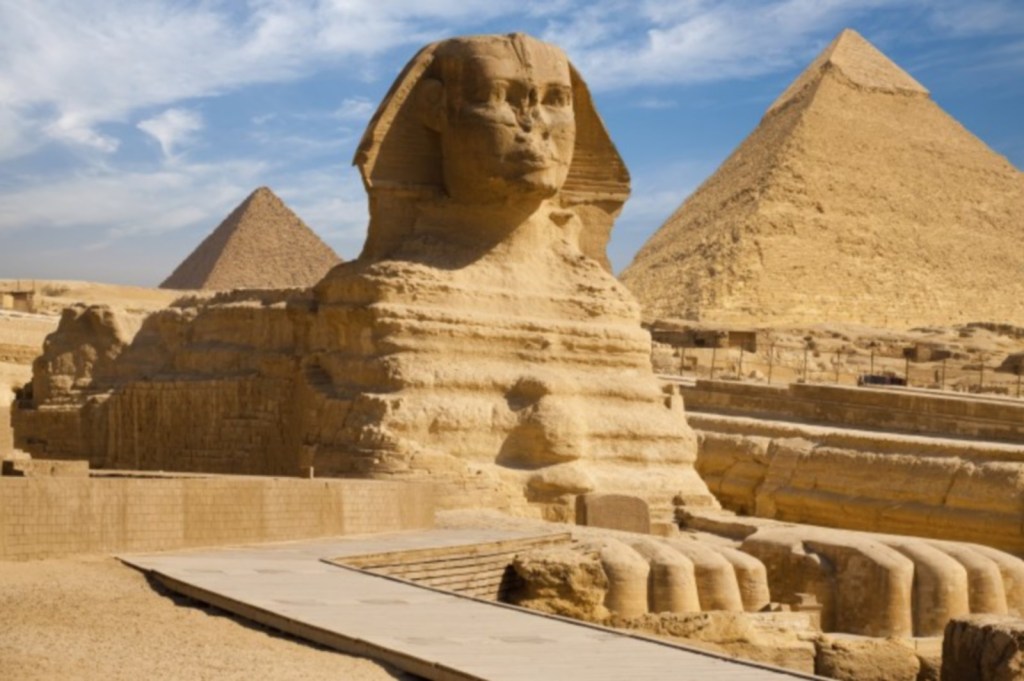
Visiting the most ancient of the Seven Wonders of the World (and the only wonder that survived the ages) should be on every bucket list. For me, it certainly was a dream come true.
Standing in front of those gigantic, and yet so perfect, piles of stone makes you feel so small – both in terms of dimensions and historical context. To think they are more than 5,500 years old is almost incomprehensible. I mean, Machu Picchu, for example, is beautiful, but it’s only 500 years old. Imagine, the Pyramid of Khufu or the Pyramid of Cheops are 10 times older!!!
Obviously, you really have to visit the Sphinx as well. It marks the entrance to an ancient mortuary temple and many myths are told about its construction. Some claim it’s over 10,000 years old, while others believe it was built by the Pharao of the second pyramid, Khafra, around 2,500 BC. As I am no Egyptologist, I stuck to admiring the ancient landmark.
Note: If you want to climb inside the Pyramid, you’ll have to get an extra ticket. It will be quite hot and claustrophobic inside. The light show in the evening is rather mediocre.
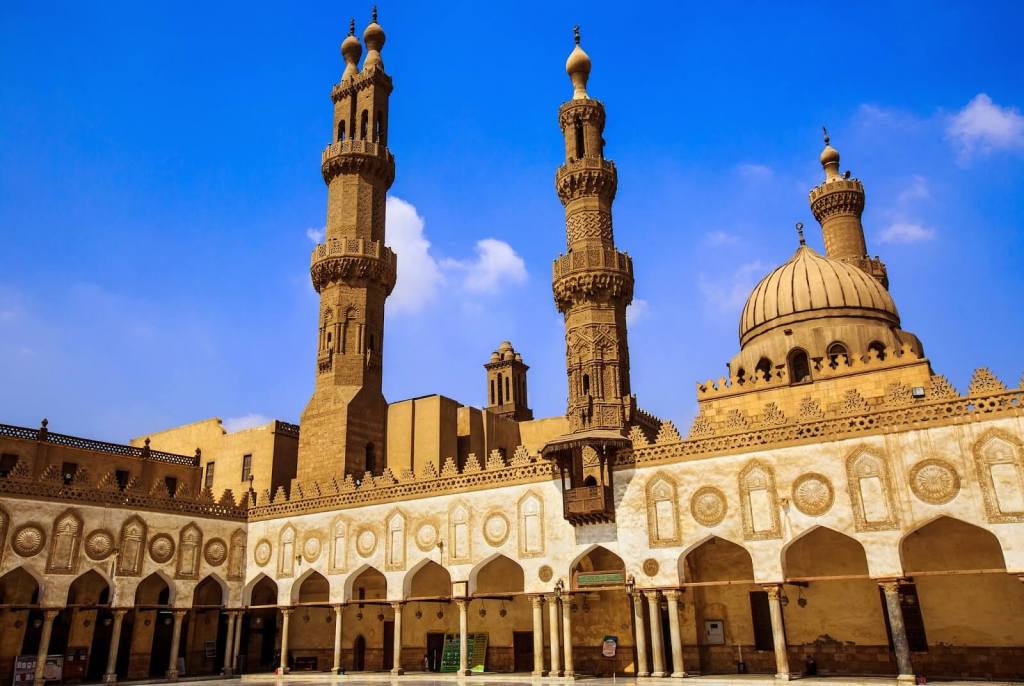
A remarkable establishment in the heart of the city, Al-Azhar Mosque is the most marvellous building which attracts millions of visitors throughout the year. Having built in AD972, It is really old and on of the prime landmarks in the city.
Al-Azhar Mosque is right in the centre of the downtown area and in addition to being a mosque, it is one of the oldest universities in the world. The spectacular landmark has a huge primary gateway allowing visitors to enter inside and explore the stunning architecture of this marvel. The five minarets of the mosque can be clearly seen and felt. Visitors often sit inside and pray in the central hall to get some respite from the outer busy world.
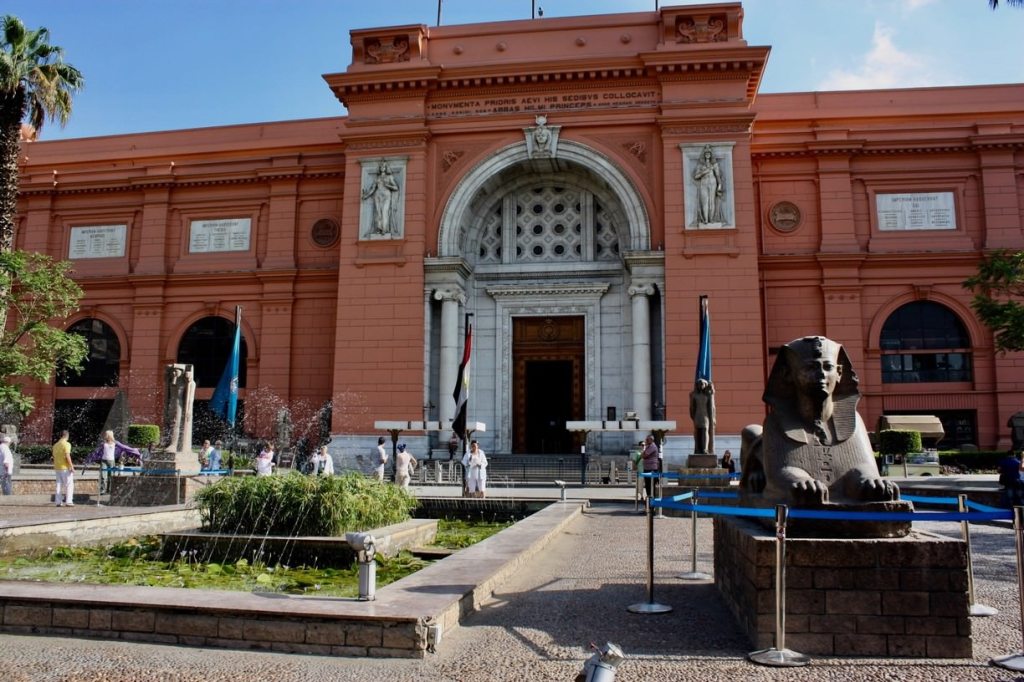
In the centre of Cairo, just outside Tahrir Square, visitors will find the Egyptian Museum of Antiquities (Midan El-Tahrir); one of the many museums in the city that invite people to explore Egypt’s glorious past. Definitely a must-see while in town, the museum houses a unique collection of more than 160,000 pieces of ancient Egyptian history. Take the time to browse through the museum’s chambers, dedicated to some of Egypt’s most prosperous dynasties, and discover what life was like during the reign of the Pharaohs.
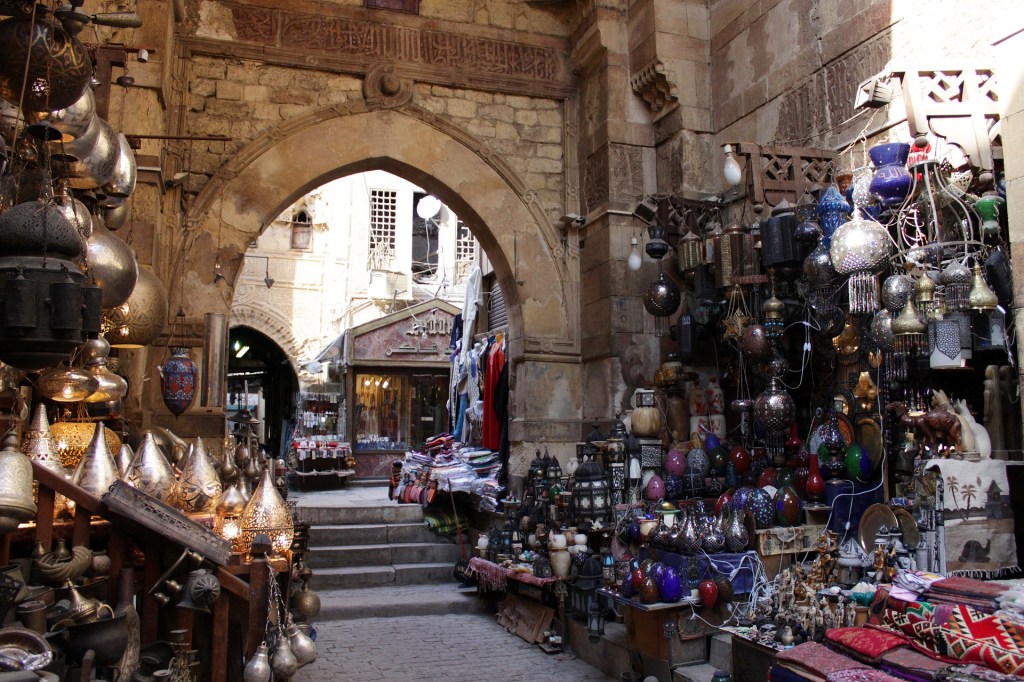
With a history dating back to the 14th century, the Khan Al-Khalili bazaar is Cairo’s signature shopping destination. It’s an intoxicating warren of streets, houses, and merchants selling everything from gold and spices to shisha pipes and toy camels, not to mention the inevitable scarabs, pyramids, and belly-dancer costumes.
Khan Al-Khalili is an essential stop on Old Cairo and Islamic Cairo tours and a focal point of any Cairo shopping tour. Enjoy it with a guide, who can help you navigate the narrow passageways, advise on quality goods, and identify the many historic buildings within the souk. Walking tours typically visit the nearby Sultan Hassan Mosque and Al-Azhar Mosque, while Islamic Cairo tours often include the Citadel of Saladin, the Alabaster Mosque, and the Mosque of Ibn Tulun.
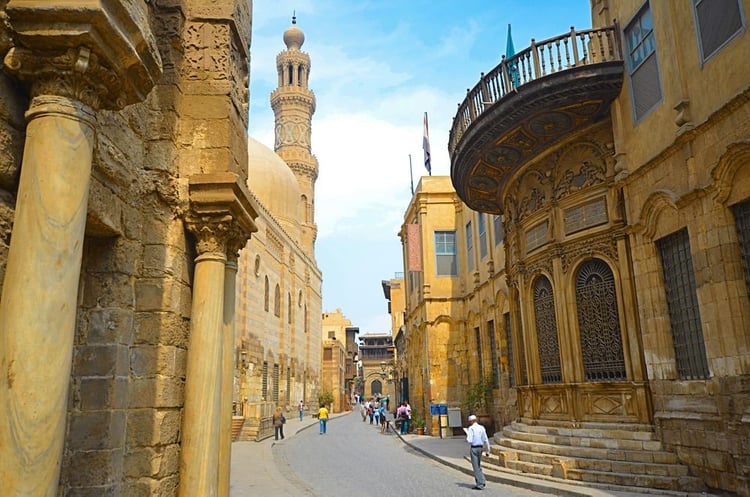
Muizz Street is a pedestrian street located in Islamic Cairo. It’s the oldest street in Cairo and is about 1km long. It has some remarkable medieval mosques and palaces along the way. We loved walking along the cobblestone streets and admiring the beautiful intricate details of every building. It’s a great street to get lost in and we found some cool quiet alleyways for some nice photos. My favourite buildings on this street are Qalawun Complex and Al-Azhar Mosque. Close by are Khan El Khalili marketplaces and El Fishawi Cafe.
Best times to visit: The street gets extremely busy most times of the day. Come on Friday mornings to have the whole street to yourself!
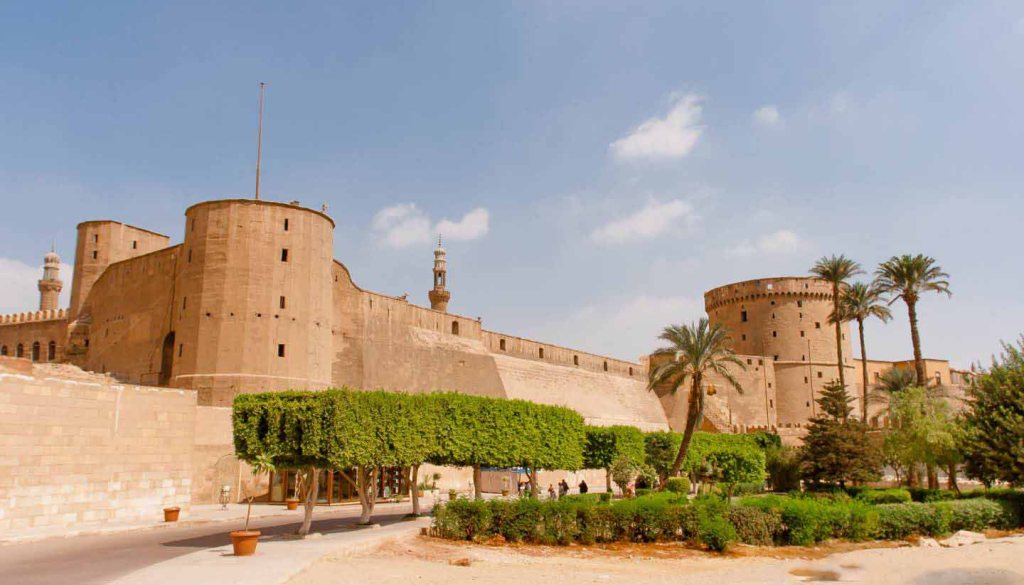
In a commanding location at the foot of the Mokattam Hills, Cairo’s citadel was built by Saladin in 1176. The original structure he laid out has long disappeared except for the eastern outer walls, but a legacy of rulers has made their own additions here.
The Mosque of Muhammad Ali is the most famous monument and the main reason for visiting. Nicknamed the “Alabaster Mosque,” its white stone and tall, disproportionately slender minarets are one of Cairo’s great landmarks. The other big reason to come up here are the views across the city; head to the Gawhara Terrace for the best panorama in town.
Just to the northeast of the Muhammad Ali Mosque is the El-Nasir Mosque, built in 1318-35 by Mohammed el-Nasir. A collection of rather half-hearted museums (the Police Museum, National Military Museum, and Carriage Museum) take up some of the other buildings on site and are more worthwhile viewing for the architecture of the actual buildings rather than the exhibits themselves.
You can walk to the citadel area from Bab Zuweila, if you’re feeling energetic, by heading along Khayyamiyya Street. The walk takes about 30 minutes.
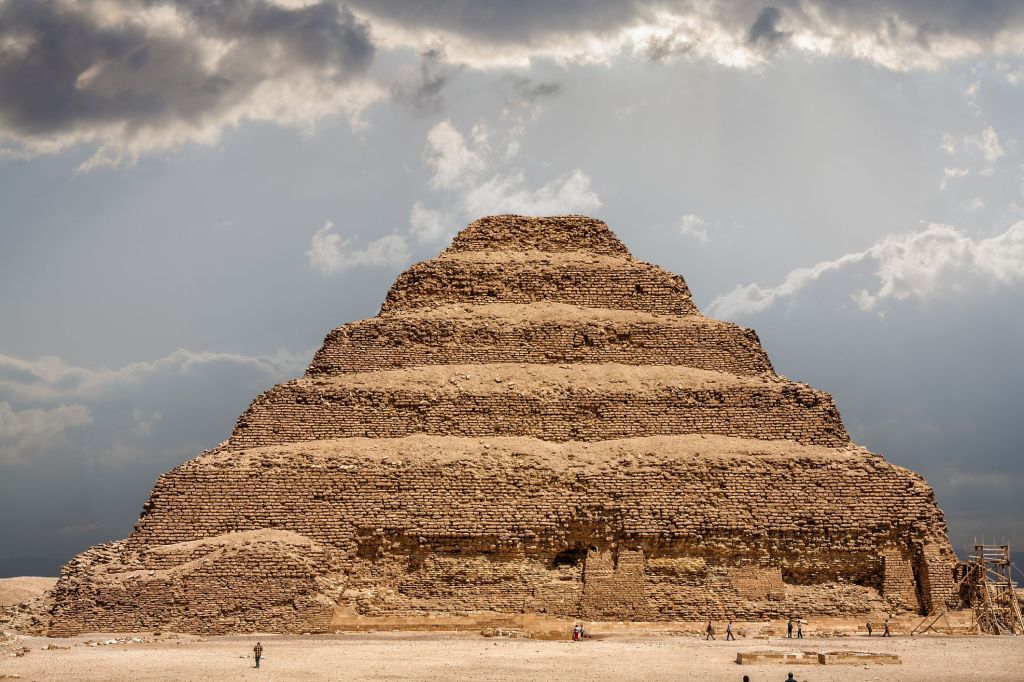
The Abusir Pyramids Complex rarely gets the recognition it deserves, and in fact, many guide books and tour brochures don’t even mention it. It truth however, it’s a places of great historical significance since it was once the final resting ground for many pharaohs; nobles and other important officials, and particularly for those who lived during the time of the 5th Dynasty in Egypt’s Old Kingdom era.
The Abusir complex, sometimes called Abu Sir, is an extensive royal necropolis located relatively close to Cairo. It served as an Elite Cemetry for the ancient city of Memphis, as did the Giza necropolis; Dahshur necropolis and the Saqqara necropolis. Technically speaking, it is part of one giant pyramid field that encompasses all the various pyramid complexes in the area surround modern day Cairo.
Because of the sheer size of most pyramids, the “elite” status associated with the Giza necropolis, the area was soon full of pyramids, and new burial grounds had to be found. The Abusir complex is just one such burial ground.
With a fascinating history that reaches back to the dawn of civilization, Egypt is considered the oldest travel destination on earth. The African nation’s awe-inspiring temples and pyramids have captured the imagination of travelers for thousands of years. Although most people come to Egypt to view its ancient monuments, natural attractions beckon travelers too. The Red Sea coast is known for its coral reefs and beach resorts. A trek through the Sahara can lead visitors to refreshing freshwater spring oasis.
Outside the hustle and bustle of Cairo, there are plenty of places where life unfolds at a slower pace. You’ll find pristine shorelines, top-notch spas, comfortable resorts, and opportunities to enjoy water sports. Here are the top places to visit in Egypt if you’re looking to unwind.
Although Cairo, the capital, is a busy over crowded city, it has a lot to give. With Giza city 15 minutes away, you can tour between the two cities to discover more and more about the country. There are many places to visit, but may the most famous are:
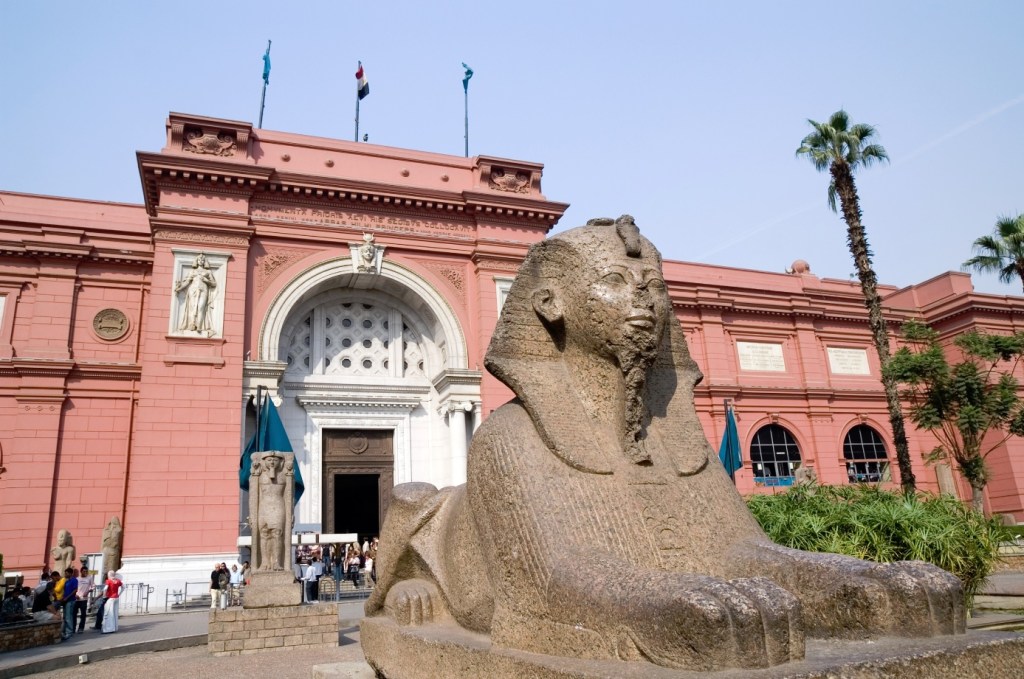
Cairo is located near the mouth of the Nile River delta, built near the ancient capital city of Memphis, modern Cairo is a popular starting point for cruises up the Nile and for explorations of the Pyramids at Giza just outside the city’s limits. At the world-renowned Egyptian Museum of Tahrir Square, visitors can get a close-up view of the treasure of Tutankhamun as well as mummies and other artifacts from Egypt’s ancient past.
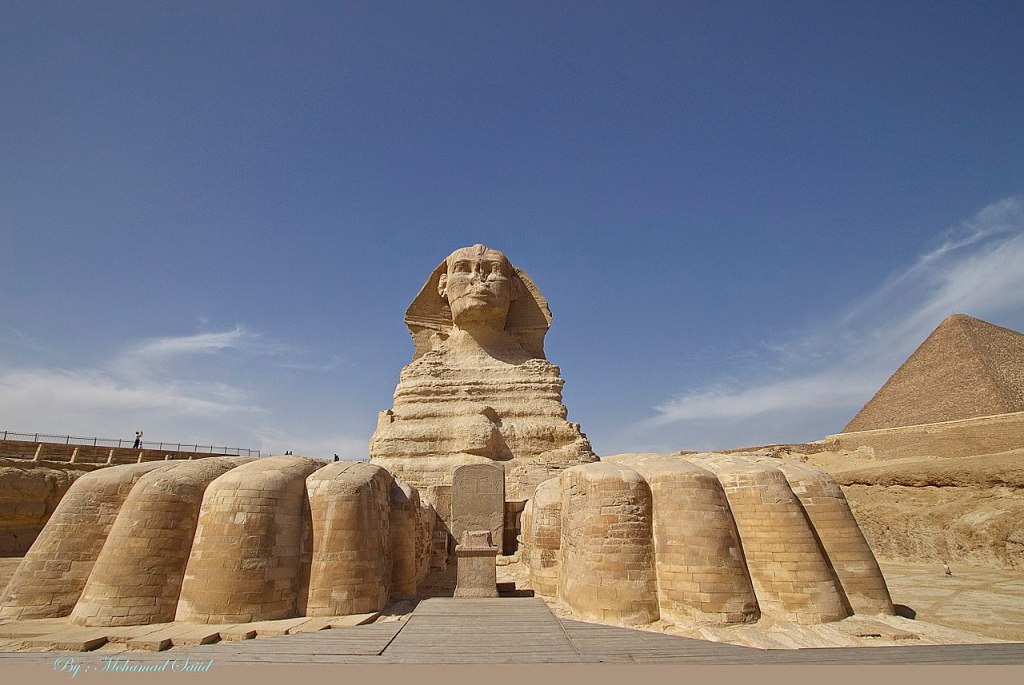
The last surviving of the Seven Wonders of the Ancient World, the Pyramids of Giza are one of the world’s most recognizable landmarks. Built as tombs for the mighty Pharaohs and guarded by the enigmatic Sphinx, Giza’s pyramid complex has awed travelers down through the ages and had archaeologists (and a fair few conspiracy theorists) scratching their heads over how they were built for centuries.
Today, these megalithic memorials to dead kings are still as wondrous sight as they ever were. An undeniable highlight of any Egypt trip, Giza’s pyramids should not be missed.
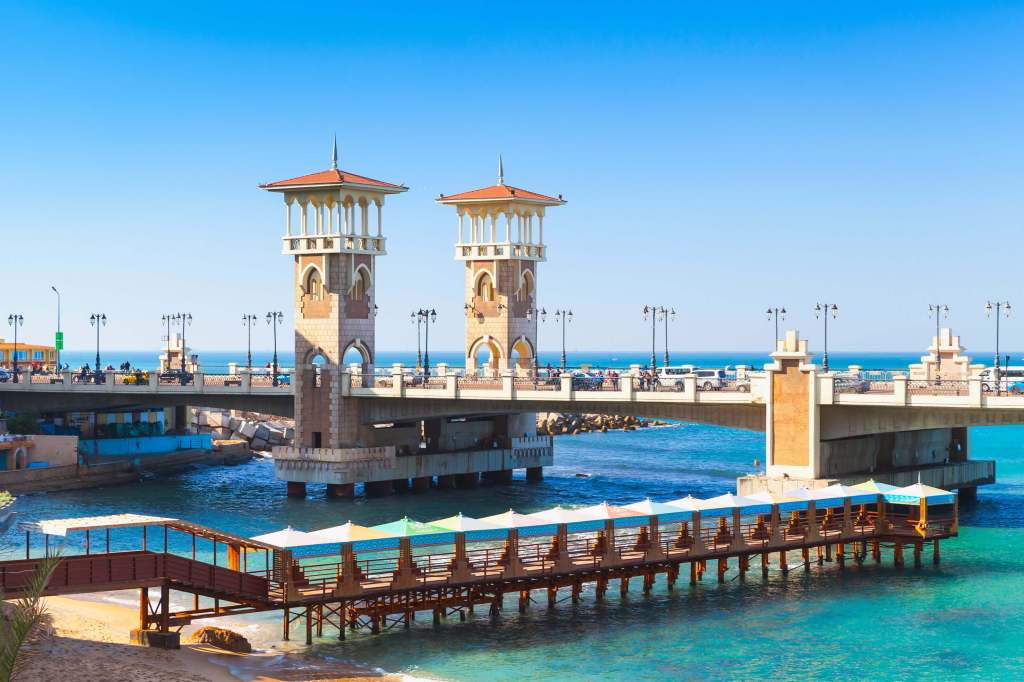
Egypt’s second-largest city feels as Mediterranean and cosmopolitan as Marseille or Athens. Known for its époque buildings and grand squares it was once a very fashionable city. Although it charms have faded a little, it’s still a must-see destination in Egypt. For peace and quiet head for the regal Montazah Palace Gardens or for your history and architecture fix try Citadel of Qaitbay, an impressive looking 15th-century fortress. Alternatively, choose one of the many antique coffee houses and sip coffee and puff on a water pipe while looking out over the Mediterranean sea.
Luxor is a living museum with vast numbers of ancient Egyptian monuments. It is also highly oriented to tourists, and might be thought of in the same regard as a theme park, where the attractions by coincidence are real monuments. Luxor is an enjoyable destination to hit while vacationing in Egypt, where you can explore:
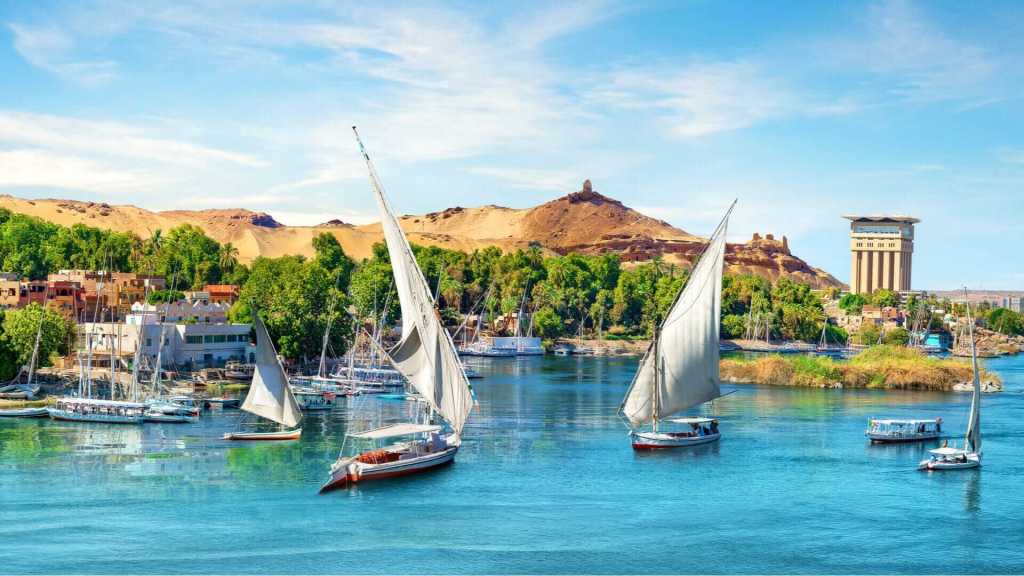
Egypt’s southernmost city, Aswan is a mid-sized city located north of Lake Nasser. Although its own monuments are minor compared to Luxor’s, Aswan is the base for excursions to the temples of Philae and Kabasha and to the Sun Temple of Ramses II at Abu Simbel, to the south. It is also the best starting point for excursions to the temples of Kom Ombo and Edfu, between Aswan and Luxor.
Most famous things to do in Aswan
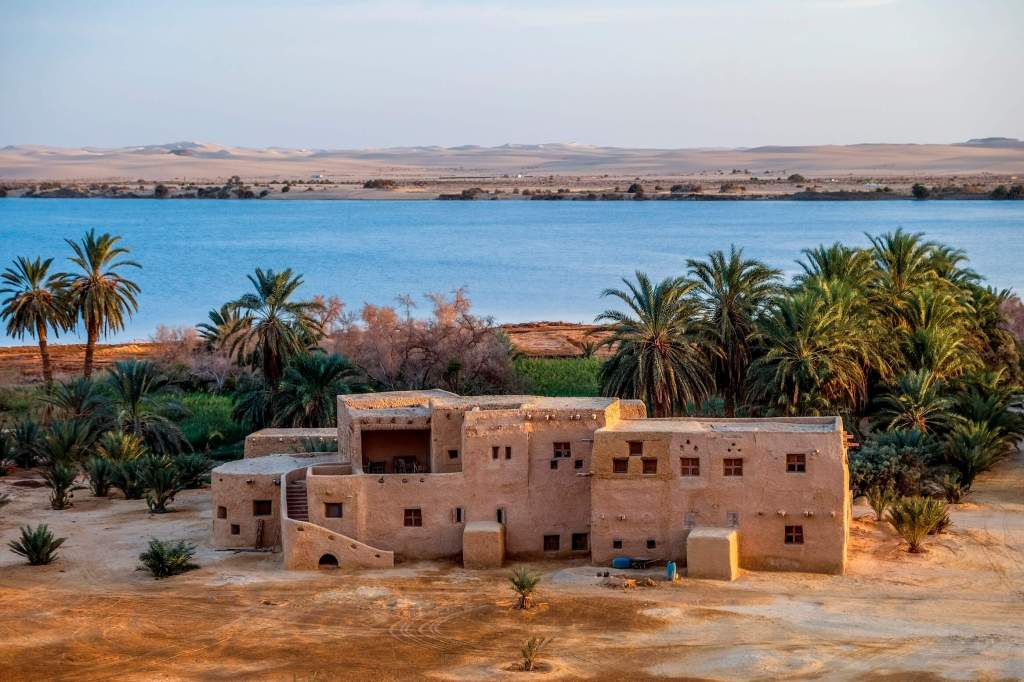
Probably one of the most remote places to visit in Egypt is the Siwa Oasis. It’s considerably hard to reach and not exactly on the most common tourist’s routes, but so worth it. It’s one of my favorite places in Egypt, as it’s still more or less the real deal.
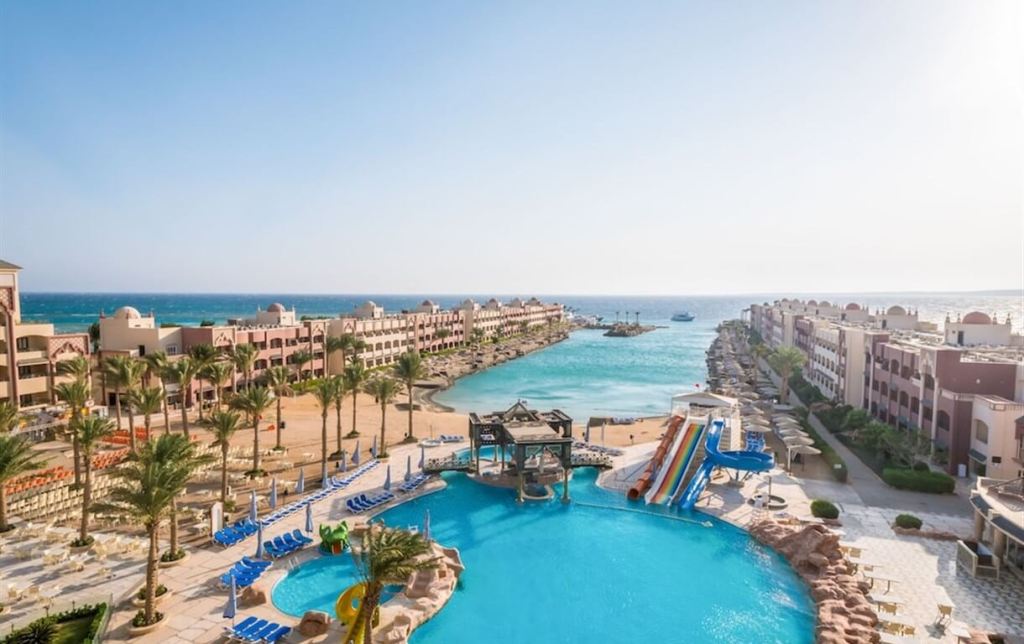
Founded in the early 20th century, the Red Sea resort of Hurghada took on a growth explosion thanks to tourism in the 1980s. The Hurghada of today comprises three main centres and numerous self-contained tourist villages. To the north, lies Ed-Dahar, which hosts more than half of the total local population, and some of Hurghada’s more expensive hotels, restaurants and the tourist bazaar. A couple of kilometres south lies Sigala, perhaps less popular than Ed-Dahar. Still further south is New Hurghada where there are a concentration of up market hotels and restaurants. All of this development has made Hurghada one of Egypt’s most popular resort towns on the Red Sea coast. Hotels and expanded infrastructure provide holidaymakers with excellent aquatic facilities for sail boarding, yachting, deep-sea fishing, SCUBA diving and snorkeling.
Hurghada’s central location provides a gateway to prime offshore reefs, which are some of the finest in the world. Hurghada is also known for its lively nightlife. For retail therapy, the town has plenty of shops selling knock-off bags and tees, snorkelling gear and suchlike. Just outside Hurghada is an ancient Roman quarry called Mons Porphyritis and Port Safarga – a famously windy place and an excellent place for windsurfing.
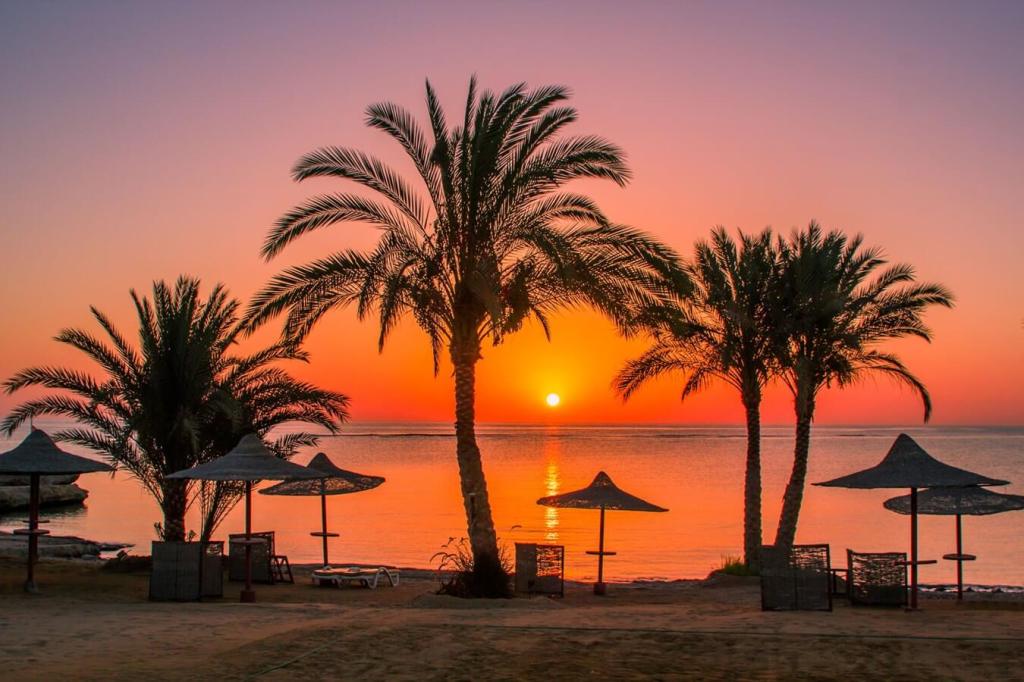
Marsa Alam is where to go when you truly want peace and quiet. This sleepy town has been growing in popularity among tourists lately, but it still makes an excellent beach escape. Go diving or snorkeling in the warm Red Sea waters, or simply relax with a book.
If you’re feeling more ambitious, you can use Marsa Alam as a base from which to visit Egypt’s Eastern Desert and the beautiful Wadi el Gemal National Park. Finally, Marsa Alam is relatively close and well connected to Luxor and the temples at Karnak and Edfu, so you can combine your beach getaway with some historic sightseeing too.
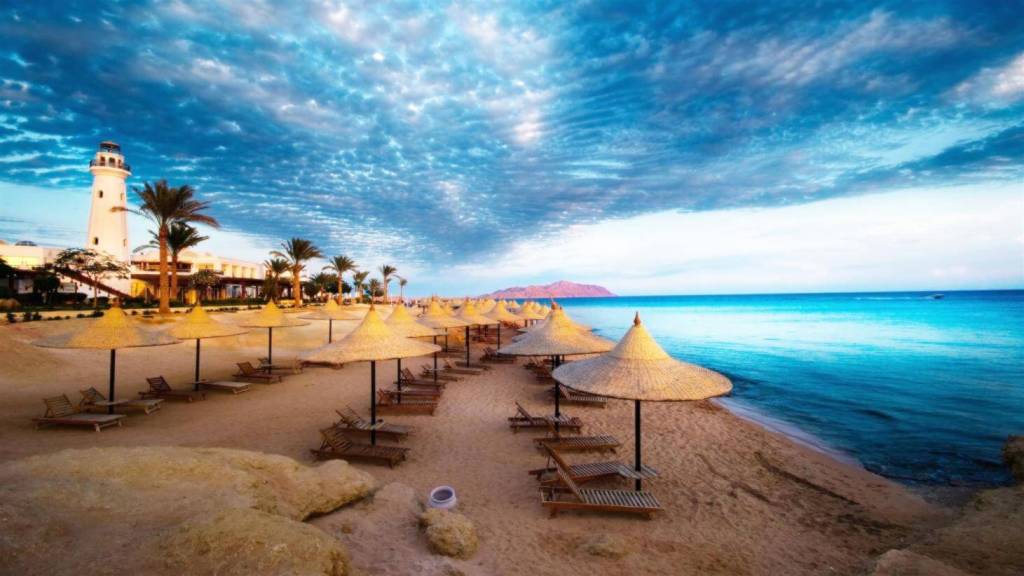
A highlight of many a traveler to Egypt, Sharm el Sheik is a holiday resort filled with luxury hotels, casinos, nightclubs and tourists getting their sun, sea and sand fix. Sharm el-Sheikh holidays are very popular although the real beauty of this area is the Red Sea. The Red Sea has clear azure waters and an incredible amount of exotic fish and coral – which is why is so highly regarded as a diving destination. In fact, it arguably offers some of the best diving and snorkeling experiences in the world. Get hold of some scuba gear (and an experienced instructor) and take a look for yourself – you won’t regret it.
Egypt has a generally high temperature, particularly during the summer months from May to August, when the sun can be very strong and temperatures above 30 degrees Celsius. If you’re visiting Egypt during this time, take plenty of sunscreen and drink lots of water. It’s still fine to visit Egypt at these times of year and the heat is drier than humid.
In Cairo and the Nile Delta region, winter (October to February) can be cooler, especially in the evenings and at night, so take a jacket, long-sleeved tops and trousers. The south remains warm during this time but again, temperatures do drop in the evenings. This is the best time to visit Egypt for sightseeing if you want to avoid the hot sun.
The shoulder months of September, March and April offer pleasant daytime temperatures and are considered the perfect time to enjoy the Red Sea for sunbathing, swimming and snorkelling. Scuba diving can be enjoyed year-round in places such as Hurghada.
However, it depends on the climate you are used to and the area you want to visit. It is personal to everyone depending on their health, country of origin and personal preferences for heat versus cold. Then to add to the mix have you found that when it’s hot you want to be cool and when it cold you want to be warm?

Remember the weather is only outside. Every building is air-conditioned and most ancient sites you will visit are big, with roofs and walls of varying heights providing shade and rooms through which cooling air flows. A well-planned schedule for going outside is the best way to guarantee an enjoyable experience. During the summer months Egyptians stay indoors and sleep during the day as much as possible and the streets come alive with shoppers and people getting together for social life at night-time, especially Cairo where some places such as Khan El Khalili are popular night spots for meeting up with friends for coffee etc. For the tourist who needs to see the monuments this is not possible. But outside of the monuments there is much that the tourist can see and experience at night-time. It is possible to plan a schedule that allows for a nap during the heat of the day and a later night time adventure – a good way to get the most out of your time.
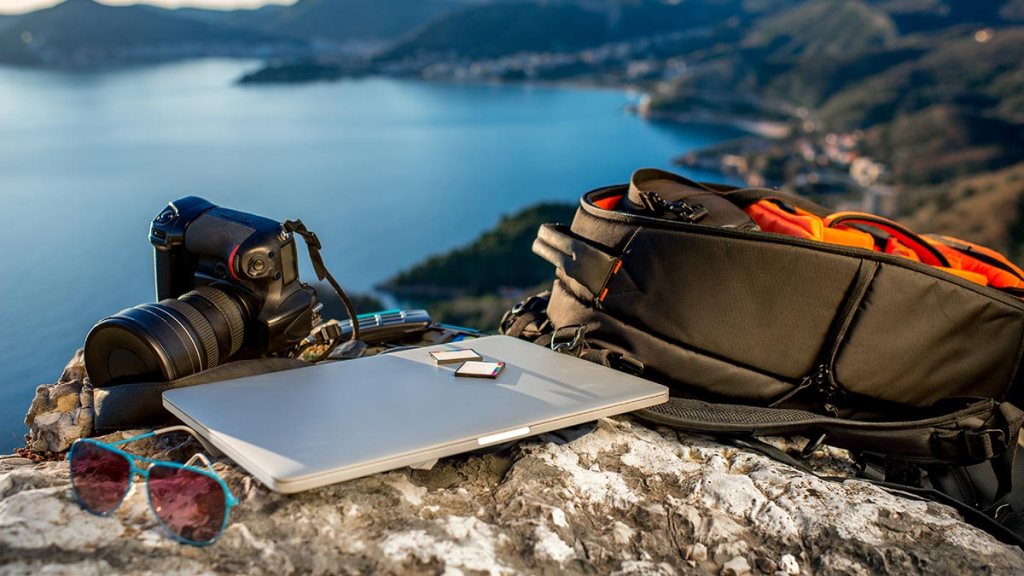
Put some thought into leaving the handbag at home in favour of a nice, lightweight, carry-all bag with secure closure mechanism, which you take everywhere with you during the day. It should be big enough to hold your drinking water (small bottles easiest), money, camera, phone, sun-screen and sun-glasses when you take them off (be surprised how many lose them).
It’s better to leave makeup at the hotel, as it could melt by the time you get indoors again.
Use a water spritzer instead of a hand-held fan to cool your face. Using a fan to cool your face makes your brain believe you are cold therefore your body responds by turning up the heat – try it. Instead carry a little bottle with a spray top – an empty, well-washed out perfume bottle which you can keep refilling with water is the best idea. Giving your face a fine spray of water is refreshing and also beneficial to the skin in the dry heat.
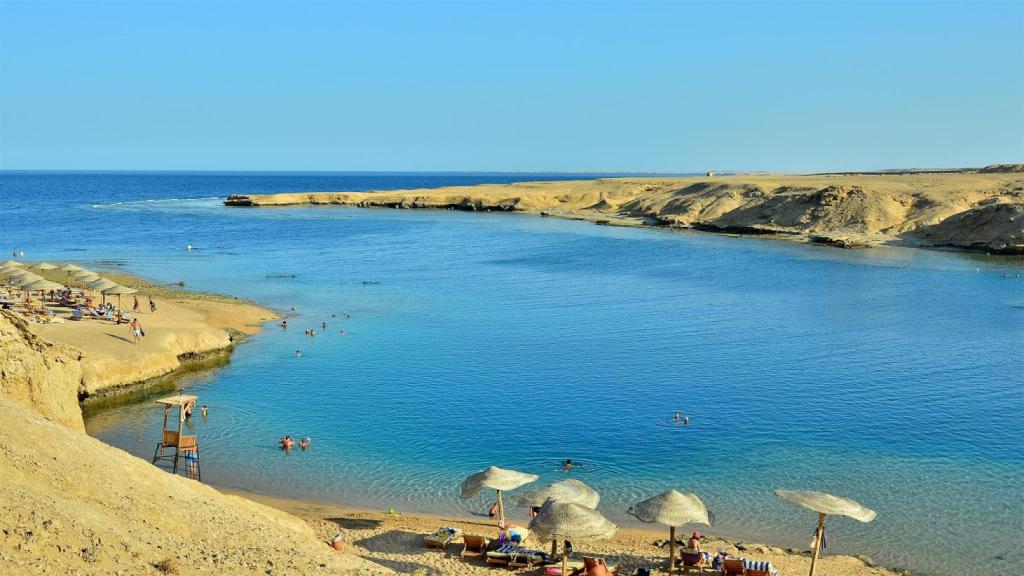
Egypt is quite the large country (390,000 square miles) and it’s probably no big surprise the climate varies a bit from region to region. As you will probably travel around a bit (read my perfect 14 days Egypt itinerary for some inspiration), it pays off to look at the differences.
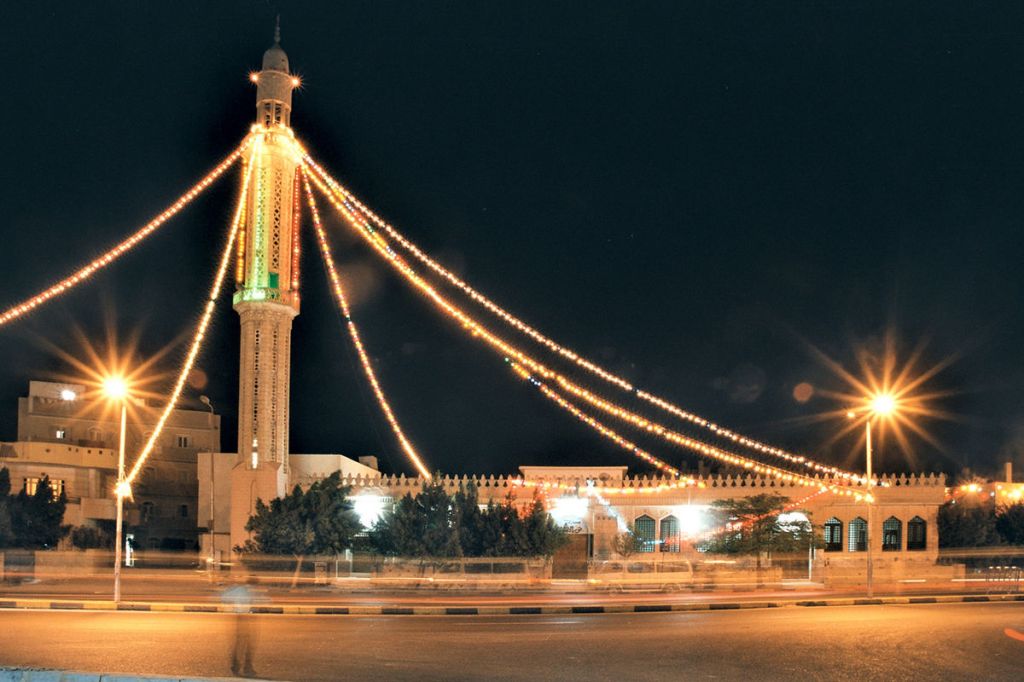
It is known all around the world that Ramadan is a holy month for Muslims when they don’t eat during the daytime. Most of the cafés and restaurants are closed during that part of the year in Egypt except for the touristic sites, hotels, and restaurants. At the end of Ramadan, there are many festivals and celebrations. You can enjoy it through witnessing the Egyptian celebration with Eid El-Fitr and the festivals of all the major shops and restaurants in different areas.
After this occasion, there is another outstanding eid, which is Eid El-Adha. So every year, Muslims all around the world celebrate this occasion in a splendid 4 days celebration.
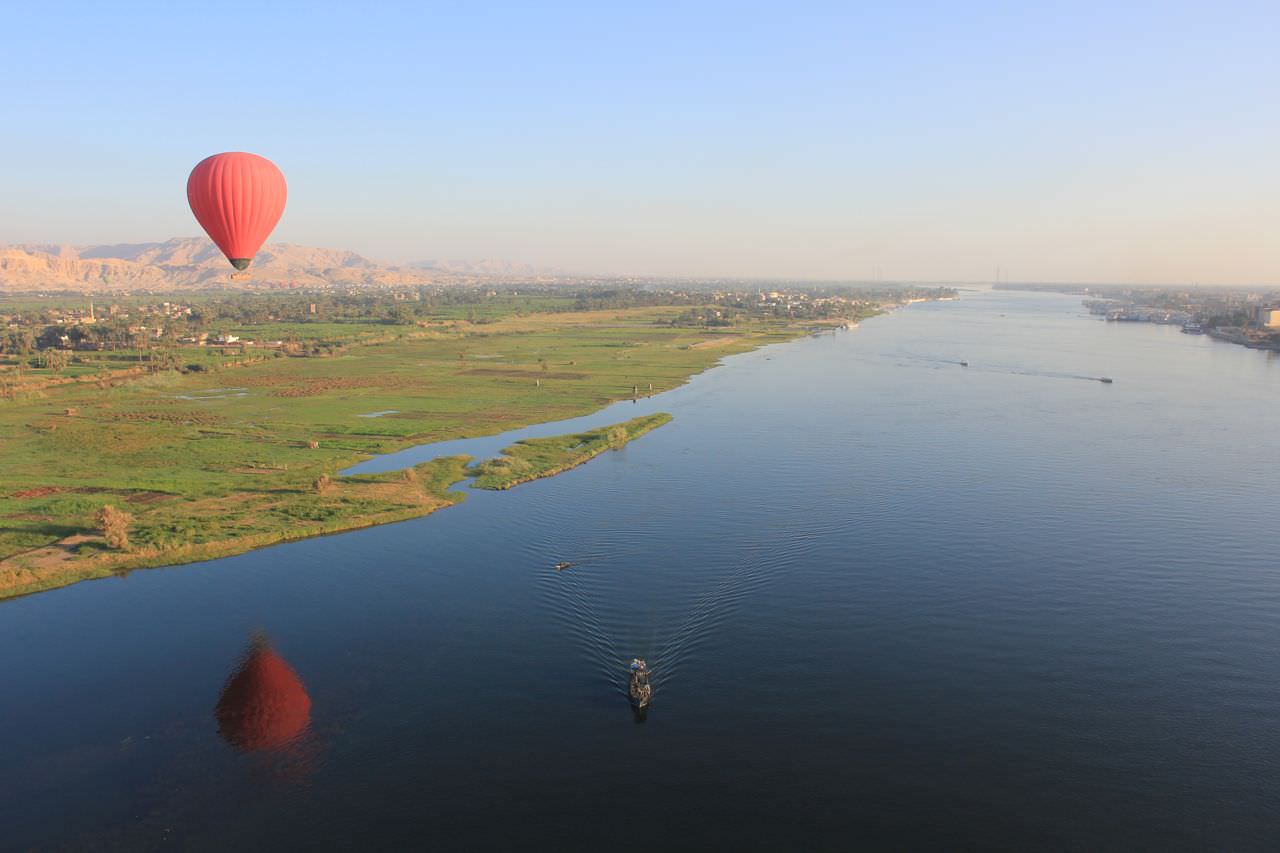
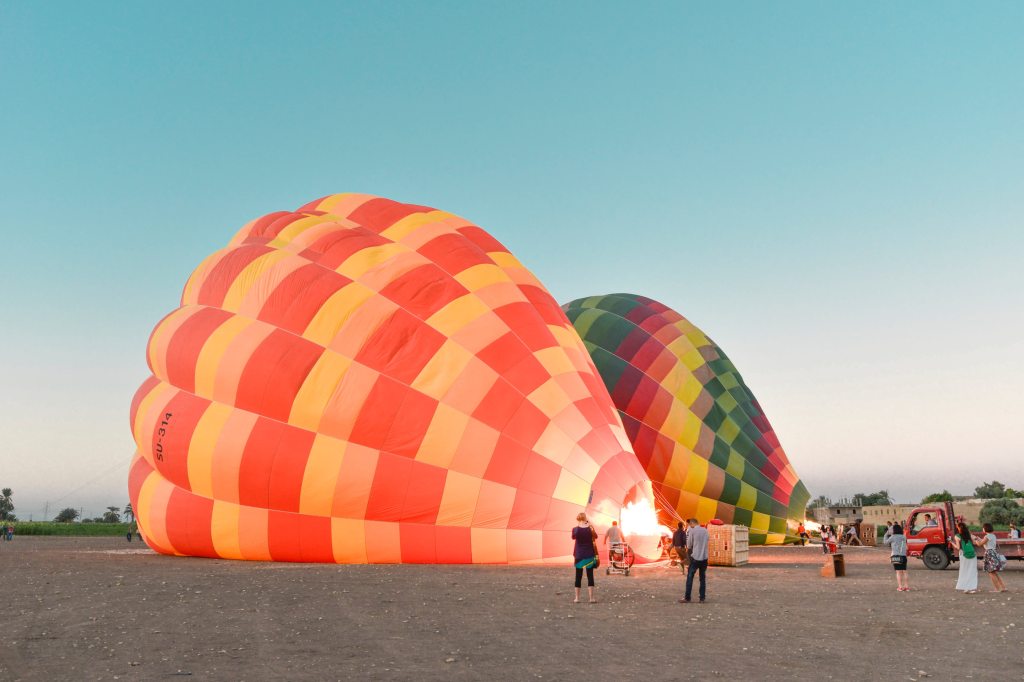
Sail high over the famous monuments of Luxor on a sunrise hot air balloon ride. You’ll get unmatched aerial views and photo ops as your guide provides insightful narrative. Landmarks include Queen Hatshepsut’s Temple and Karnak, among other important structures.
A hot air balloon is an incredible way to see the “world’s largest open air museum.
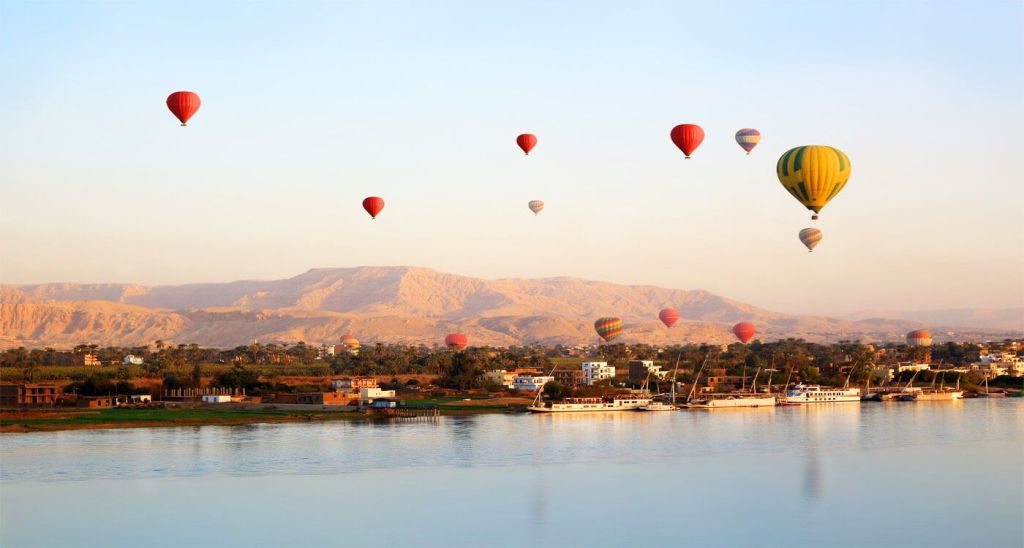
Hundreds of people take to the skies each morning at sunrise in Luxor to experience an air balloon flight and it’s something I would encourage you to try. Egypt is one of the cheapest countries in the world to fly in one and so it won’t break the bank in any budget.
An early pickup at your hotel will take you to the balloon in the West Bank. you will be transferred to marine to take the motor boat to the west bank, then you will be transferred to the take off area where you are going to start your balloon ride in the sky of Luxor.
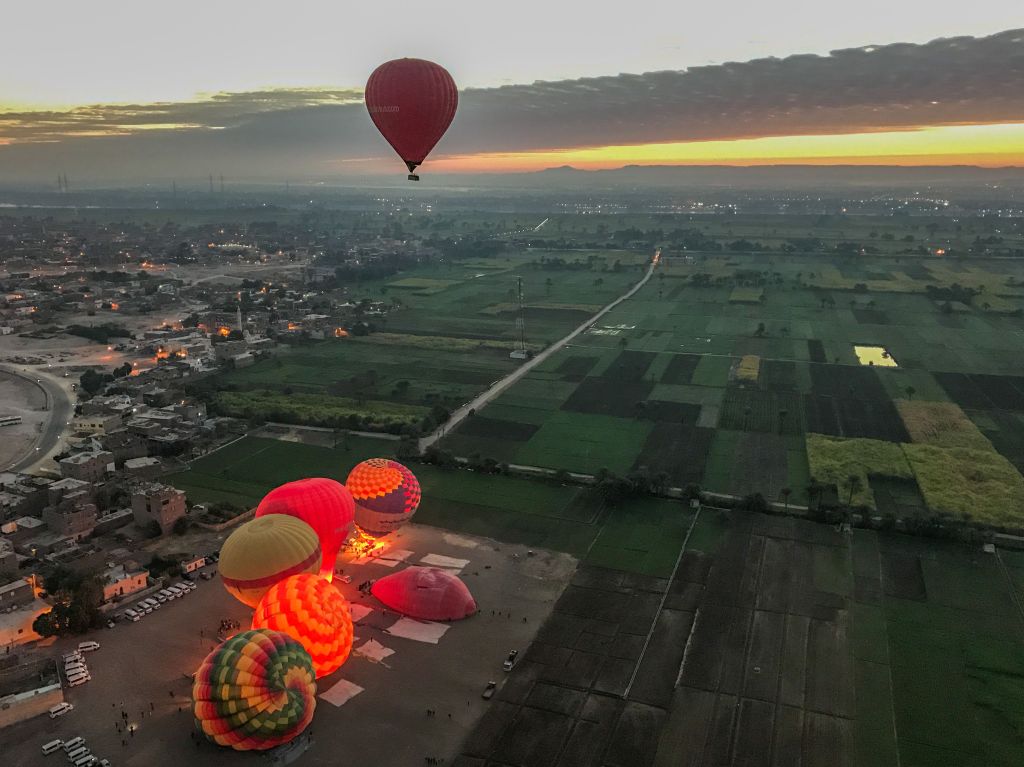
Your day starts early at 3:30 am, when you and your group get picked up from your hotel in a van and down to the Nile River to join a quick ferry ride over to the West Bank of the river.
Once you’ve reached the take off point, you will see all these beautiful balloons lit up waiting to take flight.
You will hear the loud noise of the burners blasting hot air into the half inflated balloons. The noise screams across the ground each time the ground crew pulled the cord to add more air to each balloon. The noise is like a jet engine going on and off every few seconds.
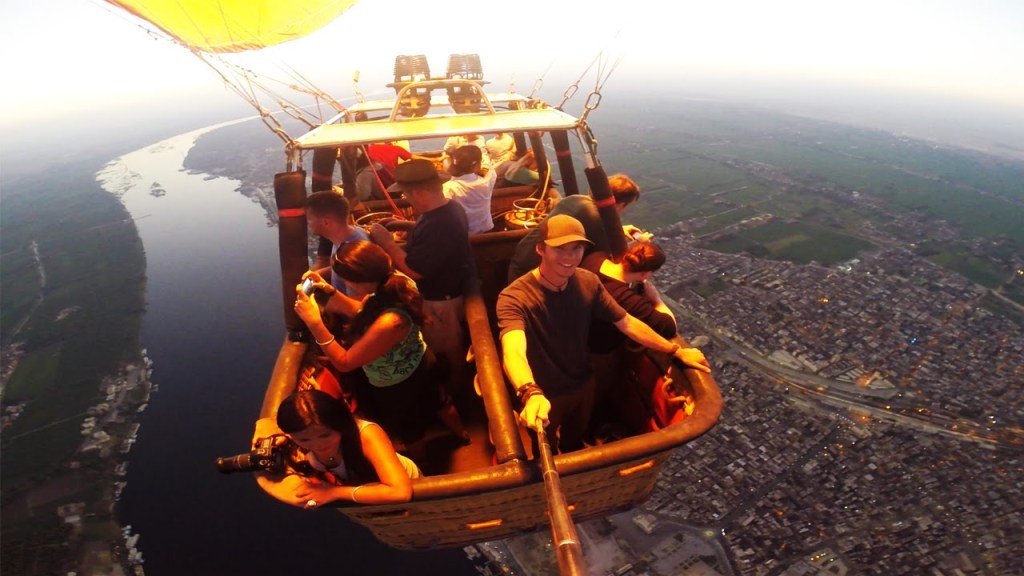
There is plenty of room to take photographs and feel comfortable during the one hour flight. However, there’s no changing spots around while the balloon is in the air, so be sure to pick your spot wisely. In some spots you could feel the heat of the burners each time the pilot pulled on his cord while standing.
As the sun rose up, the colours of the Theban hills changes, and you could see all sorts of ancient monuments and the majestic Nile river in the distance. Also, you will see the incredible patchwork blanket of local farm land, stacked houses and friendly people waving at you below.
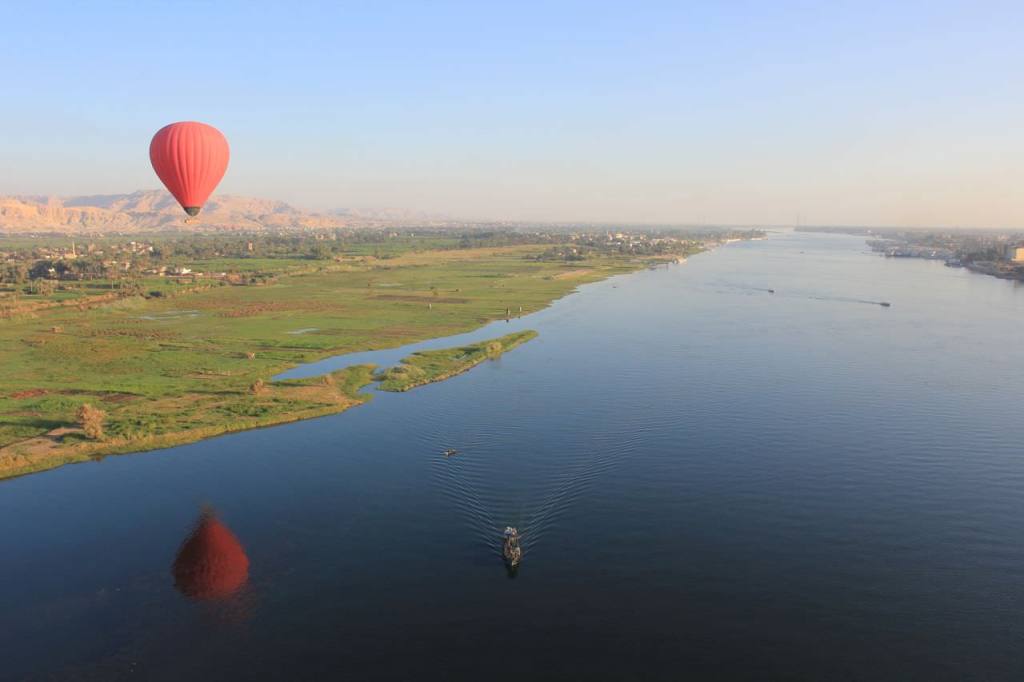
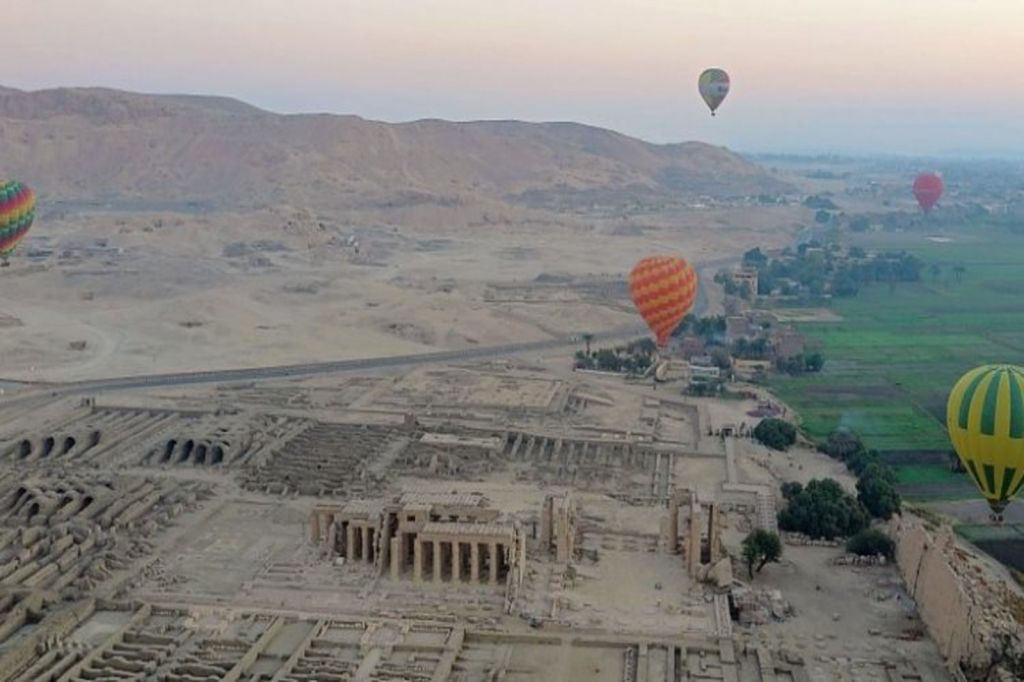
Enjoy the splendours of the ancient historical sights of Luxor from the air. See this spectacular landscape from the unique viewpoint that only hot air ballooning can provide. Glide majestically over the temples and burial grounds of the Pharaohs and allow history to come to life before your eyes.
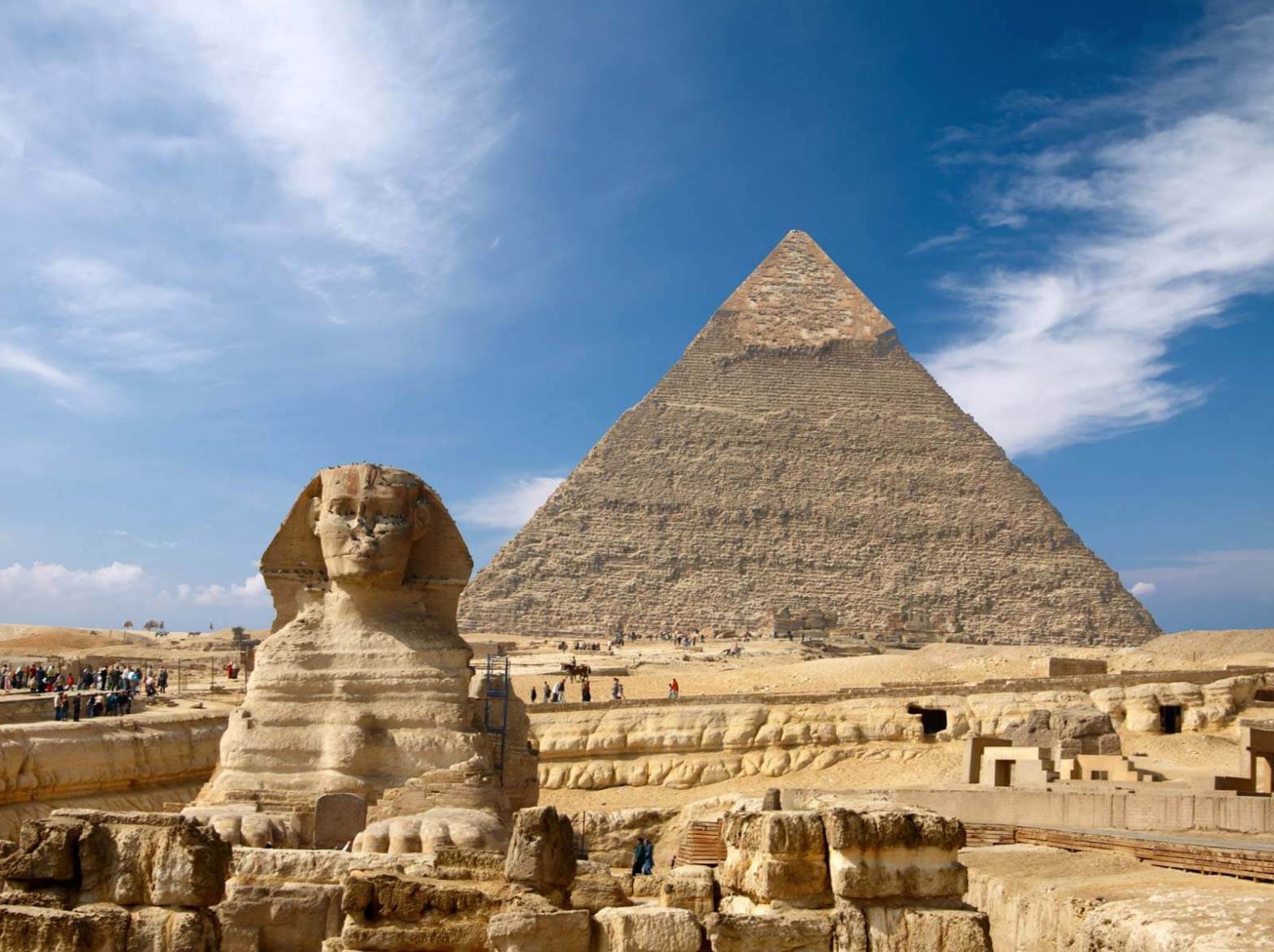
Traveling to Cairo without seeing the Great Pyramids of Giza and infamous Sphinx is like traveling to Paris without making a stop at the Eiffel Tower.
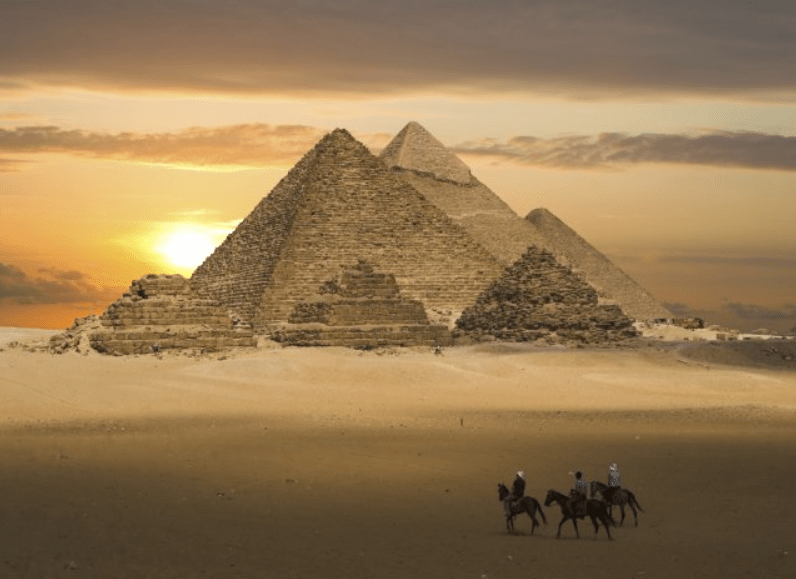
On the Giza plateau, the Great Pyramids and the Sphinx date back over 3,000 years. While there are actually over 100 pyramids in Egypt, the Pyramids of Giza are by far the most famous and are the last of the original Seven Wonders of the World. If you choose to go on a guided tour, your qualified Egyptologist guide will provide a fascinating introduction to each of the three pyramids. You can enter one of the pyramids, take a photo of the three pyramids rising from the sands, with the Cairo skyline in the background. A short drive to the city side of the plateau finds you standing at the feet of the Sphinx, for thousands of years the enigmatic symbol of Egypt. The Sphinx has the body of a lion and the head of a king, and is surrounded in mystery, including the unanswered questions: who built it and why.
What distinguishes the Pyramids from the six other wonders is that, despite the fact that they are thousands of years older than any other wonder, they are the only ones still in existence. Not only do they still exist, along with the most enigmatic giant statue ever carved, but they continue to be a subject of endless debate about their construction and real purpose. I think that anyone who has ever laid eyes on a picture of the Pyramids and Sphinx must say to himself, “I have to go there.” Certainly I did.
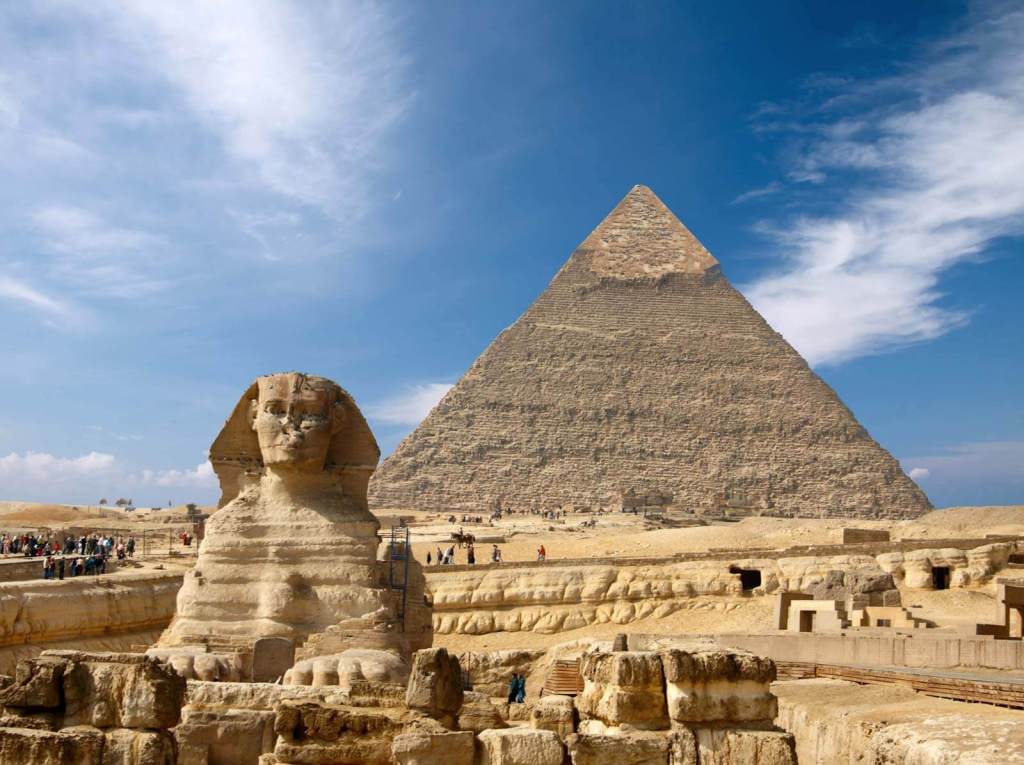
The easiest way to get to the Pyramids is taking the Uber, you will need a local SIM card to do it, which you can get at the airport after arriving).
Alternatively, you can take the metro to Giza station that is located some 5 km away from the Pyramids. From there you can catch a minibus that goes along the main road and will take you close to the Pyramids. You still will have to walk a bit to the entrance though.
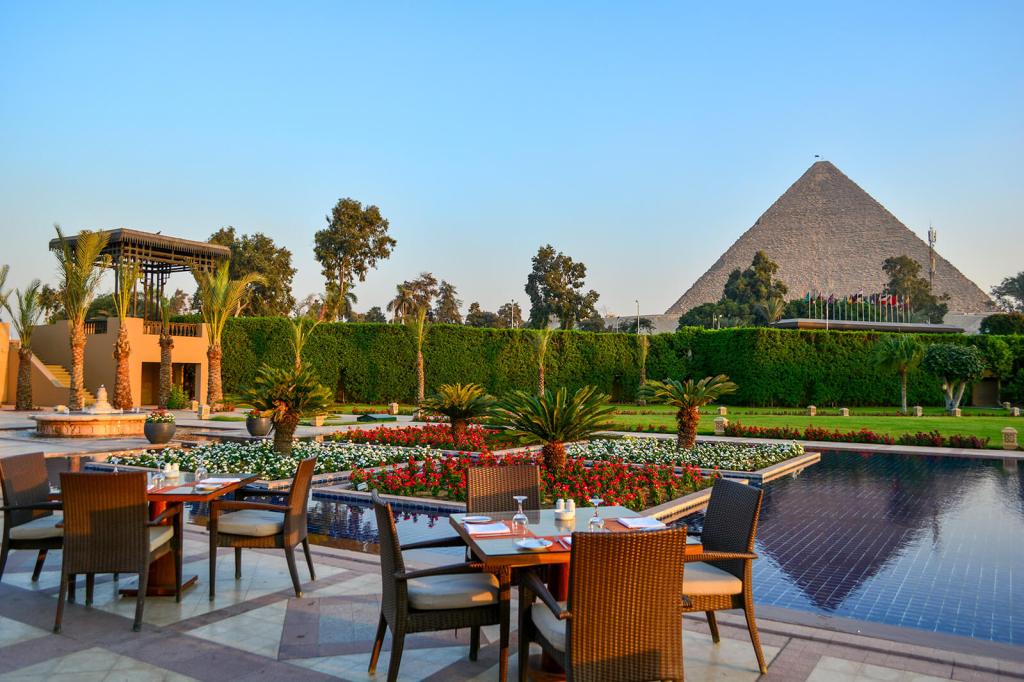
Staying at the proper hotel can make or break a visit to the Pyramids. Sometimes it’s almost as much about returning to a tranquil oasis after visiting a famous place than it is about the visit itself.
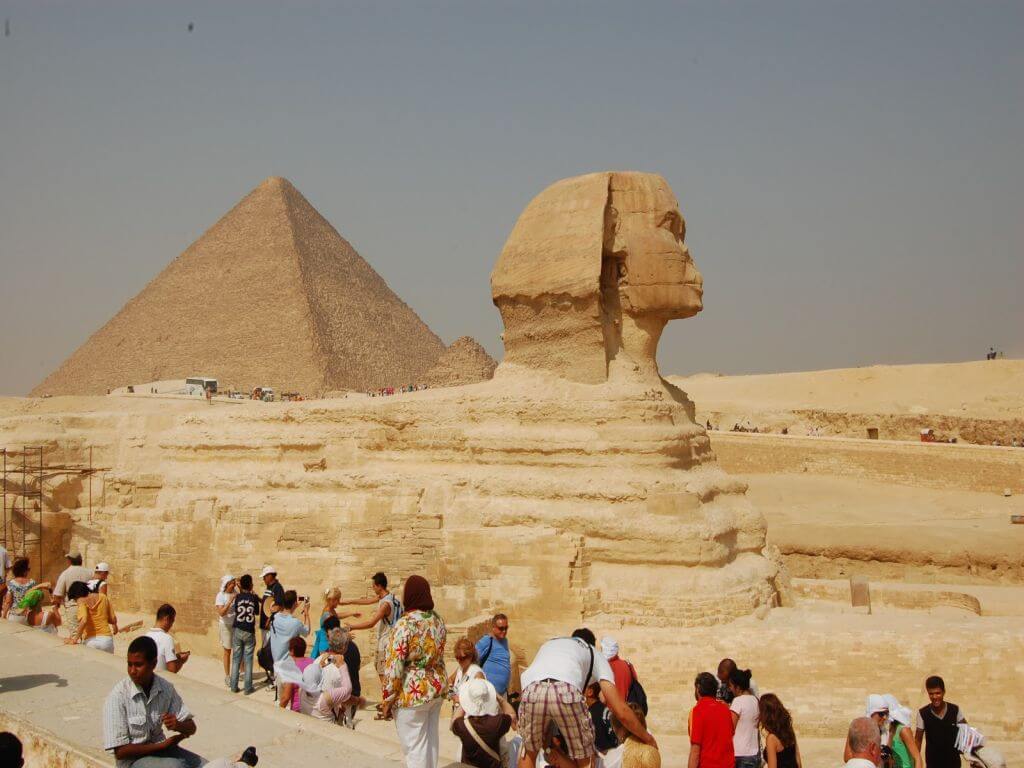
While you might think that with the drastic downturn in western visitors there wouldn’t be a lot of people visiting the Pyramids and Sphinx, you would be wrong. The Chinese have not been deterred by security concerns and now make up the vast majority of foreign visitors. Most of the times you will find groups as large as 50 or 60, however, the site is so large that it can easily accommodate a great number of visitors without seeming to be overcrowded.
What can make the difference is if it is an Egyptian holiday or non-school day in which case there may well be thousands of Egyptians on site as well as the foreign visitors.
The actual site is huge and very few people tour it entirely on foot. That is why there are dozens of Egyptian men on site hawking donkey carts and camels for those who thought they could do it on foot. Typically a vehicle will drop you off at the ticket office which is close to the Great Pyramid and then pick you up to transport you to the pyramids of Khafre and Menakaure. After that you are transported to what is referred to the viewing area where you can get great pictures of all three pyramids. Finally you will get back in and drive a fair distance to the Sphinx. After viewing the Sphinx you exit the grounds nearby, not where you came in. This exit can be absolute pandemonium with a combination of cars, donkey carts, camels, tuk tuks and pedestrians. Having an experienced driver navigate you through this back to your hotel is worth the price alone.
On the other hand, going without a guide you will be besieged with offers to guide before you even get close to the ticket stalls, they will plague you until you give in and hire one. You will almost certainly get ripped off by some guy who has very poor English, is not particularly knowledgable about the Pyramids and is most interested in getting you to buy some crappy Chinese made souvenirs at exorbitant prices.
If you visit the pyramids without a guide, ask your taxi driver to take you to the vehicle entrance rather than the pedestrian entrance near the Sphinx. The ride will be a bit longer, but there were incredible numbers of hawkers and people trying to sell products at the pedestrian entrance. There are far fewer people at the vehicle entrance, and you can enter on foot from there. You can typically hire a guide (there were many available) or secure a camel ride if that is your intent as well. We entered at the vehicle entrance and found it to be much quieter than the pedestrian entrance, which we drove by on our way back from Giza.
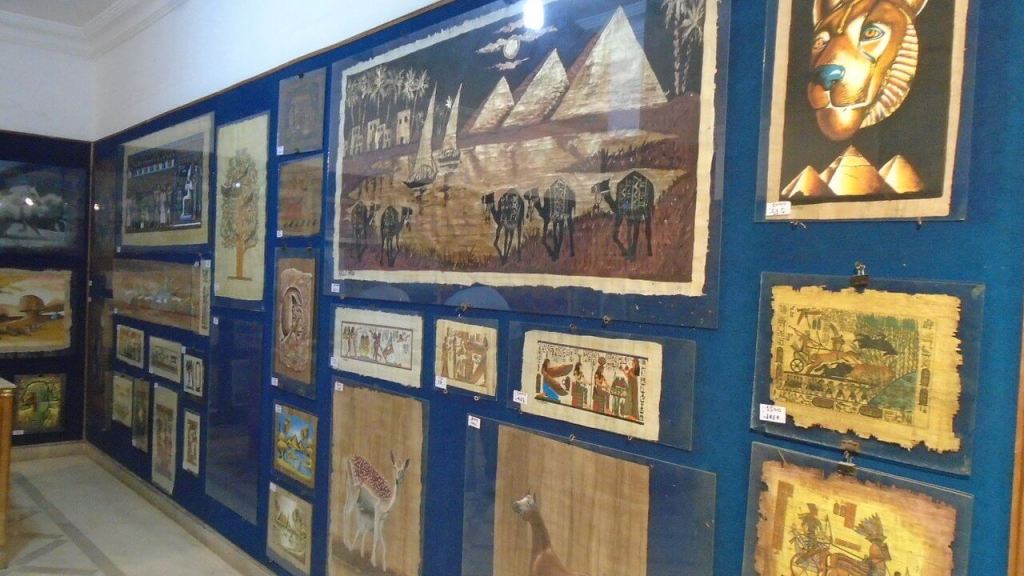
Once you have finished your visit to the Pyramids and Sphinx you exit into a crowded street with so-called Perfume and Papyrus “museums” everywhere.
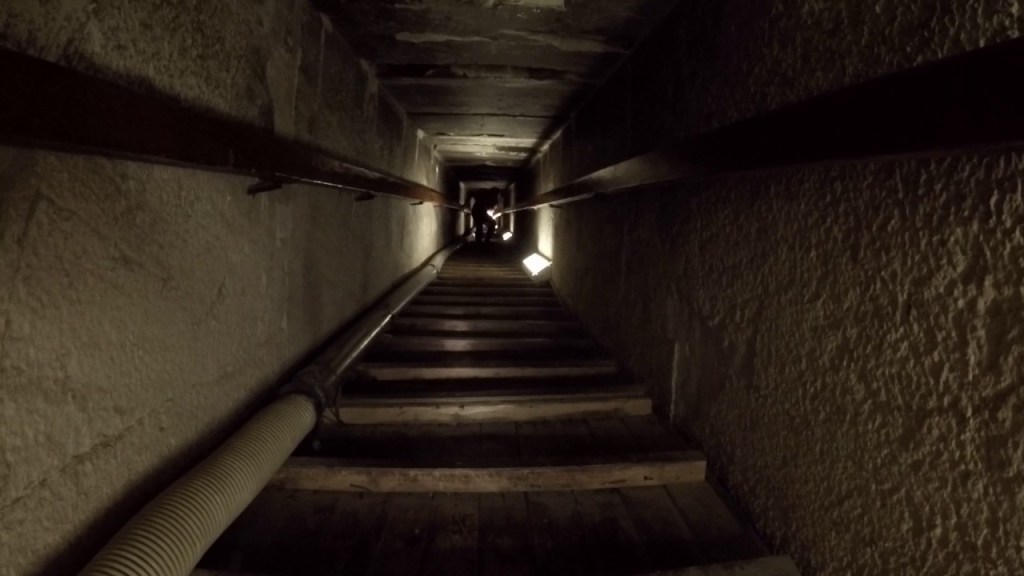
Yes, you can. But it’s not as exciting as getting inside the tombs at the Valley of the Kings. Most guides will tell you that you need to pay extra to get inside the pyramids, but it’s only partially true. There is one pyramid that’s included in your ticket price.
There are three pyramids of the Queens of Cheops and you can go inside the one in the middle for free. Khufu’s Pyramid costs another 400 EGP and Khafree’s Pyramid costs 100 EGP, or 500 EGP for a combined ticket but trust me – they all look the same inside. Once you’ve been to the one you’ve been to all. The inside of the pyramid isn’t the same as Tombs in the Valley of the Kings in Luxor where you want to see every single one of them.
There are no mummies inside since they were all moved to the Egyptian Museum that I highly recommend visiting as well.
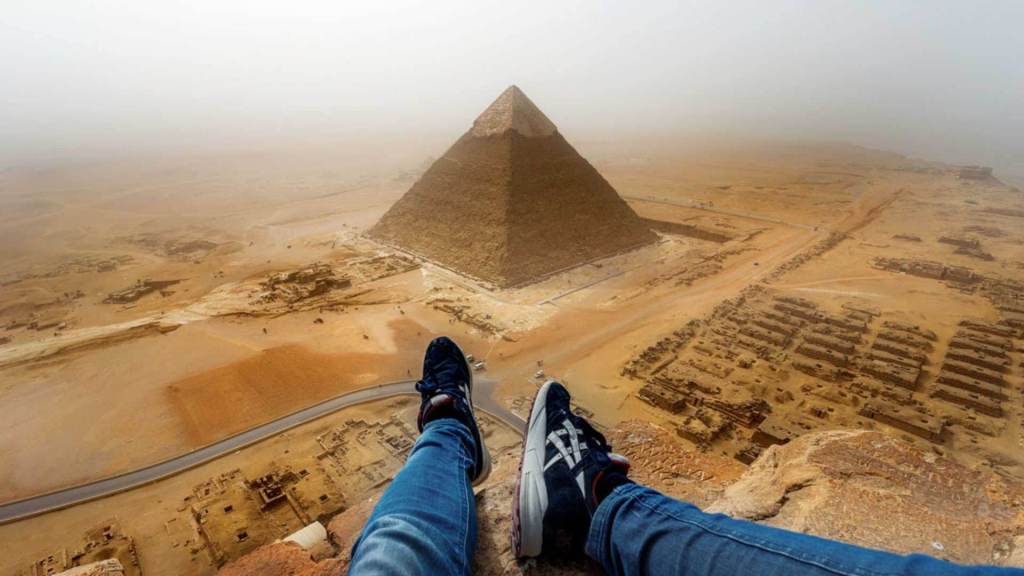
Officially no. In reality, some climbs the Pyramids when there is no one watching, up there the view was awesome.
In the past people were able to climb the pyramids freely. Now climbing to the top of Khufu is illegal and they don’t issue permits, and if you do you might even get arrested.
Egypt might be known for its pyramids and ancient artifacts, but its burgeoning beach resorts are what have been bringing in the tourists in recent years. Famous for fantastic diving opportunities and bordered by the wilds of the Red Sea and the relaxation of the Mediterranean. The stunning coastline along the Red Sea is a magnet for sun-worshippers looking for year-round sunshine, whilst the incredible underwater wilds of the reefs attract keen divers from all over the world to sample Egypt’s coastline. Here are the best beaches in Egypt, so you can discover for yourself the luxury and natural beauty of this amazing country.
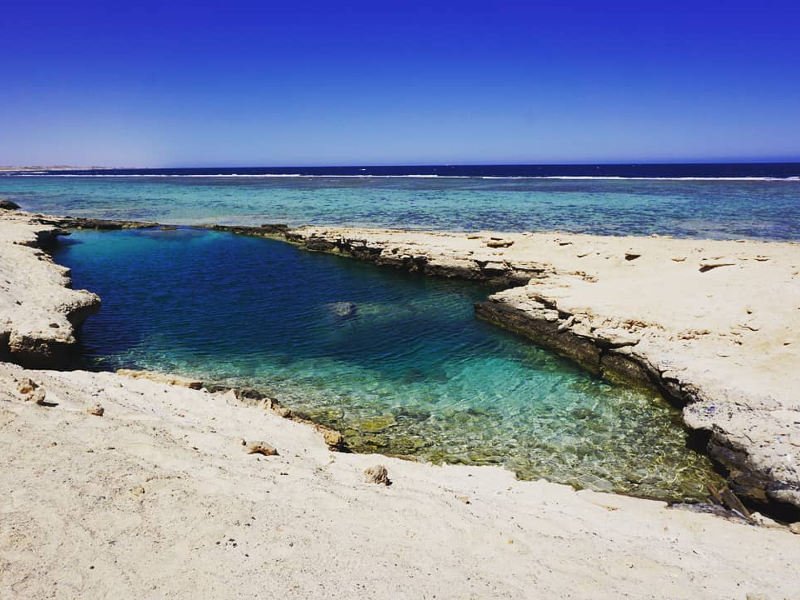
What makes it unique is not only that very few people know about it, but also that it’s one of the few places in Egypt that has large mangrove trees growing in the salt water as well as 140 other types of plants.
If you’re tired of tanning on the beach, go for a hike in the huge, breathtaking protected area and try to spot some rare birds.
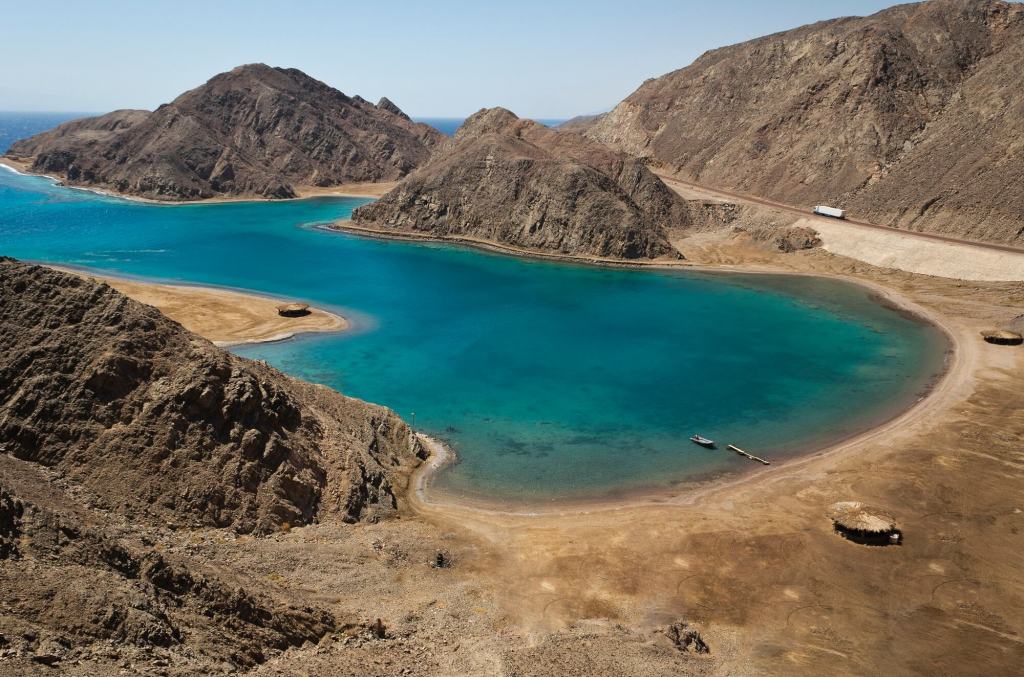
About 15 kilometers south of Taba, you will be stopped by a flash of dazzling blue colour and find the amazing Fjord of Taba. Along the coastal route from Nuweiba to Taba, this fantastic beach is especially popular with divers, due to its crystal clear waters, colorful coral reefs and magnificent ecosystem. The Fjord of Taba is just one example of the beautiful nature surrounding the city of Taba, which also includes outstanding geological formations, such as caves and valleys, and number of natural springs.
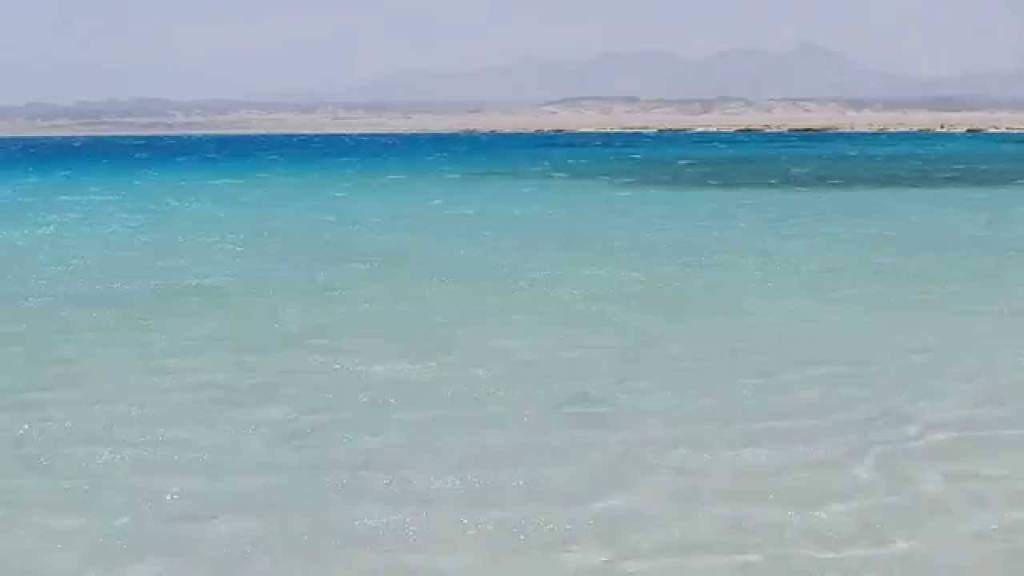
It’s hard to believe these pristine waters are almost completely empty given that Ras Hankorab can easily compete with the white sandy Maldives beaches.
Around 60km south of Marsa Alam, this is one of the most beautiful secret beaches I’ve ever been to (and I’ve been to 53 countries!).
Thanks to its location inside the national park Wadi El-Gemal, the area is completely undeveloped – no shops, no restaurants, and no hotels.
Especially during low tide it’s like a lagoon that allows you to walk basically right into the middle of the Sea – perfect for amazing photos that will make your friends at home super jealous
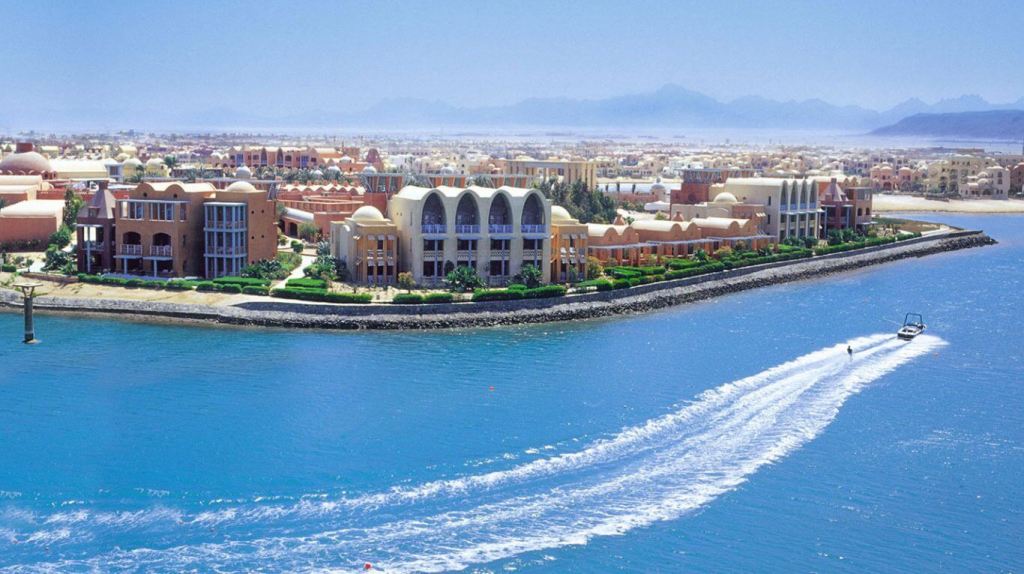
This modern Red Sea town is both unusual and romantic, made up of numerous islands connected by bridges. The result is a town of plentiful lagoons bordered by lush gardens and views of the water at every twist and turn. With natural beaches, water sports aplenty and buzzing marinas, this is a good-looking and immaculately kept destination. El Gouna is also Egypt’s most environmentally friendly holiday destination, having won numerous prestigious awards including the Green Globe.
When it comes to beaches in El Gouna, visitors are spoilt for choice in high-end surroundings. Most of the beachfront is privately owned by a combination of hotels and homeowners. Despite the fact that most are privately owned, you don’t have to be a hotel guest to access most of El Gouna’s beaches.
For the active-minded, diving and kite-surfing is a must.
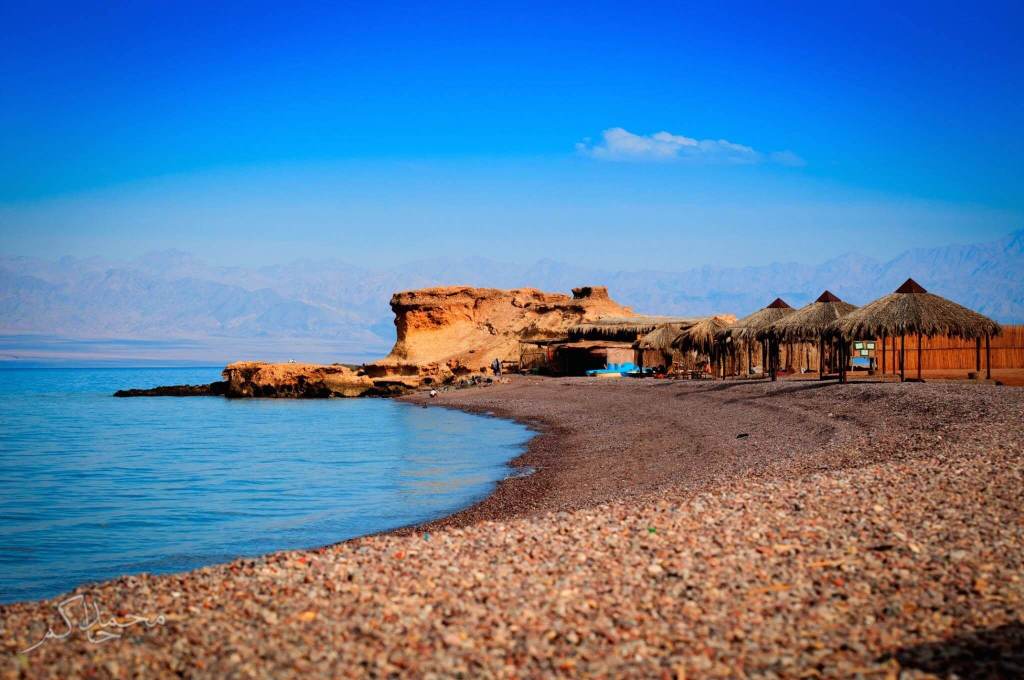
Ras Shaitan, nicknamed the Devil’s Head because of its unusual formation on two sides of a huge rock, is roughly a 30 minute drive north of Nuweiba. The Bedouin camp on this beach promotes eco-friendly lodging in Egypt and is a great place to stay for diving enthusiasts. It is the perfect location for more experienced divers, with its underwater canyons, caves and plateaus. While underwater, Ras Shaitan impresses with a diverse and colorful marine life of hard corals, anemones and pat fish, and a beautiful untouched landscape on land.
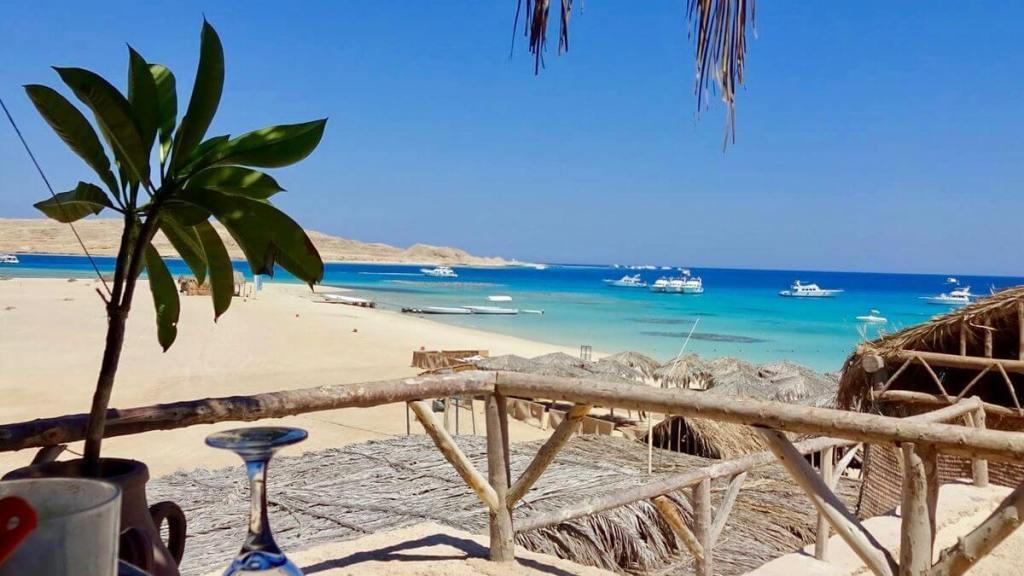
Located on the southern shores of Giftun Island, Hurghada, this is a getaway to enjoy swimming, snorkelling, stunning sunset views, a meal or a drink from the many restaurants serving seafood and Italian food. It is paradise on earth. El-Mahmya’s waters are home to dolphins, schools of colourful fish and many more marine species. Retreat on the buttermilk sand under the delightful sun while wholeheartedly embracing one of the best beaches in Egypt.
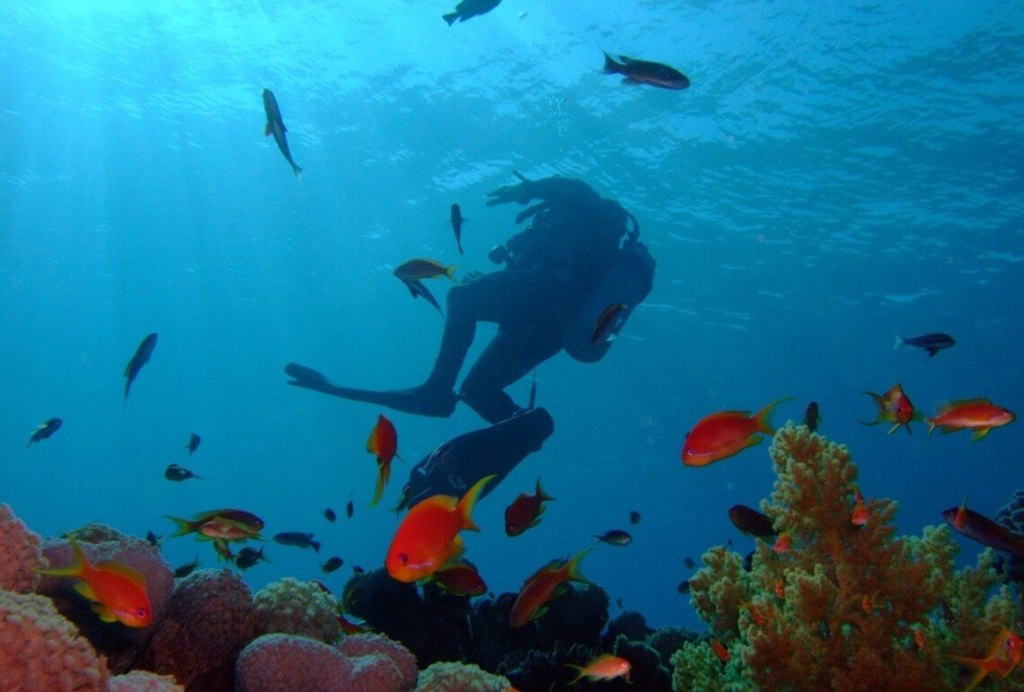
If you are looking for a stunning spot to do some snorkeling or diving, then Ras Abu Galoum is a brilliant choice. Situated close to a traditional Bedouin settlement – around 15-kilometers from the small coastal town of Dahab on the southeast coast of the Sinai Peninsula – is this sparklingly blue patch of ocean. This desert diving paradise is a feast for the eyes; the stunning seascape contrasts brilliantly with the arid rocky land and makes a very special spot to visit. Arrive across the desert on camelback before diving into the depths of the Red Sea, and experience for yourself the magnificence of its underwater landscape. Hard and soft coral create the perfect environment for angelfish, parrotfish and Picasso fish, amongst others, so make sure to bring your underwater camera.
We can go on and on and try to write about best Egypt beaches, however, I will not be able to write all in one article, as there are many other more than the previous. So I tried to collect some of the most beautiful and famous beaches I could find for you to enjoy.
Egypt is the oldest tourist destination on Earth with its fascinating history that reaches back to the dawn of Civilization Egypt with its ancient monument captured the imagination of the travelers for thousands of years, Egypt now receives about 14 million tourists a year from all over the world.
The country is blessed with a lot of amazing attractions, as it contains two-thirds of the world monuments. No one would ever miss the chance to explore all the allure and greatness of this majestic land. Cast your eyes on the magical Egypt tourist attractions like Cairo, Aswan, Luxor, and Alexandria and discover the true meaning of the words Vacation and adventure.
Here we will guide you to the best tourist attractions to visit in Egypt, and we will give you a brief about the best of Egypt Sights and vacation spots in Egypt.
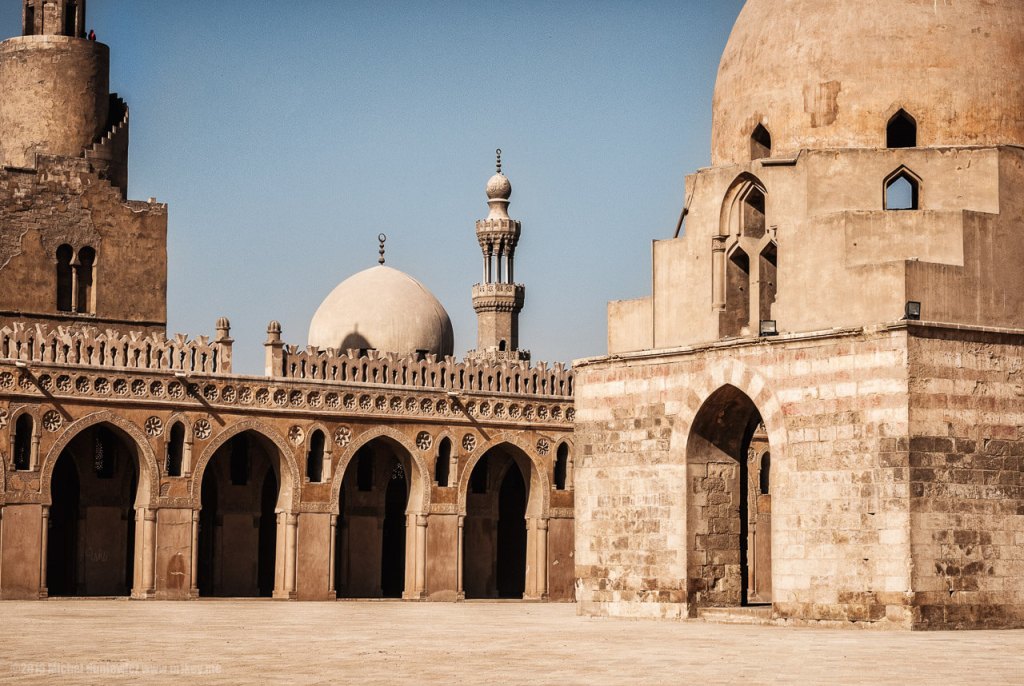
Built between 876 and 879 AD, the Mosque of Ibn Tulun is one of the oldest mosques in Cairo. It was commissioned by Ahmad ibn Ţūlūn, the Abbassid governor of Egypt. The mosque is constructed around a courtyard, with one covered hall on each of the four sides. The minaret, which features a helical outer staircase similar to that of the famous minaret in Samarra, was probably built several centuries later. Parts of the James Bond film The Spy Who Loved Me were filmed at the Mosque of Ibn Tulun.
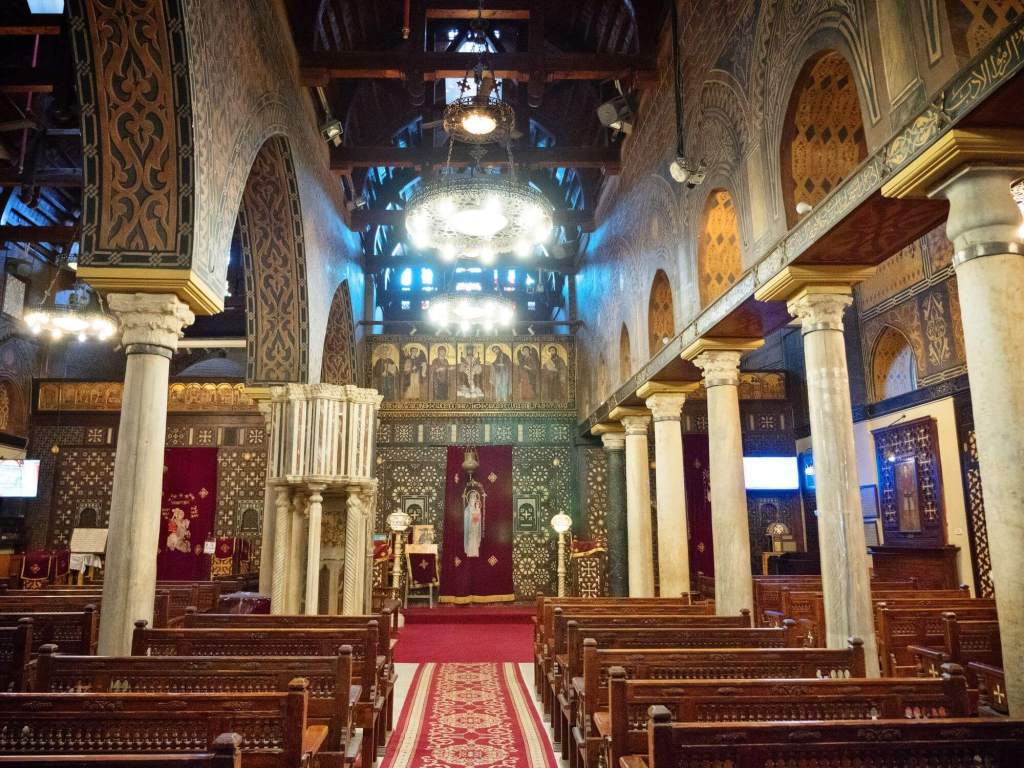
The Saint Virgin Mary’s Coptic Orthodox Church is located above the Babylon Fortress’s gatehouse. With its nave suspended over a passage, it is commonly known as The Hanging Church.
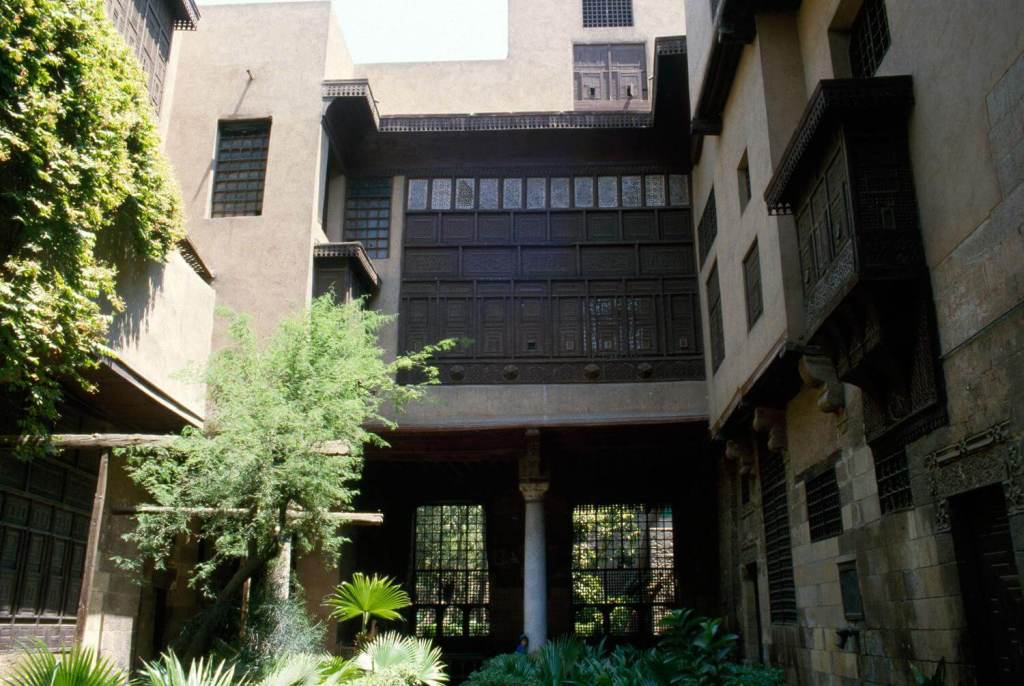
A family mansion and a caravanserai, famous for its unique mashrabiya and wooden-lattice screens; Beit El-Suhaymi is also a unique architectural beauty.
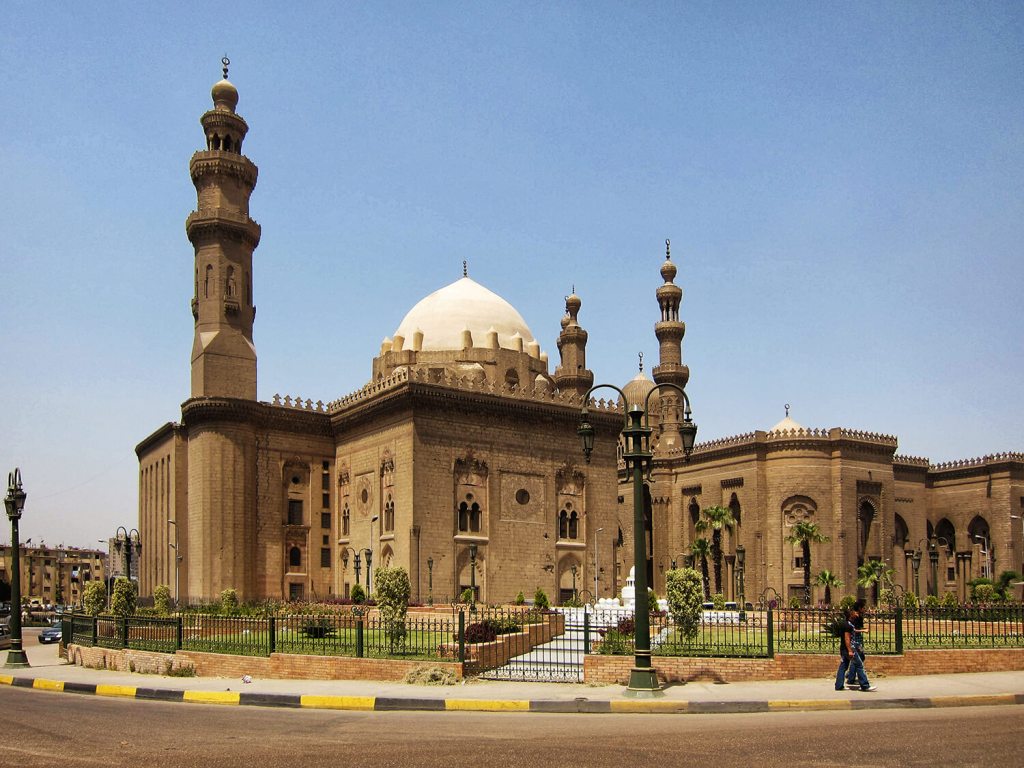
Considered to be one of the largest mosques in the world, the Sultan Hassan Mosque covers an area of 7,906 square meters (around 85099.4 square feet). It consists of a mosque as well as an educational institution, and it is famous for its innovative-architectural components.
Away from the famous Bibliotheca Alexandrina, Alexandria have many amazing sites and attractions that’s unknown to most visitors.
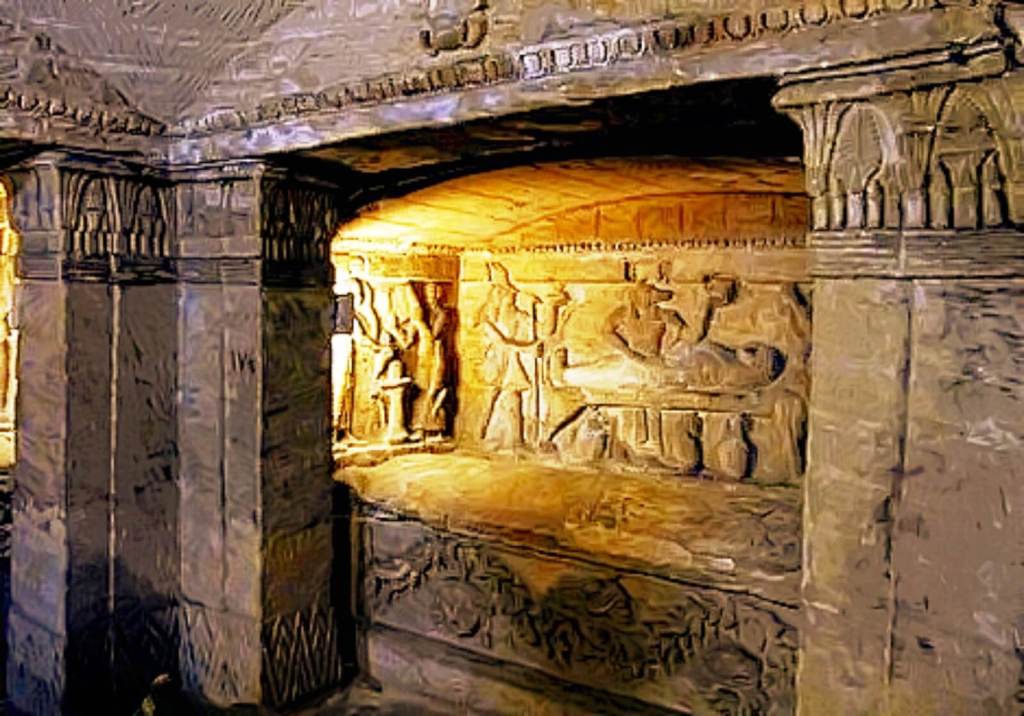
The Catacombs of Kom el-Shuqqafa are hewn from the rock on the southern slopes of a hill, in the Carmous district. Thought to date from the 2nd century AD, they offer an admirable example of the characteristic Alexandrian fusion of Egyptian and Greco-Roman styles. Discovered in 1900 (thanks to a donkey falling into them) they are laid out on several levels of sarcophagi and loculi (shelf tomb) chambers.
A spiral staircase leads down into the ground to the main rotunda. To the right, you can enter the main burial chamber and also the Sepulchral Chapel with 91 loculi, each large enough to accommodate three or four mummies. To the left is a large room known as the Triclinium Funebre, which would have been used for banquets in honor of the dead.
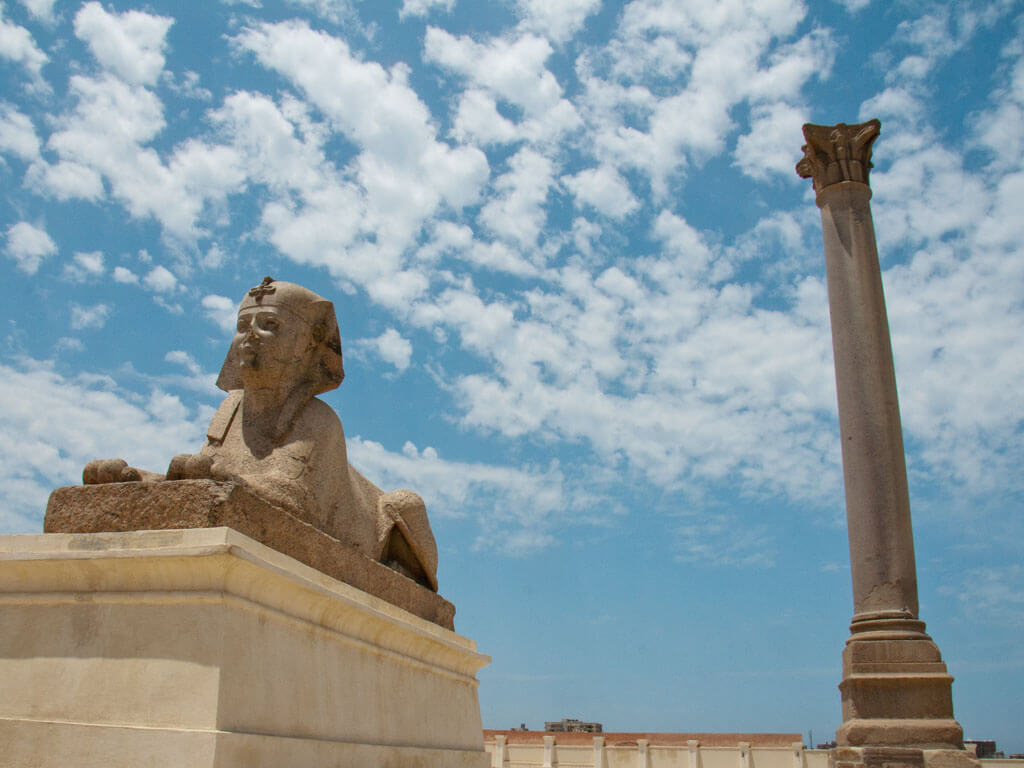
In Carmous (in the southwest of the city) is a hill littered with the remains of ancient walls, architectural fragments, and rubble on which Alexandria’s only ancient monument is left standing. Pompey’s Pillar rises from the ruins of the ancient and famous Serapeion (Temple of Serapis), which was once used to store the overflow of manuscripts from the Great Library of Alexandria. This column of red Aswan granite with a Corinthian capital, standing on a badly ruined substructure and rising to a height of almost 27 meters, actually has nothing to do with Pompey and was instead set up in AD 292 in honor of Diocletian, who supplied food for the starving population after the siege of the city.
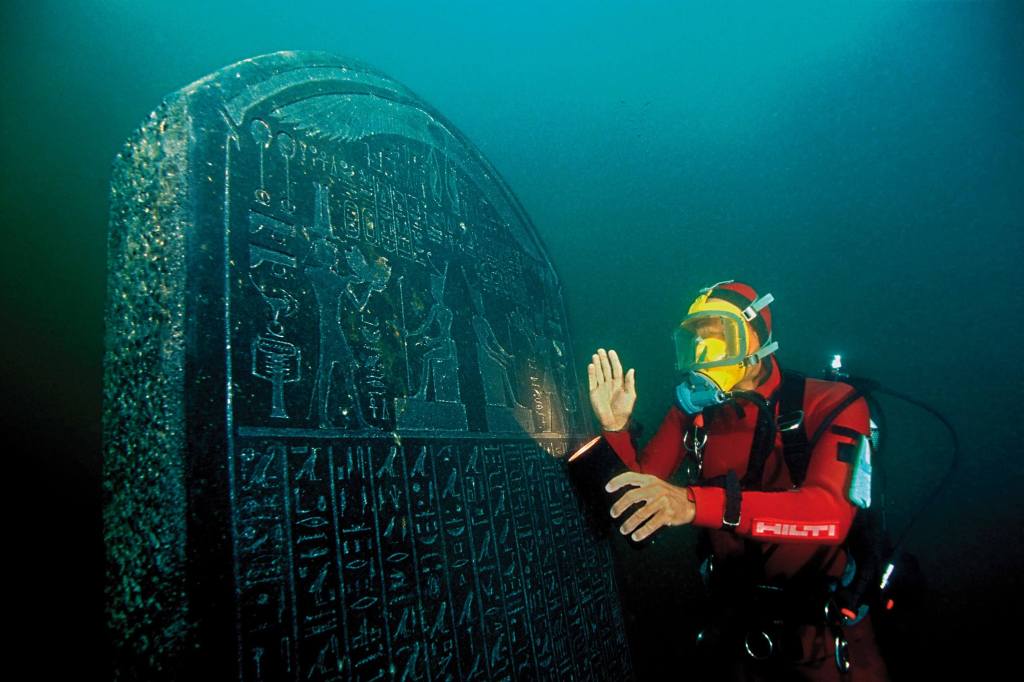
Diving is the big activity in Alexandria. Unlike Egypt’s other diving centers, you’re not here for the colorful coral reefs. Instead, in the eastern harbor area, Alexandria’s diving is all about ancient underwater ruins. For divers, this is a unique opportunity to see the toppled statues and columns strewn across the sea bed.
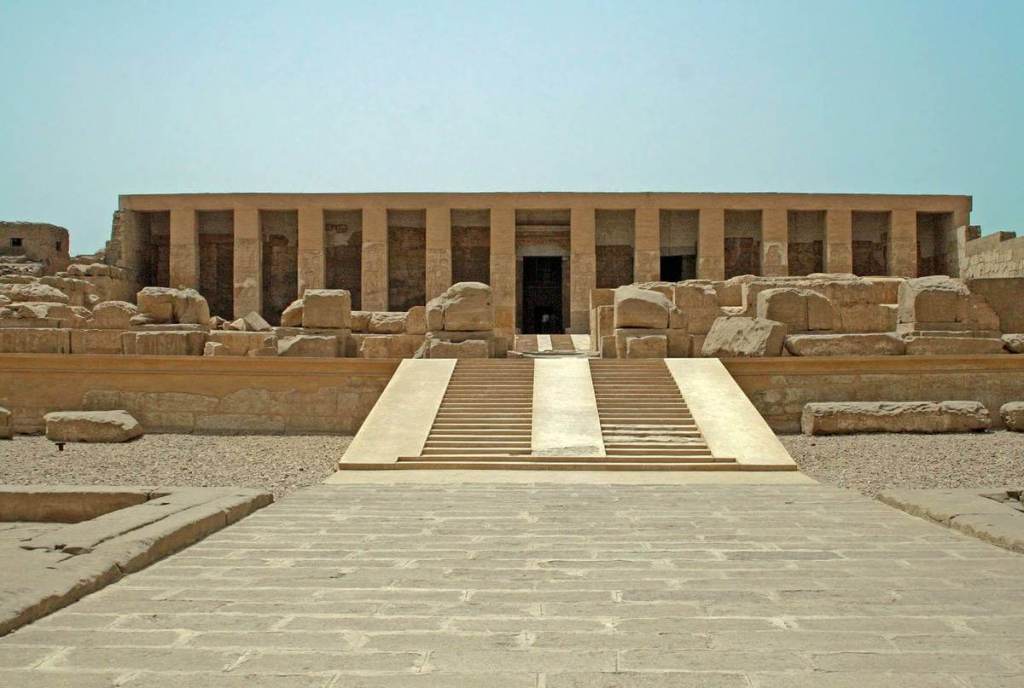
One of the oldest cities of ancient Egypt, Abydos once contained some of the most-ancient temples as well as the tombs of early Pharaohs. It is a sacred city, and it is considered one of the most important archaeological sites of Egypt.
Located in Upper Egypt about six miles (10 km) from the Nile River, the site of Abydos played a pivotal role in ancient Egyptian religious life.
The earliest kings of Egypt, including those from the first dynasty of Egypt’s history (3000-2890 B.C.), appear to have been buried at Abydos. Their tombs and funerary enclosures may have been a first step on an ancient architectural journey that would see the Great Pyramids constructed centuries later.
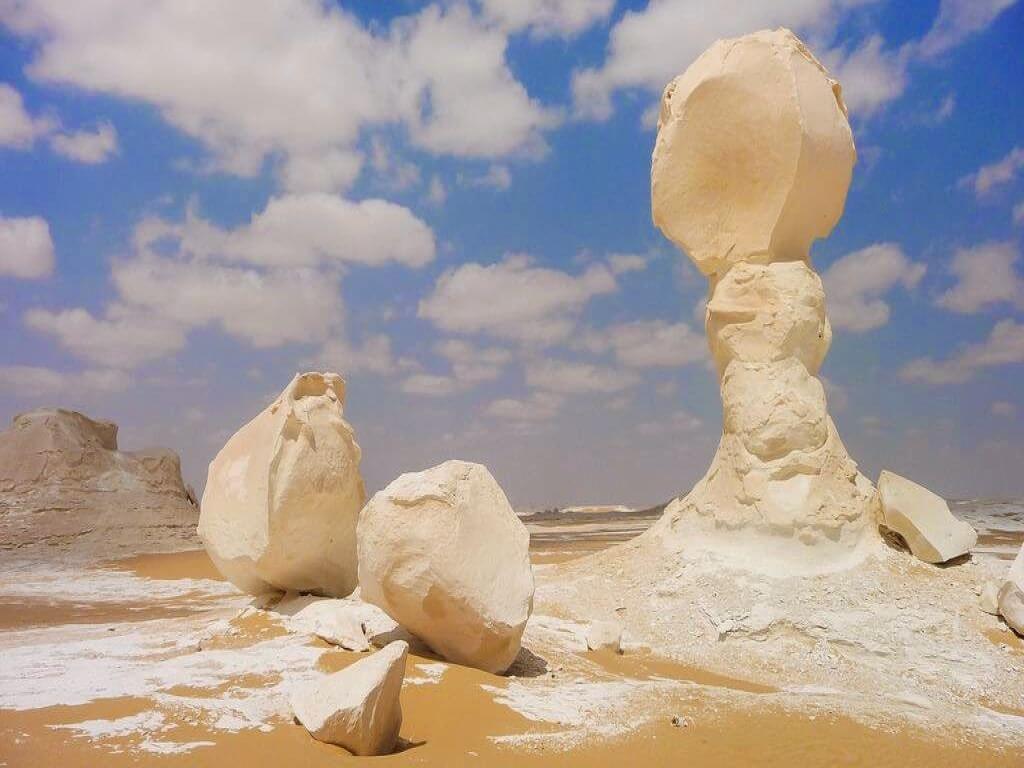
The Western Desert is home to many popular Egypt tourist attractions, most of which are located in or near to the various oases. The best way to view these attractions is by booking an oases package tour or a Sahara desert adventure tour. Most good oases tours will include a visit to all the different oases, and you will often be taken to see the best sites found at each of them.
In addition to the oases and their historical monuments, the Western Desert is also home to several natural Egypt attractions, including the White Desert; the Black Desert, and the Valley of the Whales, to name just a few.
The White Desert is a unique white-colored rock formation of the White Desert, the Bedouin-inhabited national park north of Farafra.
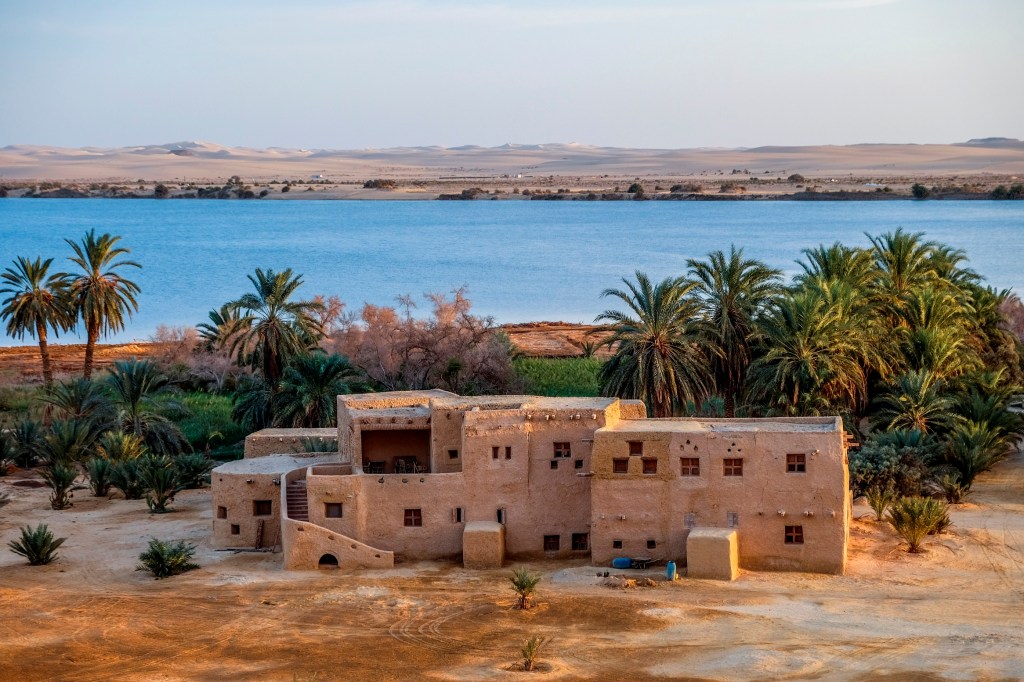
Way out west, Siwa is the tranquil tonic to the hustle of Egypt’s cities. This gorgeous little oasis, surrounded by date palm plantations and numerous fresh water springs, is one of the Western Desert’s most picturesque spots. The town is centered around the ruins of a vast mud-brick citadel that dominates the view. This is a top spot to wind down and go slow for a few days, as well as being an excellent base from which to plan adventures into the surrounding desert.
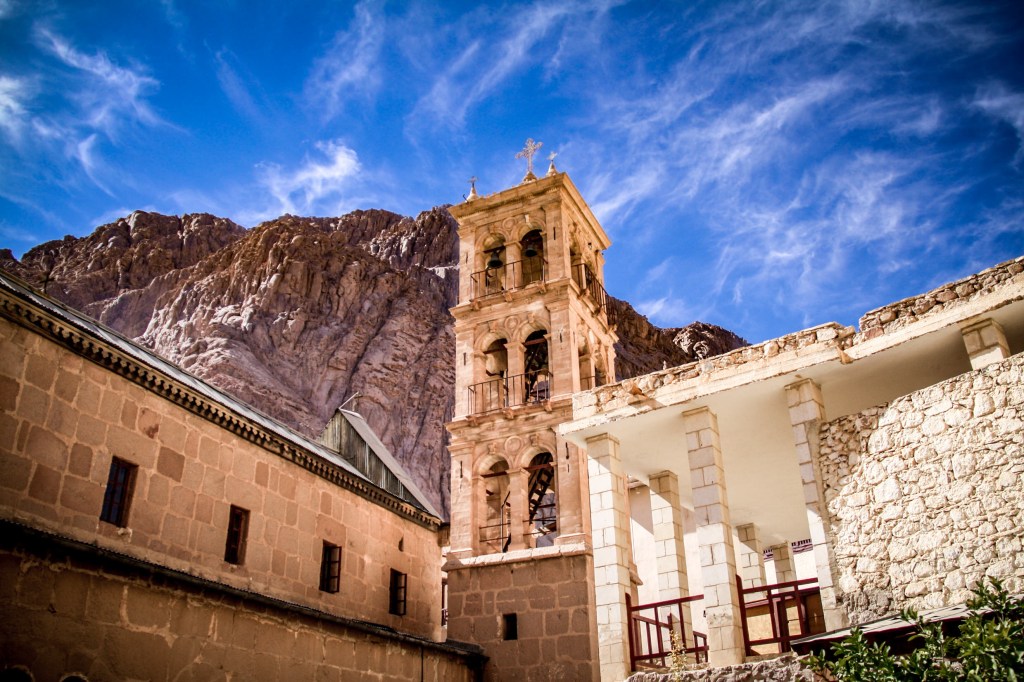
Officially known as the Sacred Monastery of the God-Trodden Mount Sinai, the Monastery is named after a Christian martyr called Catherine of Alexandria. It is believed that her remains were taken by angels to Mount Sinai after she was beheaded.
This attraction is considered one of the oldest monasteries in the world, St. Catherine’s stands at the foot of Mount Sinai, where Moses is said to have received the Ten Commandments. This desert monastery is home to an incredible collection of religious iconography, art, and manuscripts (some of which can be seen in the on-site museum), as well as the burning bush. For most visitors here, a trip to St. Catherine’s also involves a hike up Mount Sinai to see sunrise or sunset. Take the camel path for the easy route or climb the famous Steps of Repentance if you want better views.
Egypt is a fantastic place, and one of the highlights on the Nile is certainly Aswan. The small city in the far south of the country has been a tourist’s favorite for more than 200 years. And let me tell you, there are quite a lot of things to do in Aswan!
Even Agatha Christie cherished Aswan and wrote one of her most famous books here (Death on the Nile), staying at the fabulous Old Cataract Hotel. That’s why you absolutely need to visit as well.
It’s always hard to pick favorites, and more so in Aswan where everything is lovable! But we’ve still managed to convey what to do in Aswan as briefly as possible to only bring you the best experiences here.
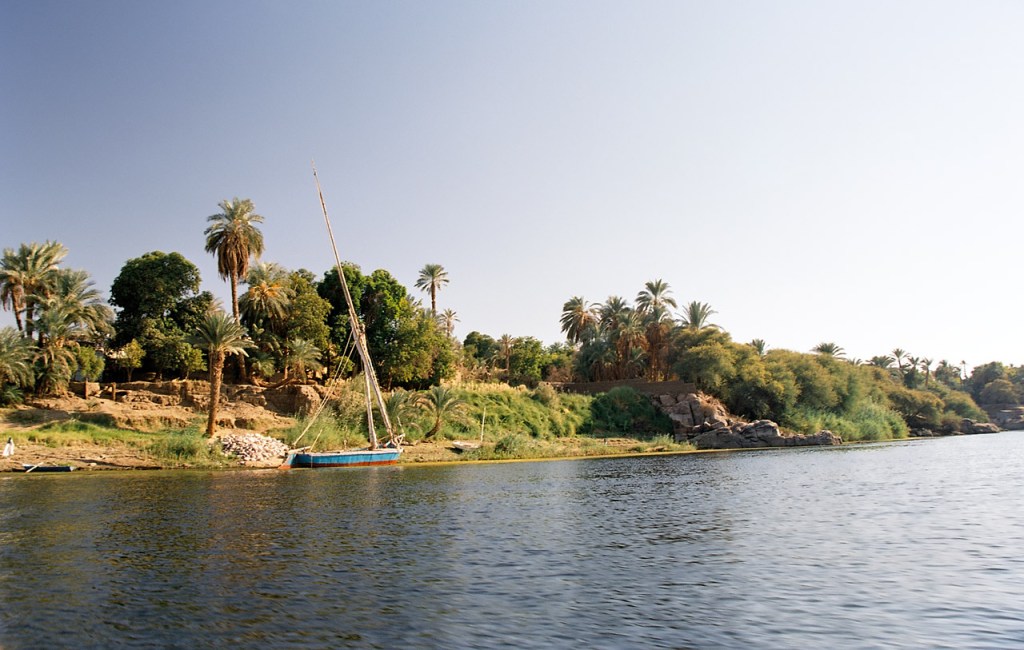
Peppered with palm tree plantations and sloping villages of colorful mud-brick houses, Elephantine Island is Aswan’s major tourist attraction. At its southern end are Aswan Museum and the Ruins of Abu, Aswan’s most ancient settlement, which contains the Old Kingdom Temple of Khnum and the Temple of Satet. The museum building, in a beautiful late 19th-century villa, is partially open, with a collection of artifacts that span Elephantine Island’s history up to the Roman era.
There are frequent local ferries from the boat landing in downtown Aswan to Elephantine, or you can also hire a felucca to sail you around the island.
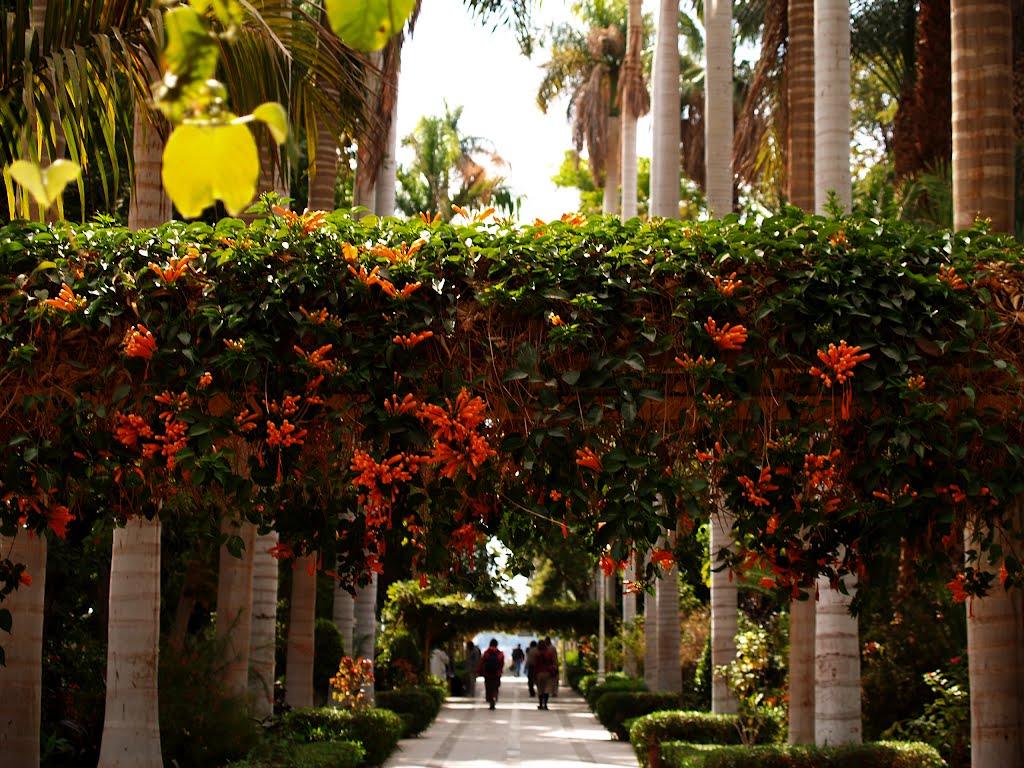
Hitch a cheap boat ride to Kitchener Island where you can visit the famous Temple of the Nobles and the Aswan Botanical Gardens. Thanks to the original owner of the island, Lord Kitchener, the island has turned it into a verdant spectacle of exotic plants from Asia and Africa. Strolling in these vast gardens are amongst the most unmissable things to do in Aswan, especially for couples and nature lovers.
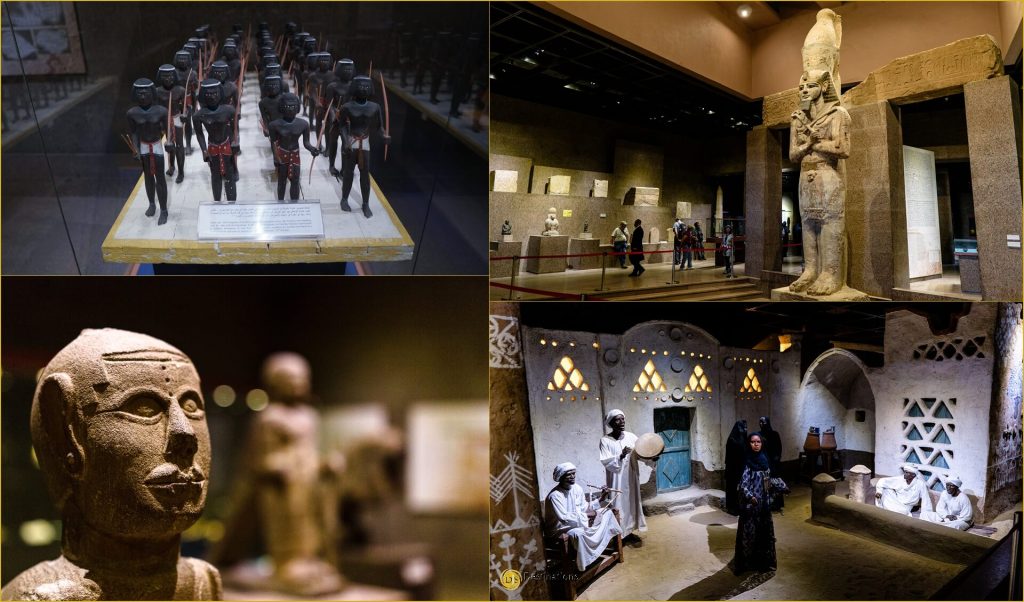
It’s amongst Egypt’s best and has documents demonstrating the plight of people relocated to build the Aswan Dam and Lake Nasser. It even has pictures of ancient monuments lost under the waters of this lake owing to the construction of this dam. It houses artifacts of the Kush Kingdom as well as old statues of Ramses II, Amenras, the head of the Shpatka, and the black granite head of Tahraqa.
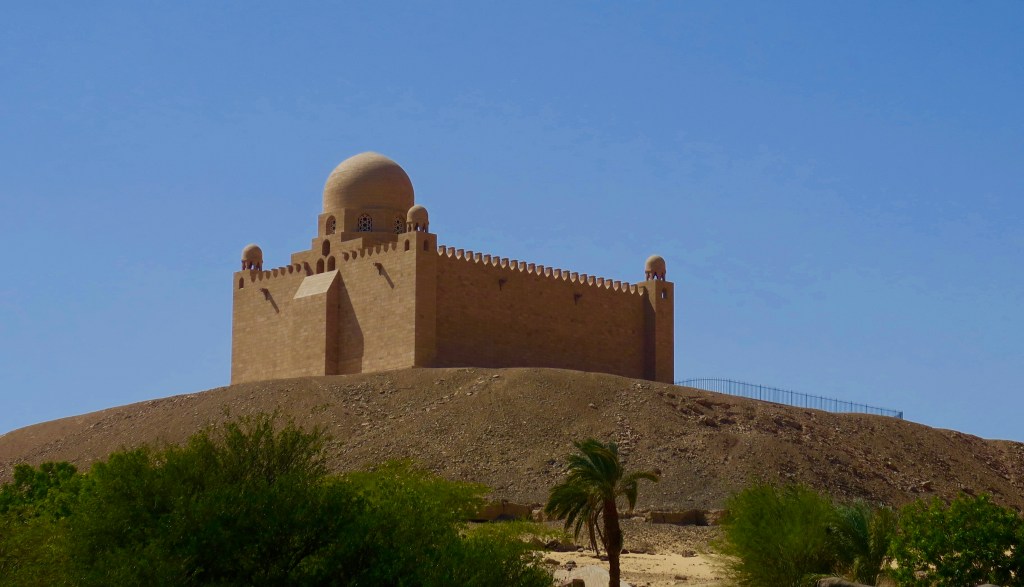
Siting high over the Nile’s bank, this museum is dedicated to Sir Sultan Muhammad Shah (1877-1957), the leader of the Shi’a Islam Nizari Ismaili sect who played an influential role in the partition of India. The mausoleum has his tomb and tells about his contributions and the extensive charity he did in Asia and Africa.
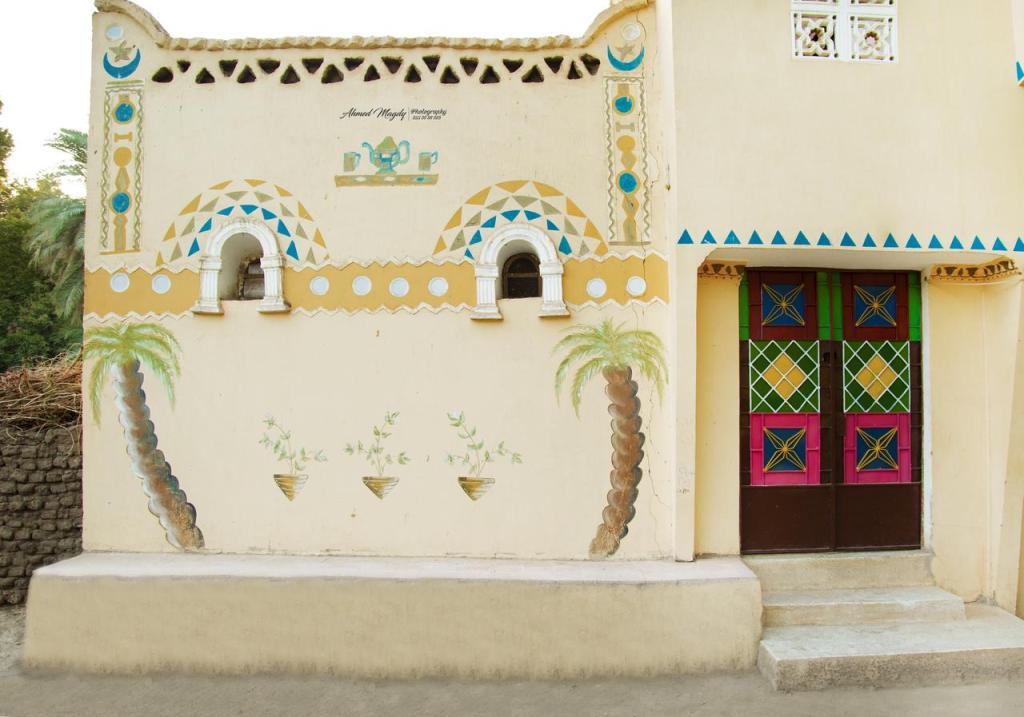
A delight for kids, this small museum is dedicated to showcasing the traditions, flora, fauna, and history of Nubia. It’s collection of stuffed animals endemic to Nubia, iconic photographs of the pre-flooded Lake Nasser, as well as samples of sedimentary rocks are sure to enthrall you! You can also buy Nubian crafts here.
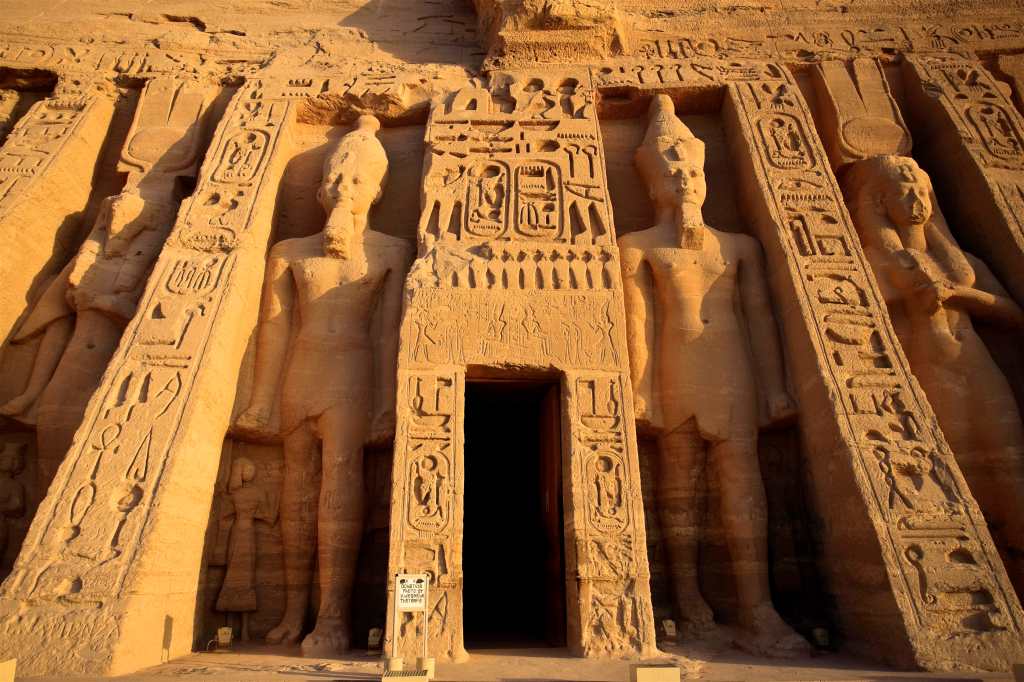
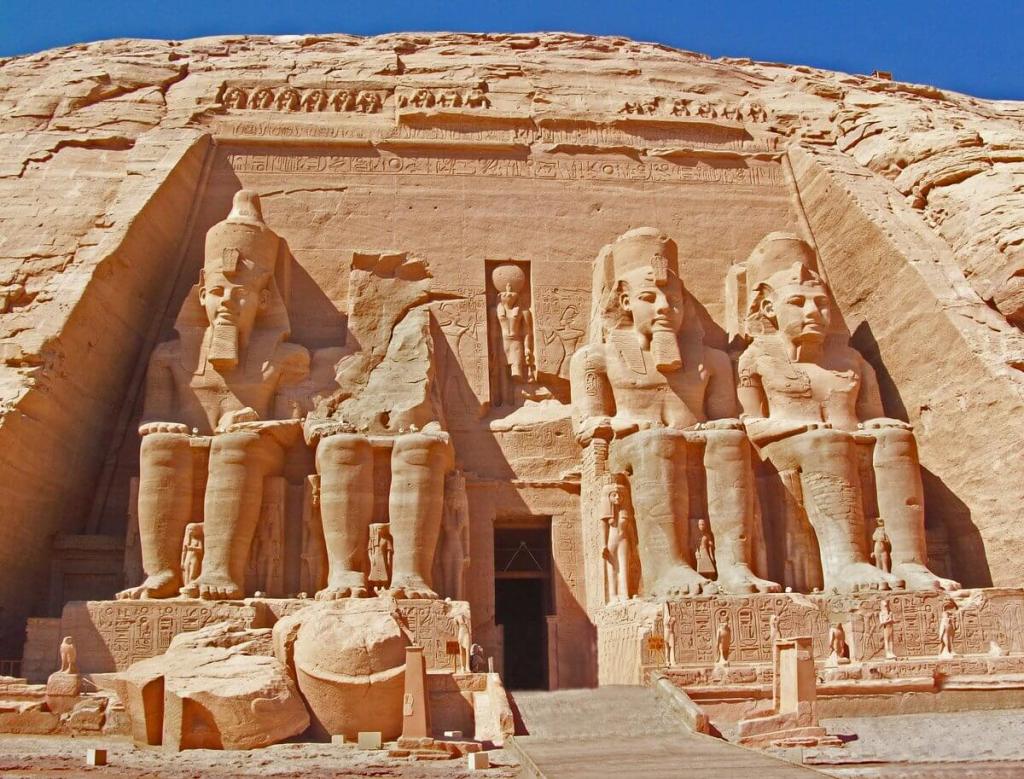
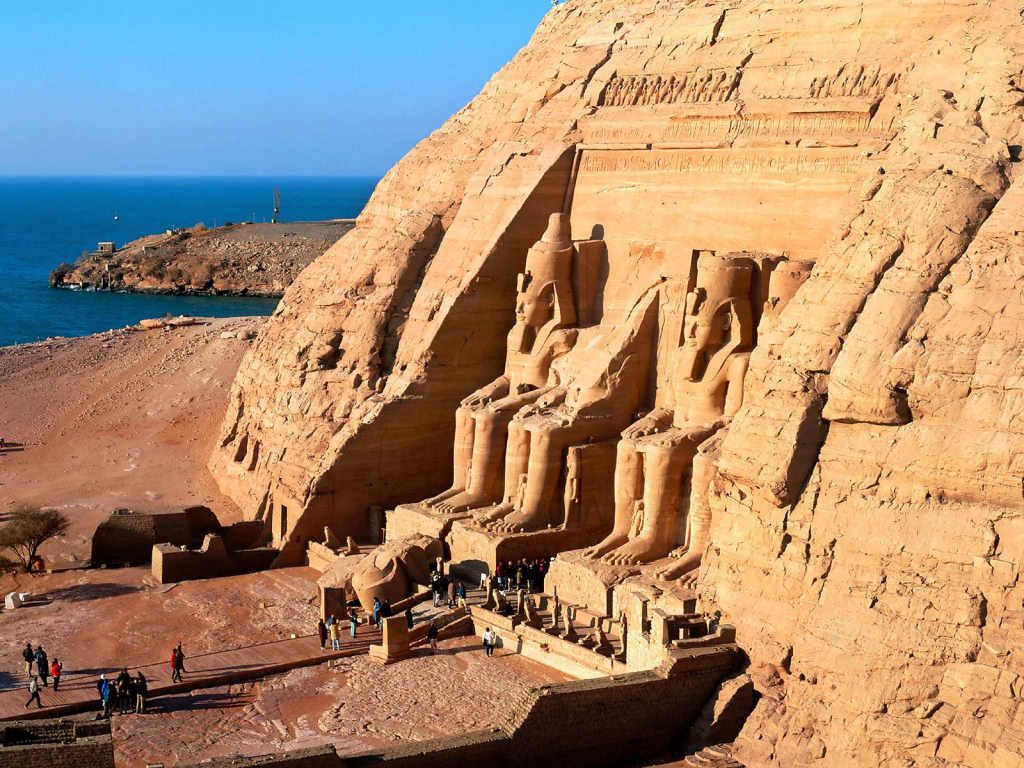
If you have time for only one day trip from Aswan, pick a visit to Abu Simbel. Built by Ramses II, and saved from destruction by a remarkable UNESCO rescue project in the 1970s, Abu Simbel is not only a triumph of ancient architecture, but also of modern engineering. The mammoth scale of the Great Temple of Ramses II and the Temple of Hathor, sitting on the banks of Lake Nasser, trumps everything else in Egypt and has to be seen to be believed.
Most people come to Abu Simbel by tour. This private Abu Simbel minibus tour transports you by minibus to the temples and includes entry and tours of both temples with an Egyptologist guide. If you’re shorter on time, or simply don’t fancy the four-hour road trip there and back, this private Abu Simbel tour with flights includes return flight from Aswan to Abu Simbel, temple entrance fees, and a guided tour of both temples with an Egyptologist guide.
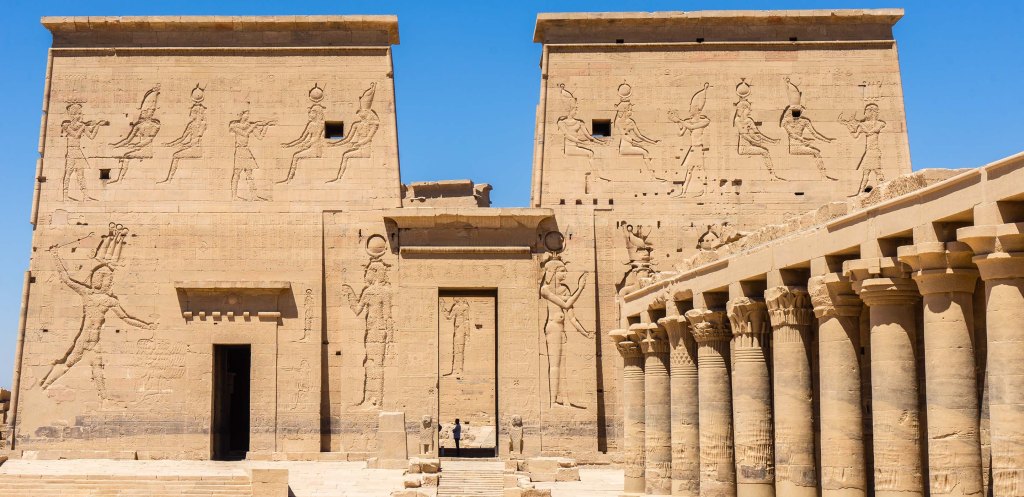
The sacred Temple of Isis (more commonly known as Philae Temple) is one of Upper Egypt’s most beguiling monuments both for the exquisite artistry of its reliefs and for the gorgeous symmetry of its architecture, which made it a favorite subject of Victorian painters. Like Abu Simbel, the temple was saved by the rising waters of Lake Nasser by UNESCO’s rescue project and moved lock-stock-and-barrel from its original home on Philae Island to nearby (higher) Agilika Island where it sits today.
The Temple of Isis, a center for the ancient cult of Isis, is the main part of the Philae complex, but the island is also home to the Temple of Hathor, the Kiosk of Trajan, and various other buildings from the Roman and Byzantine periods. You can easily reach the temples by taxi from Aswan, although most people arrive here as part of an Abu Simbel day trip tour.
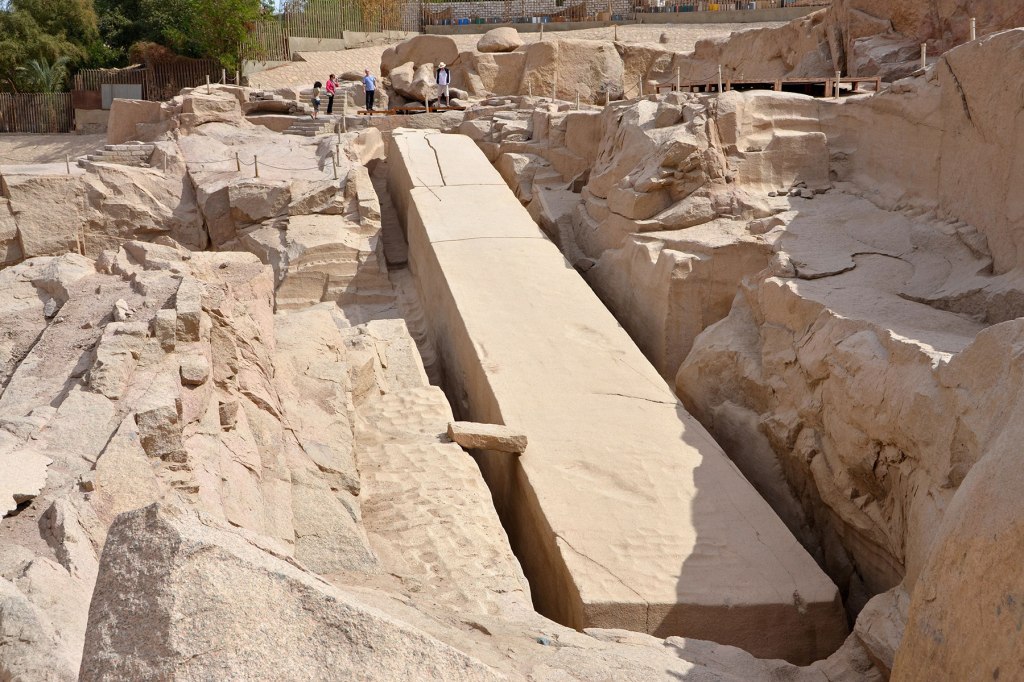
How did the Egyptians build their pyramids? How did they build their temples? While we know pretty much everything about their funeral rites and gods, the tombs and steles of the Pharaohs very seldom depicted everyday crafts. Aswan is home to an ancient granite quarry, where you can see the unfinished obelisk.
The top of the gigantic obelisks (one third bigger than any other ever built) cracked at one point before it was finished, so the project was abandoned. The remains, give us a fairly good idea just how these gigantic monoliths were created without the help of steel & dynamite.
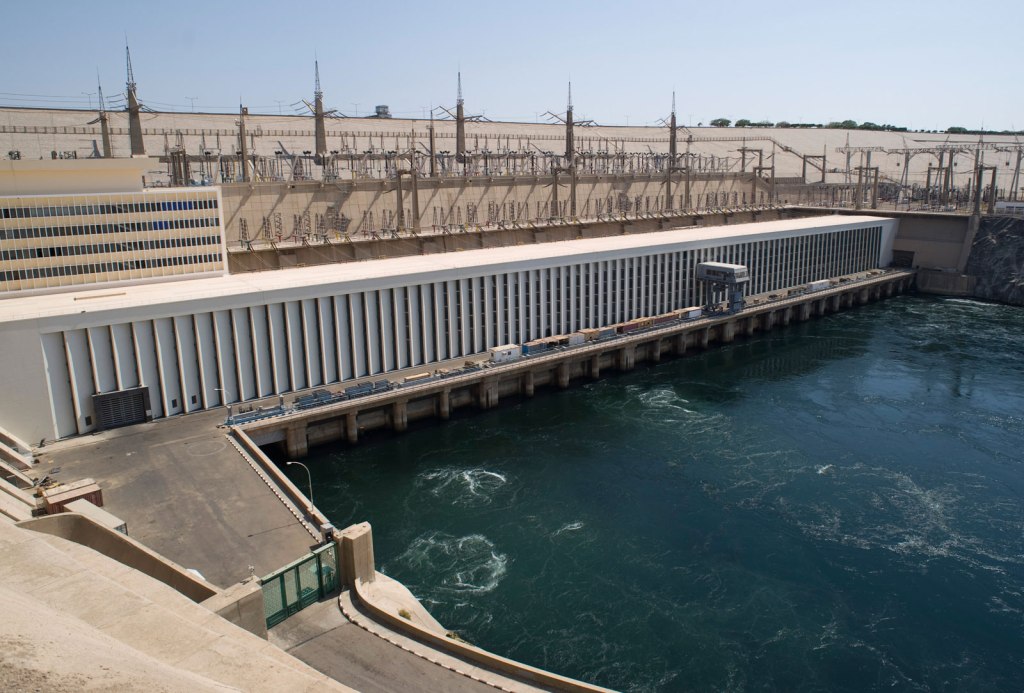
Egypt’s modern example of construction on a monumental scale, the controversial Aswan High Dam, 13km south of Aswan, contains 18 times the amount of material used in the Great Pyramid of Khufu and created Lake Nasser, one of the world’s largest artificial lakes.
At the dam site is a small pavilion with displays detailing the dimensions and the construction of the dam; on the western side is a monument honouring Soviet-Egyptian friendship and cooperation.
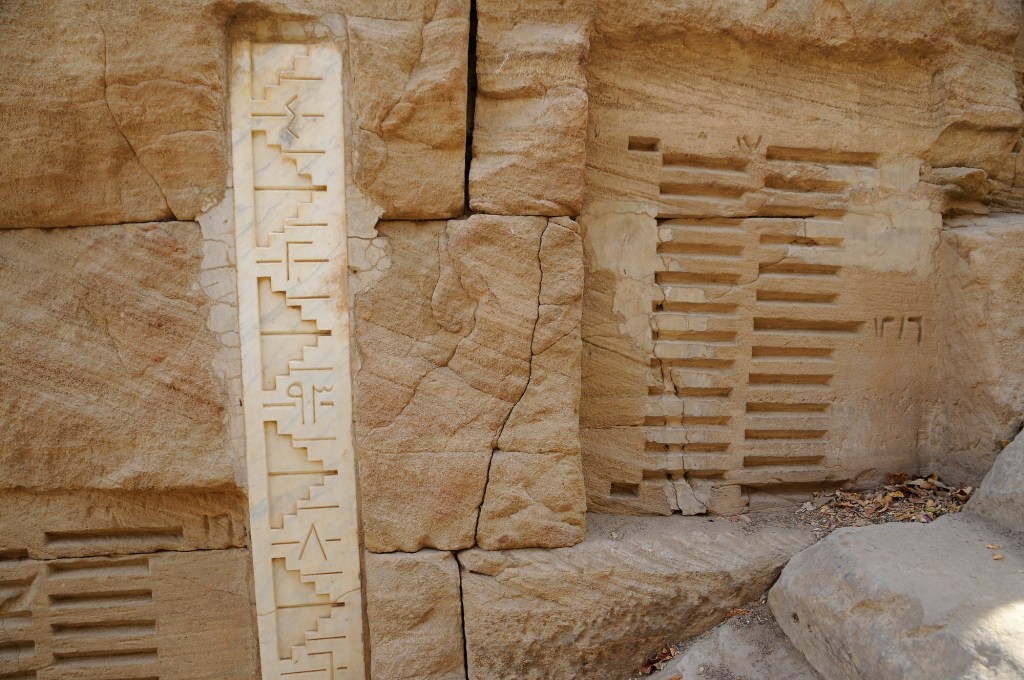
Situated within Aswan Museum complex, it’s an incredible measuring system the ancient Egyptians used to assess the height of the Nile.
A “guide” will show you the way to go after the entrance. It’s a basic service, with little English, but helpful anyway and free – besides a tip of course… this is Egypt after all!
With steps that lead down to the river and clever markings that help judge its height, this is a fascinating glimpse into the highly sophisticated skills of a civilisation that existed here over 3,000 years ago.
At the bottom of the Nilometer is a nice archway, framed perfectly for your Instagram shots and you can even sit on the bottom step and cool off by dipping your toes in the world’s most famous waterway!
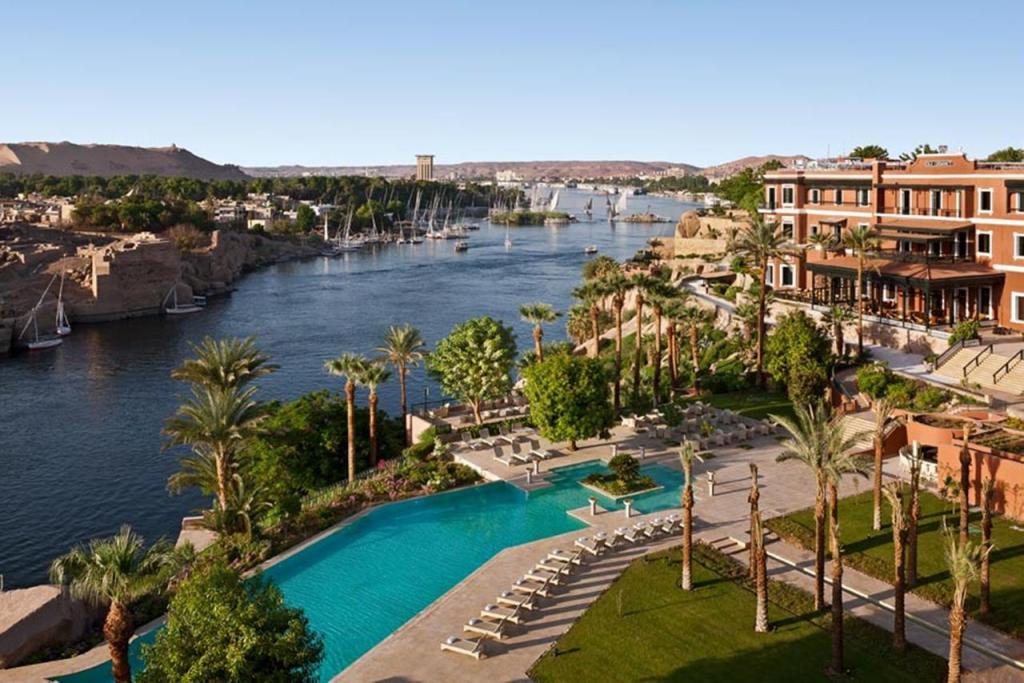
Cataract hotel is a historic hotel, it’s a former British colonial property now managed by Sofitel, where you can retreat to for a drink or to sit in a shaded garden, following the footsteps of legendary travellers.
Inside the hotel you’ll find crimson chandeliers, Moorish domes, Persian carpets, and a timeless decadent feel throughout.
The walls of the lobby are adorned with photos of former guests like Lady Diana, Winston Churchill and Agatha Christie, who also used the hotel as a setting for her novel Death on the Nile.
Rooms with Nile view can be had for about €250, which is a steal considering that the hotel is absolutely stunning. Otherwise, you can still experience the atmosphere visiting the panoramic terrace with views over the Nile and Elephantine for a cup of tea or karkade.
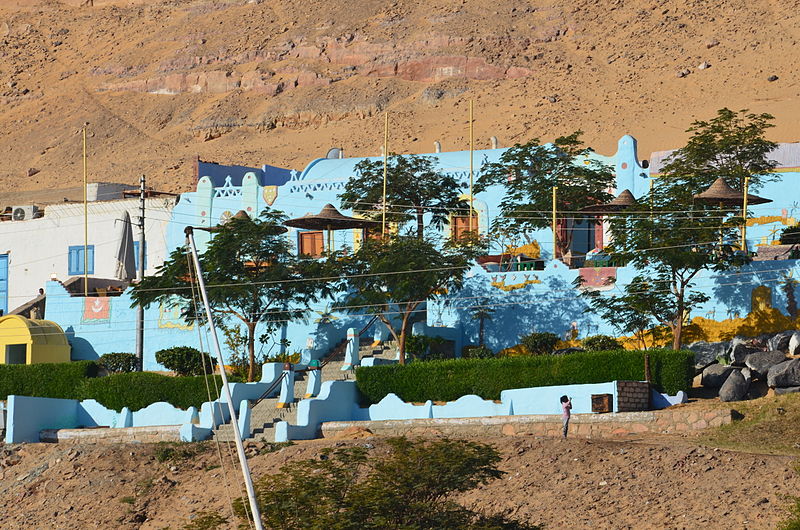
Gharb Seheyl, the village opposite Seheyl island, has become a popular tourist attraction of late, both with excursions from Aswan and for those looking for a quieter pace of life. The colourful Nubian houses are a treat, there is a nearby beach for safe swimming, camel rides and a small Nubian crafts souq. A selection of laid-back guesthouses make it a popular stop to hang out for a few relaxing days.
The best way to get here is by motorboat or felucca from the Corniche in Aswan (LE80 to LE100), or by road from the Aswan Dam.
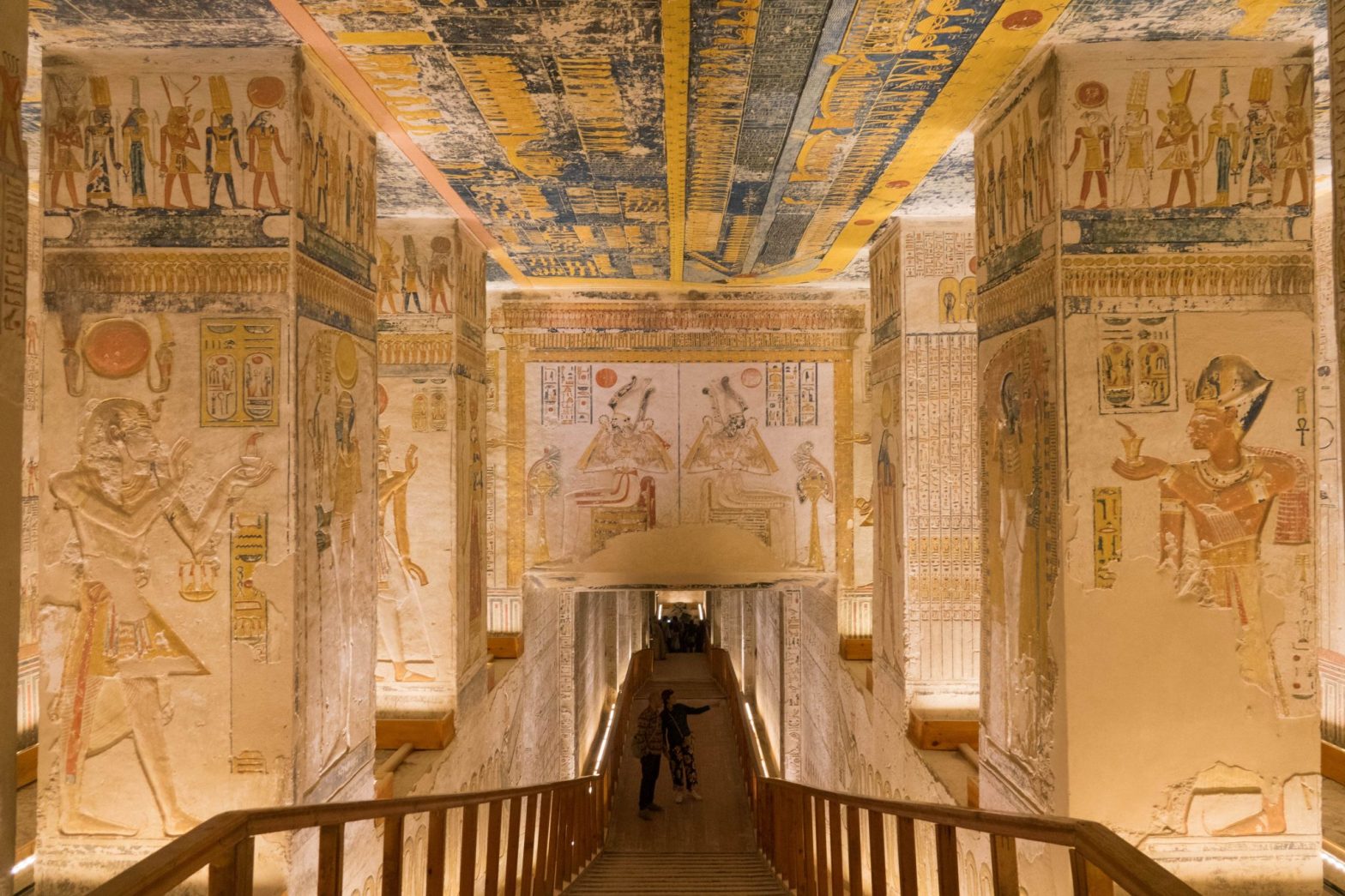
Luxor stands head-and-shoulders above Egypt’s other towns for its sheer wealth of temples and tombs. This was the site of ancient Thebes, the great city of the Middle Kingdom and New Kingdom pharaohs, who covered the banks of the Nile with their mammoth building works and began the vast tomb structures snugly hidden amid the rocky valley of the West Bank. The scope of their ambition is best appreciated today in the magnificent Karnak Temple complex, but there are so many monuments here that you could easily spend a week simply soaking up the elegance and grandeur.
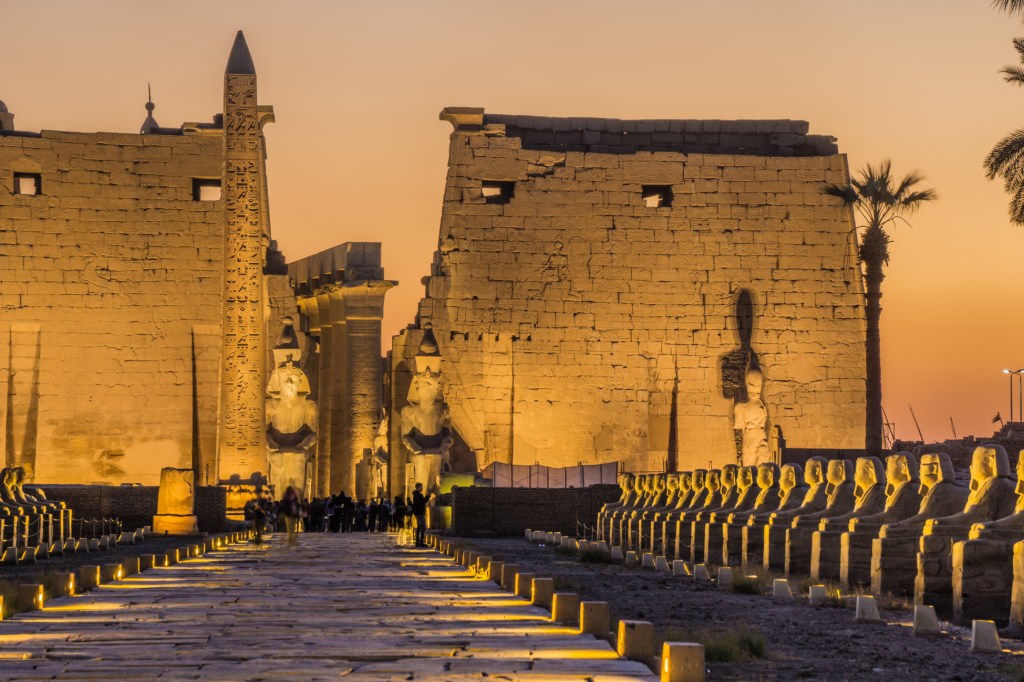
Luxor is basically an open-air museum, and a trip there is all about soaking up the city’s rich past and simply losing yourself in the wonders of the ancient world. For a crash course in Egyptian history before exploring Luxor’s ruins, check out the Luxor Museum. Once you’ve seen the museum’s mummies and artifacts, make your way to the city’s famous temples and tombs. Though you’ll want to plan enough time to see them all, must-see sights include the Karnak Temple Complex, the Valley of the Kings and the Temple of Hatshepsut.
For any given destination, the Best Things to is to select based on:
According to those points, we selected top places and things to do in Luxor.
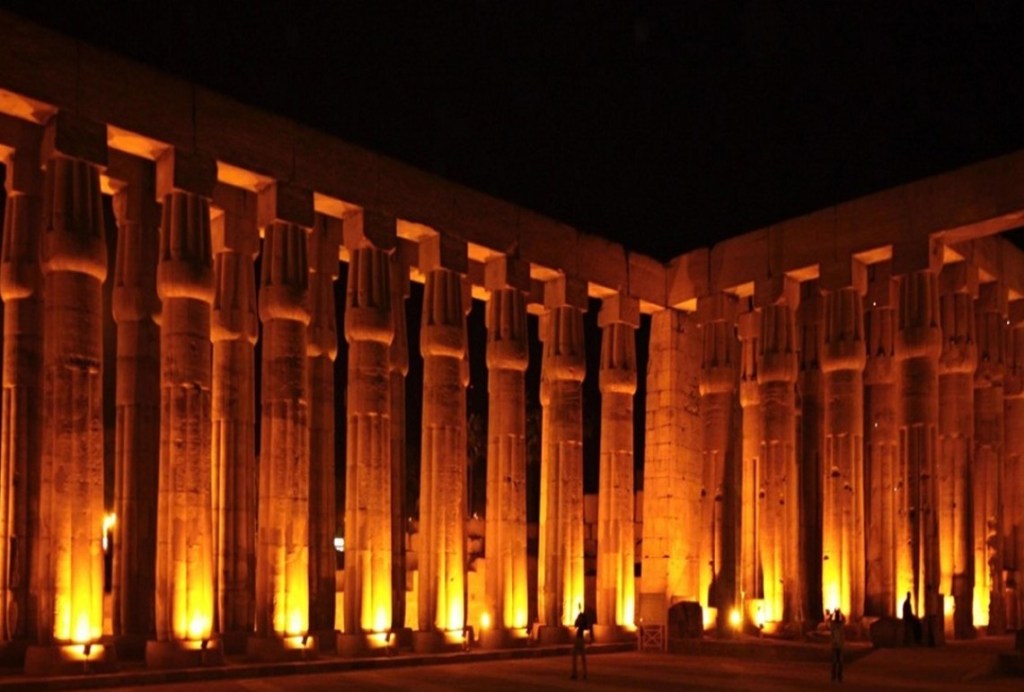
Luxor is divided into two main sightseeing areas; the west bank and the east bank.
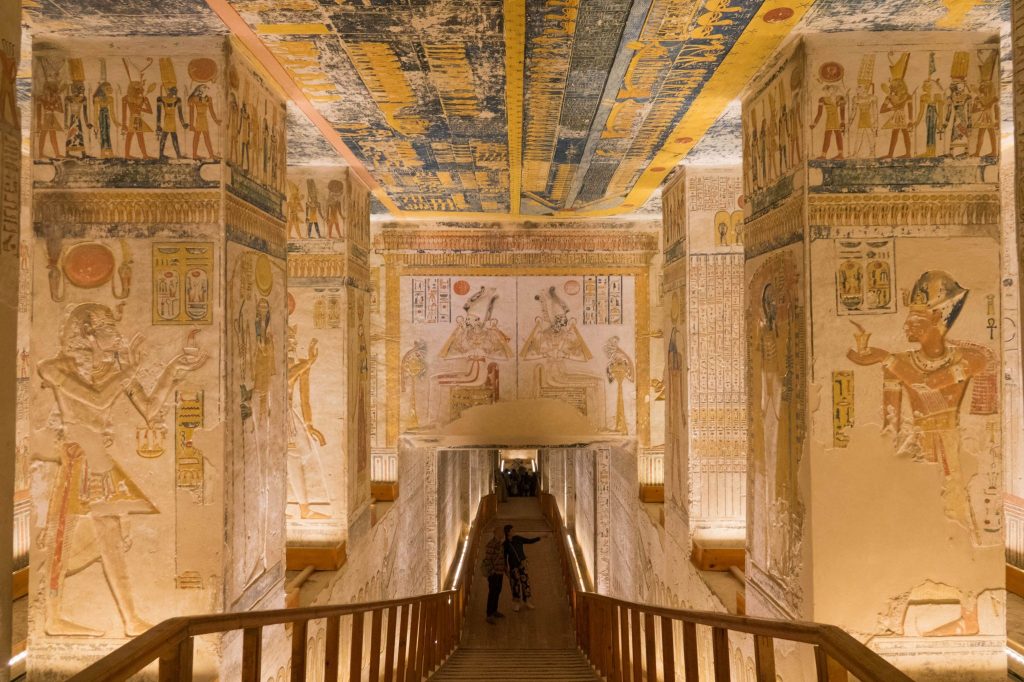
The west bank of Luxor had been the site of royal burials since around 2100 BC, but it was the pharaohs of the New Kingdom period (1550–1069 BC) who chose this isolated valley dominated by the pyramid-shaped mountain peak of Al Qurn (The Horn). Once called the Great Necropolis of Millions of Years of Pharaoh, or the Place of Truth, the Valley of the Kings has 63 magnificent royal tombs.
The tombs have suffered greatly from treasure hunters, floods and, in recent years, mass tourism: carbon dioxide, friction and the humidity produced by the average 2.8g of sweat left by each visitor have affected the reliefs and the stability of paintings that were made on plaster laid over limestone. The Department of Antiquities has installed dehumidifiers and glass screens in the worst-affected tombs. They have also introduced a rotation system: a limited number of tombs are open to the public at any one time. The entry ticket gains access to three tombs, with extra tickets to see the tombs of Ay, Tutankhamun, Seti I and Ramses VI.
The road into the Valley of the Kings is a gradual, dry, hot climb, so be prepared. A tuf-tuf (a little electrical train) ferries visitors between the visitors centre and the tombs (it can be hot during summer). The ride costs LE4. It’s worth having a torch to illuminate badly lit areas but you cannot take a camera – photography is forbidden in all tombs.
Note that:
The best source of information about the tombs, including detailed descriptions of their decoration and history, can be found on the Theban Mapping Project website. Some tombs have additional entry fees and tickets.
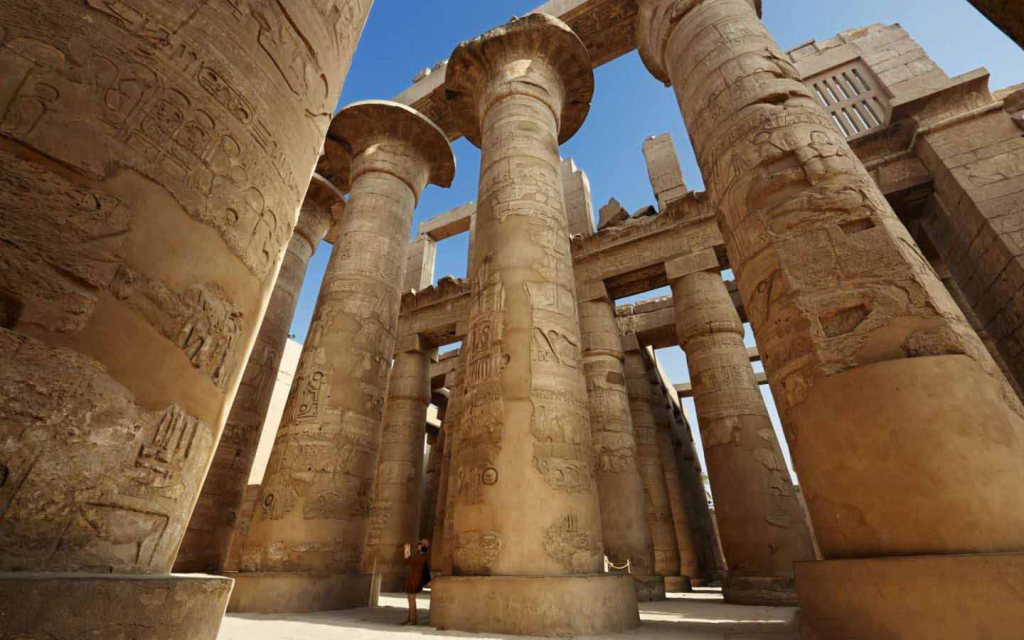
Karnak is an extraordinary complex of sanctuaries, kiosks, pylons and obelisks dedicated to the Theban triad but also to the greater glory of pharaohs. The site covers more than 2 sq km; it’s large enough to contain about 10 cathedrals. At its heart is the Temple of Amun, the earthly ‘home’ of the local god. Built, added to, dismantled, restored, enlarged and decorated over nearly 1500 years, Karnak was the most important place of worship in Egypt during the New Kingdom.
The complex is dominated by the great Temple of Amun-Ra – one of the world’s largest religious complexes – with its famous hypostyle hall, a spectacular forest of giant papyrus-shaped columns. This main structure is surrounded by the houses of Amun’s wife Mut and their son Khonsu, two other huge temple complexes on this site. On its southern side, the Mut Temple Enclosure was once linked to the main temple by an avenue of ram-headed sphinxes. To the north is the Montu Temple Enclosure, which honoured the local Theban war god.
The 3km paved avenue of human-headed sphinxes that once linked the great Temple of Amun at Karnak with Luxor Temple is now again being cleared..
The light is most beautiful in the early morning or late afternoon, and the temple is quieter then, as later in the morning tour buses bring day-trippers from Hurghada. It pays to visit more than once, to make sense of the overwhelming jumble of ancient remains.
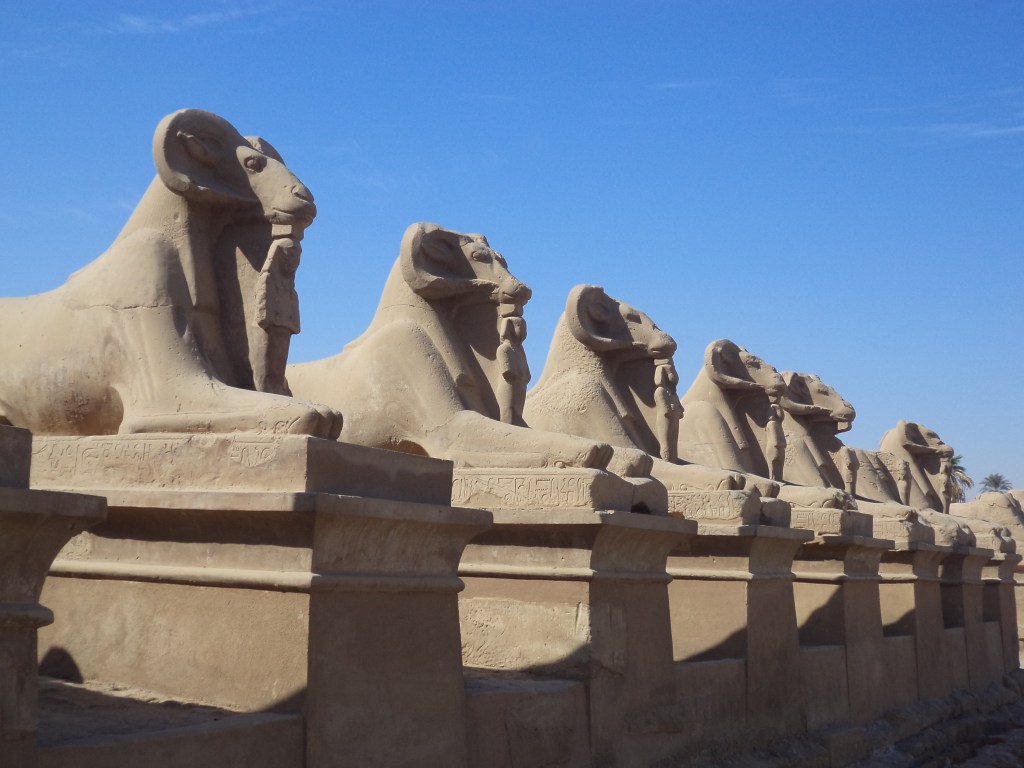
Currently, as of 2014, the continued project to complete the original ‘Avenue of Sphinx’ is ongoing. This when completed, will allow tourists to walk between Karnak and Luxor Temples, the project being that to unearth and restore the 2.7 kilometers long Avenue of Sphinxes that once linked the two Temples. The ancient road was constructed by the pharaoh Amenhotep III and was finally formed under Nectanebo I in 400 BCE. Incredibly, over one thousand Sphinx statues lined the road currently being excavated which was covered by churches, silt, homes, and mosques.
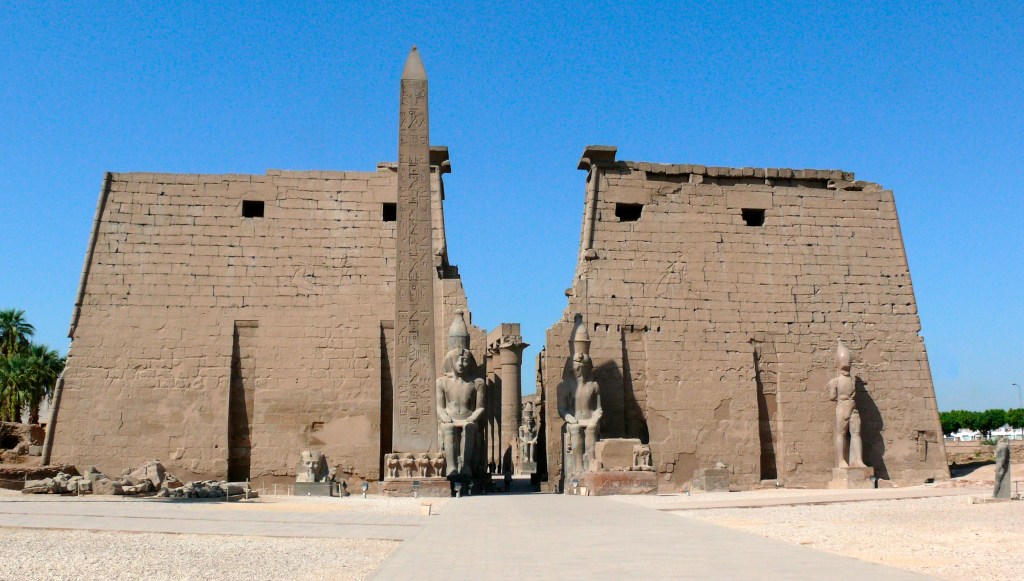
Presiding over the modern downtown district, Luxor Temple is an ode to the changing face of Egypt through the centuries. Built first by Amenophis III (on the site of an earlier sandstone temple), it was known as “the southern harem of Amun” and was dedicated to Amun, his consort Mut, and their son the moon god Khons. Like all Egyptian temples, it comprises the chapels of the deities with their vestibules and subsidiary chambers, a large Hypostyle Hall, and an open Peristyle Court, which was approached from the north by a great colonnade.
The temple was added to and changed by a parade of pharaohs, including Amenophis IV (who obliterated all references to the god Amun within the temple and added the Sanctuary of the god Aten), Tutankhamun (who had the walls of the colonnade embellished with reliefs and in turn destroyed the Temple of the Aten), Seti I (who restored the reliefs of Amun), and Ramses II (who extended the temple significantly, adding a new colonnaded court at the north end). During the Christian era, the temple underwent a transformation into a church, while in the Islamic period, the Mosque of Abu el-Haggag, dedicated to a revered holy man, was built inside the complex grounds.
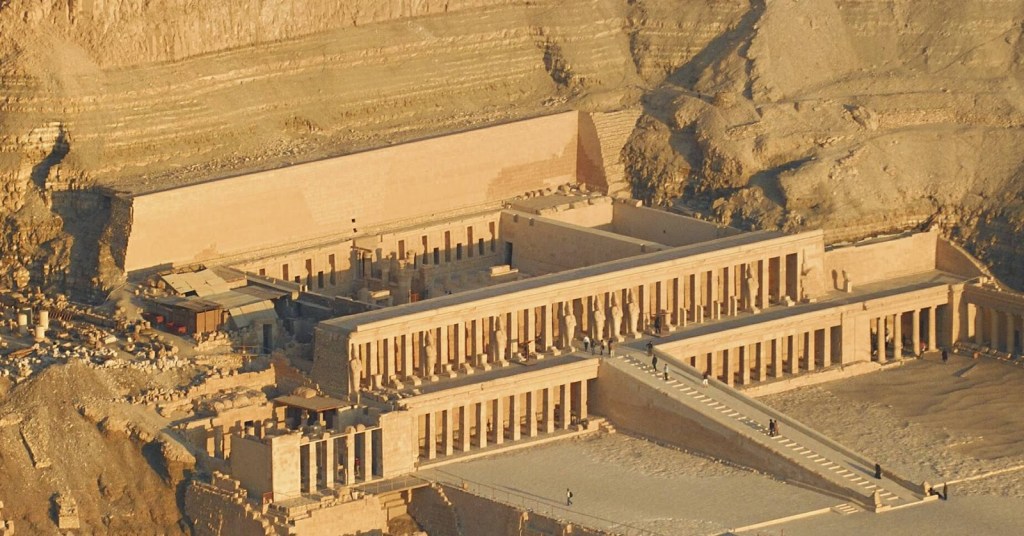
The Temple of Deir el-Bahri is magnificently situated at the foot of the sheer cliffs fringing the desert hills, the light-colored, almost white, sandstone of the temple standing out prominently against the golden yellow to light brown rocks behind. The temple complex is laid out on three terraces rising from the plain, linked by ramps, which divide it into a northern and a southern half. Along the west side of each terrace is a raised colonnade.
The terraces were hewn out of the eastern slopes of the hills, with retaining walls of the finest sandstone along the sides and to the rear. The temple itself was also partly hewn from the rock. Inside, the complex is richly adorned with statues, reliefs, and inscriptions. Note how Queen Hatshepsut had herself represented with the attributes of a male pharaoh (beard and short apron) to demonstrate that she possessed all the authority of a king.
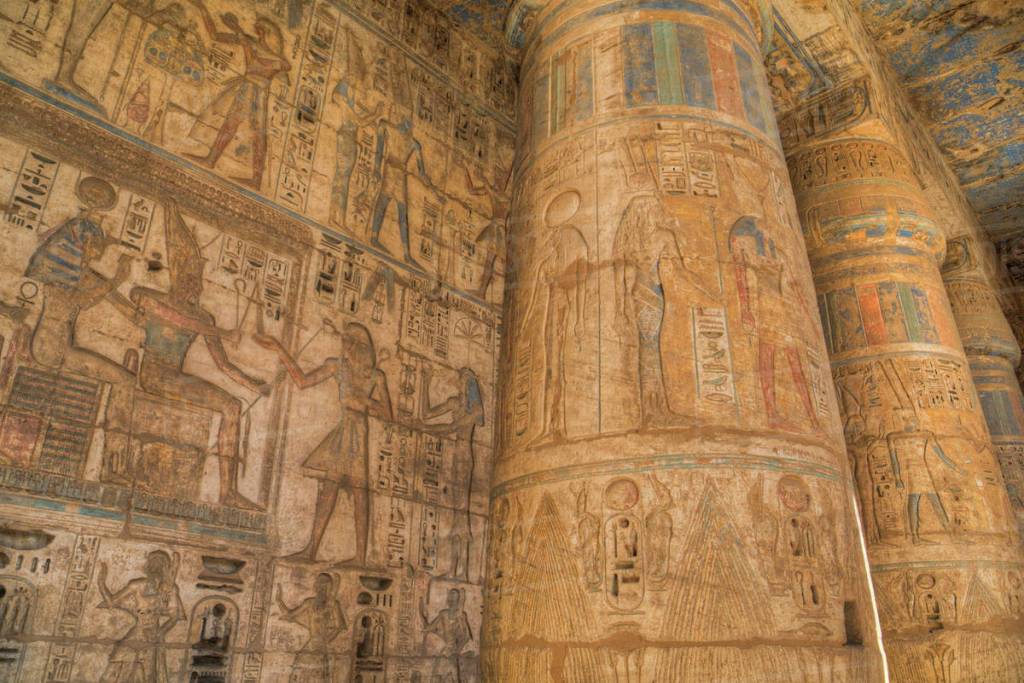
With the famous Valley of the Kings and Temple of Deir al-Bahri the main attractions, Medinet Habu often gets overlooked on a West Bank trip, but this is one of Egypt’s most beautifully decorated temples and should be on everyone’s West Bank hit list. The complex consists of a small, older temple built during the 18th dynasty and enlarged in the Late Period, and the great Temple of Ramses III, associated with a royal palace, which was surrounded by a battlemented enclosure wall four meters high.
The main temple area was built exactly on the model of the Ramesseum and, like the Ramesseum, was dedicated to Amun. The reliefs here are some of the best you’ll see on the West Bank.
Beside being an open air museum, Luxor have more to offer.
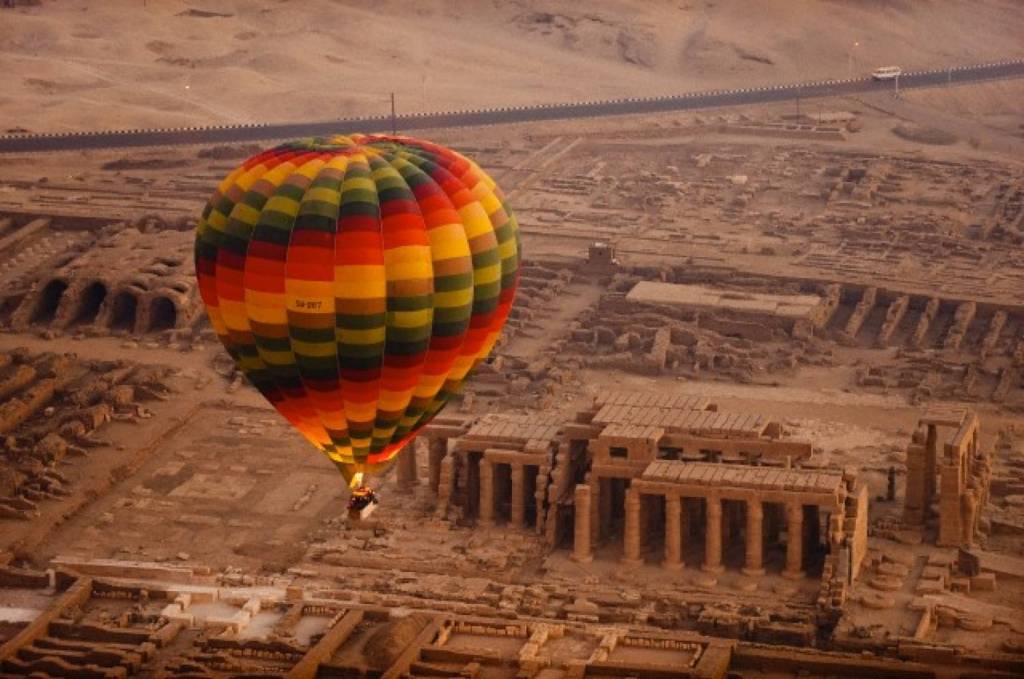
You can head on up for an air balloon ride at sunrise over the Theban Necropolis. Temple hop in Luxor and Karnak (I’d recommend opening time at 6am). Or, you can organise a half day trip to the Temple of Hatshepsut, the Valley of the Kings, Madinat Habu and the Colossi of Memnon.
A hot-air balloon flight is unique from all other experiences of flight as there is no sensation of motion. Traveling at heights of up to 1500 feet, the feeling is one of peace and tranquility. The earth slowly descends and rotates below you. Within moments after lifting off you become at ease while you effortlessly drift over the treetops and the spectacular Luxor landscape. It is like a dream to gently float over the countryside in complete harmony with your surroundings.
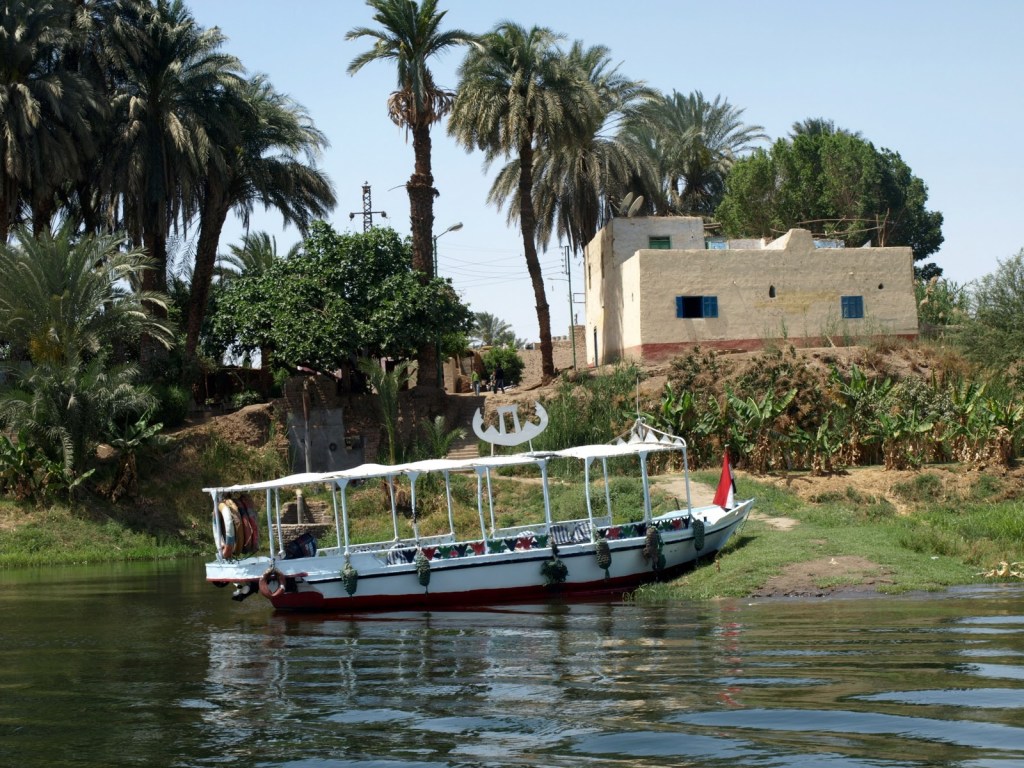
If you’ve had your fill of temples and tombs for the day, there is no better way to relax in Luxor than to take a felucca ride to Banana Island. Five kilometers upriver from Luxor, this teeny palm-shaded island is the perfect chilled-out contrast to the history-filled treasures of the West and East Bank. Hop on a felucca in the late afternoon after a long day of temple and tomb viewing, and sit back to watch the Nile-side views as the boat captain raises the sail and you slide up the river. If you sail back just on sunset, you’ll get to see the river at its most majestic.

 Egypt Travel Guide